Dreaming Stones : “…of whirling air and of rushing fire…”

The first stop of the afternoon was a familiar one; we had made a point of visiting the magnificent Sueno Stone on our last trip to the area. It is the tallest carved Pictish stone in Scotland and shows scenes of war and conquest… with the usual Pictish wholesale hacking off of heads. In this case, not one of our pet theories about the symbolic ‘removing the head’ psychologically in order to access the higher self, but the more graphic depiction of the slaughter and decapitation of the conquered. Not for nothing is Sueno’s Stone also known as the Battle Stone.

The Battle Stone is also one of the places reputed to be where Macbeth met the witches at the crossroads. Behind it, on Cluny Hill, is Nelson’s Tower, commemorating a sea battle from a later time… the Admiral’s victory at Trafalgar. But the hill is better known for a darker period in its history, when it was the site of the examination of witches.

Witches Stone, Forres, truehighlands.com

During the witch trials that would execute an estimated fifteen hundred midwives, healers and herbalists in Scotland for being ‘in league with the devil’, those accused of witchcraft in Forres were deprived of sleep for three days and nights until they were vulnerable and would confess (a little odd, given what was to come…). One they had done so, they were put to death by packing them, still living, into spike-lined barrels and rolling them down Cluny Hill. Where the barrels came to rest, they were burned… a grisly echo of the Burning of the Clavie.

When the Macbeth witches were reputedly burned in this way, stones marked the spot of their incineration. One of these stones, split into three and stapled together again, still sits directly outside Forres police station. Local legend says the stone was once broken up and used for building a house in which all the occupants fell ill. The house was demolished and the stone returned, such was the superstitious fear in which witchcraft was still held. It didn’t bode well for our pentagrams… but not all things are what they may seem.

A brief comfort break at Logie Steading allowed us to walk through the gardens where rhododendrons line the paths. Beautiful as they are, one species is becoming a ‘weed’ in the woodlands, suppressing the habitat of native wildlife. Then it was on to our next symbolic location.

A green lane led us onto a viaduct, where the element of air was perfectly symbolised. Air beneath us, wind farms harvesting its power on the horizon, wind catching hair and garments as we worked… so much so that the ribbons were abandoned. Instead, we marked out the pentagrams with stone, conscious that any walkers or bikers would be looking askance and glad the witchcraft laws were no longer enforced…

Continue reading at France & Vincent

Posted in albion, Ancient sites, archaeology, esoteric, france and vincent, Photography, Sacred sites, travel | Tagged , , , , , , , , , , , | 4 Comments

Tobias and the Angel… Stuart France

https://upload.wikimedia.org/wikipedia/commons/1/1e/Francesco_Botticini_-_I_tre_Arcangeli_e_Tobias.jpg

(Francesco Botticini)

*

The story of Tobias is told in the Book of Tobit in the Old Testament.

The book of Tobit is part of the Catholic Old Testament but is considered apocryphal by Protestants and does not form part of the Jewish canon.

It is an ancient writing and Aramaic and Hebrew fragments of the tale where found in Cave IV in Qumran in 1955.

*

Tobias was the only child of a blind, holy man, named Tobit, and his wife, Anna.

Tobit sent his young son Tobias on an errand to a distant land to collect monies that were owed to him.

As he started on his journey Tobias was met by the angel, Raphael, disguised as a man named, Azarias.

Tobias and the angel started on their way accompanied by Tobias’ dog…

They stopped the first night by the River Tigris and as Tobias went to wash his feet a monstrous fish came up and tried to devour him.

Tobias wrestled with the fish and managed to haul it out onto the dry land.

Continue reading at The Silent Eye

Posted in Art, Folk Tale, Mythology, symbolism, The Silent Eye | Tagged , , , , , , | 3 Comments

Distance ~ Miss B #writephoto

We had said our goodbyes

Again and again

This time, though

There was a firmness

Continue reading at Bernmusings

Posted in photo prompt, Photography | Tagged , | 7 Comments

Glisten ~ Honoré Dupuis #writephoto

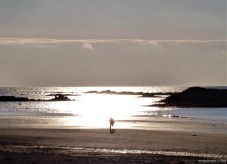
Is this you, running toward me, in the dying light of our star? Is it you, or your double, or your servant? I know it cannot be you, how much I wished it were. But I know: I lost you, eons ago, far away.

Continue reading at Of Glass and Paper

Posted in photo prompt, Photography | Tagged , , , , , | 3 Comments

Calling

I whispered your name to the Universe

Silent echoes, butterflies on the wind,

Calling you to me.

Only in softness, gentle as snowflakes,

Fragile and transient

Will the voiceless speak.

Yet into the silence your name flutters,

Hawk’s feather falling at my feet

From a clear sky.

I hear my voice and listen to my own cry

Calling your name in the silence

In you I find myself.

Posted in Life, Love and Laughter, Poetry, Spirituality | Tagged , , , , | 27 Comments

Shimmer ~ Brian F. Kirkham #writephoto

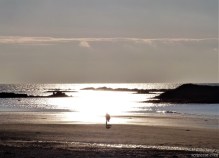
Sole observer watching by the shore, as
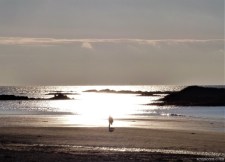
hopping and skipping towards the beach

in a race to get to him

Continue reading at  The Inkwell

Posted in photo prompt, Photography | Tagged , , , , , , , , , , , , , | Leave a comment

Grammarian #midnighthaiku

Welcome visitor

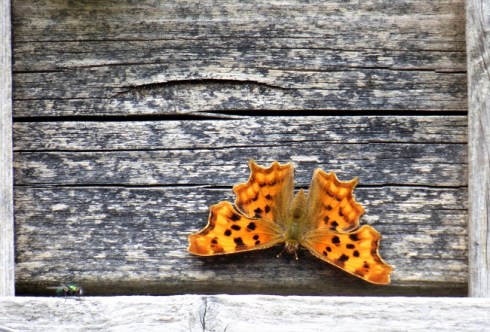
A flighty grammarian

Punctuates summer

*


Posted in Photography, Poetry | Tagged , | 9 Comments

Glisten ~ Sadje #writephoto

My tears glisten in the moonlit night

The sorrow I felt at your leaving is breaking my heart

I stand at the edge of the water and think

Just like this ocean you were never mine, to begin with

Continue reading at Keep it Alive

Posted in photo prompt, Photography | Tagged | 4 Comments

Dreaming Stones: “…and under the earth…”

Sharp tang of woodsmoke, tall shadows climb stone walls, reflected flames dance in a black pool. Deep in the belly of earth, the symbols of the rite painted on pale skin, I wait as the torches come…

I could not say where or when the scene unfolded, nor what was the rite, only that to find yourself unexpectedly standing in a landscape familiar from an old, recurring dream is very strange. The soft echoes of the chamber brought back one missing detail.

“We need to chant…”

***

We had arrived in Burghead knowing that we would take a look at an ancient fort and a holy well. For once, that was about the limit of my knowledge. We had been given a detailed itinerary, but I had deliberately not researched any of the places on the list. As I was not one of those responsible for guiding the weekend, I would be able to come at each site fresh and free from preconceptions.

Burghead has all the solidity and cleanliness typical of the area, but although most of the town has stood for just a couple of centuries, its history goes back into the earliest of times. At low tide, you can still see the peat beds and remains of trees that stood, where the sea now flows, some seven thousand years ago. The earthworks of the Pictish fort were unmistakeable as soon as we had parked… and incredibly well sited on a spit of land surrounded on three sides by the sea. But, when the Picts first came to the area and began work on the earliest phase of the ‘promontory fort’, the promontory had become an island, separated from the mainland by a narrow strip of sea.

Was the site of the new fort first chosen simply for defensive reasons, which is entirely possible, or was there some deeper significance for the choice? So many times we have seen the lands of the living and the lands of the dead… the landscape of ritual… divided by water. There is even the old magical tradition that flowing water contains or prevents the passage of otherworldly beings and forces to strengthen the idea. Maybe there was more than just tactical planning by the founders?

Most of the fort was buried beneath the new town in the nineteenth century, but radiocarbon dating has shown the site was already occupied as far back as the third century. At the height of its strength, the fort had walls up to twenty feet high and twenty-six feet thick, dotted with around thirty Bull carvings, only six of which have as yet been located.

Was the Bull the symbol of the tribe, its spirit animal… or both? Is it an earth-bull, association with strength and fertility, or one of the mythical water-bulls of Scottish folklore, who were shapeshifters and could not be killed by drowning?

The information boards at the holy well spoke of executions by drowning, such as that of Talorgen, son of the king of Atholl in 739, could not resist the idea of possible beheadings and mentioned the Celtic carved head found there as being a ritual object such as we see at so many ancient wells. Bearing in mind that the well would once have stood within the walls of a fort surrounded by sea, I would not have thought that contaminating a source of drinking water with messy executions would have been the norm. Not with the sea below the walls.

On the other hand, having a shrine to water deities within the fort, to whom appeals and offerings might be made and where rituals might take place, that does make sense. The idea that the Picts saw ritual significance in both caves and water is reinforced at a site not far away.
In a nearby cliff, the walls of the Sculptor’s Cave are decorated, curiously enough, with pentagrams and other Pictish symbols. Deep within the cave, many human bones were found. Some were cut through the neck as if deliberately decapitated. Others show clear evidence of having been deliberately defleshed. Some heads, mainly those of adolescents, appear to have been placed around the entrance to the cavern.

The majority of reports focus on the apparent brutality, sensationalising ghastly rituals and barbaric sacrifices. One, rather more considered report is that of ScARF, the Scottish Archaeological Framework, who suggest that the caves would have been a liminal place, between land and sea, where “rites of passage – transforming children to adults or the living to the dead – may have taken place” and where it was thought that you could reach out to “the gods or spirits of the underworld”. We know that bones held meaning for our ancestors and that the cleaning of the bones for burial was seen as a respectful funerary rite. We also know that initiatory rites of passage, such as that marking the transition from child to warrior, priest or shaman, often held an element of real risk. What we do not know is the story behind the bones in the cave and it seems unfair to paint their people as barbaric, by our standards, without that knowledge.

Continue reading at France & Vincent

Posted in adventure, albion, Ancestors, Ancient sites, archaeology, esoteric, france and vincent, historic sites, Spirituality, travel | Tagged , , , , , , , , , , , | 5 Comments

Dr Joy’s Garden ~ Steve Tanham

Real dedication, like an enduring friendship, is a quiet thing… I was standing, in the early morning light, with Tess, our Collie, in hand, entering a compact garden which overlooks the headland at Alnmouth. We are on a week’s holiday; Bernie and myself, her sister and my mother. In some ways, it’s our annual ‘offering’ because my mother needs a lot of looking after. She has vascular dementia, and, year on year, the condition worsens and the change in the previous twelve months becomes apparent in the everyday events of holiday life repeating themselves – but differently.

Continue reading at The Silent Eye

Posted in Steve Tanham | Tagged , | 2 Comments