High Days and Holidays ~ Mike Biles

Just published and available from Amazon – A Bit About Britain’s High Days and Holidays.

High Days and HolidaysHigh Days and Holidays are special occasions, celebrations, or commemorations. They occur throughout the year, some wanted, some not, some remembered more than others.  In days gone by, the passing year was marked by seasonal or religious feast days of one sort or another; in some respects, they still help define our calendar.

Continue reading at A Bit About Britain

Posted in reblog | Tagged , , , , , | 2 Comments

Discovering Albion – day 4: Saxon Crosses

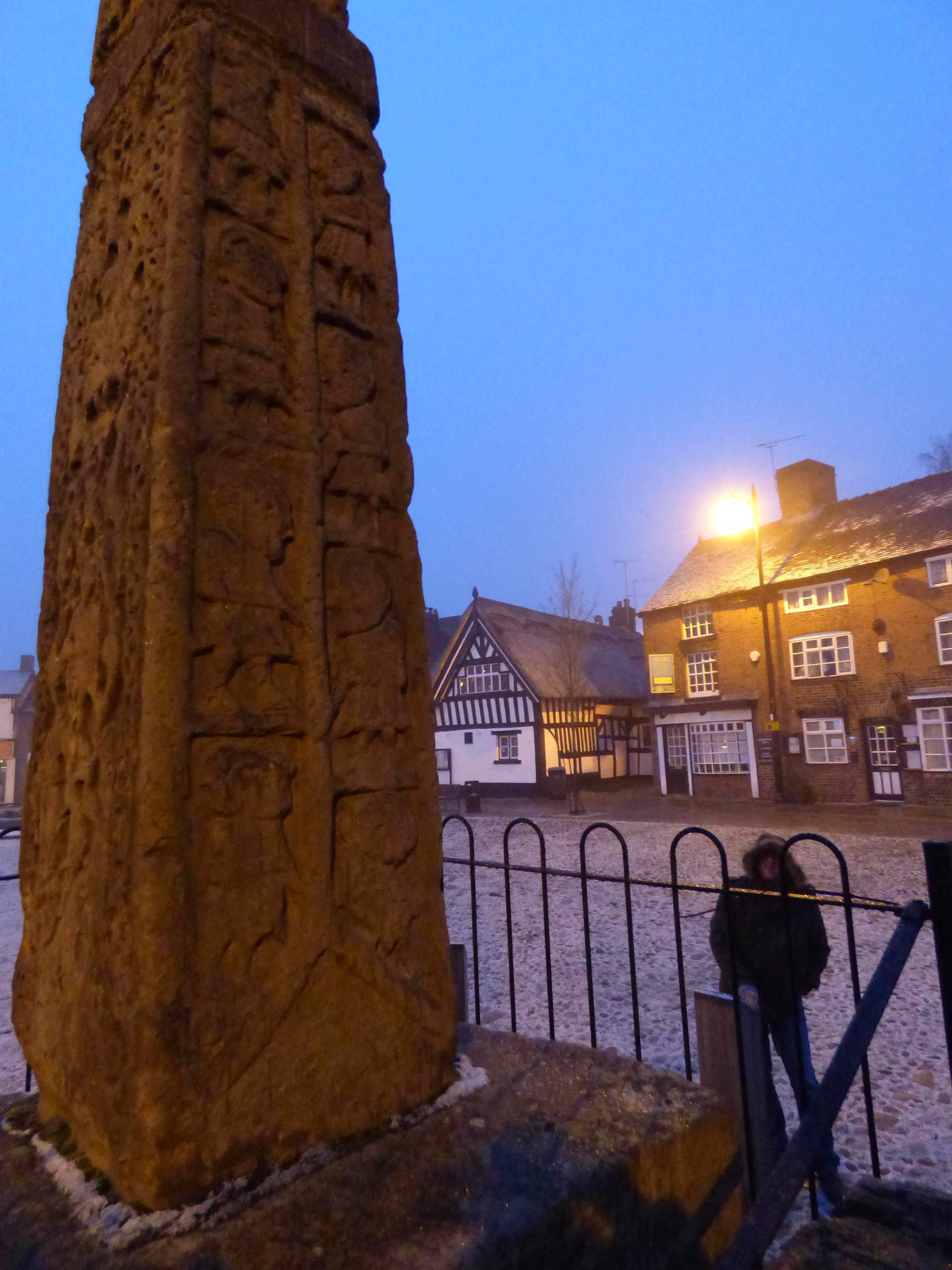
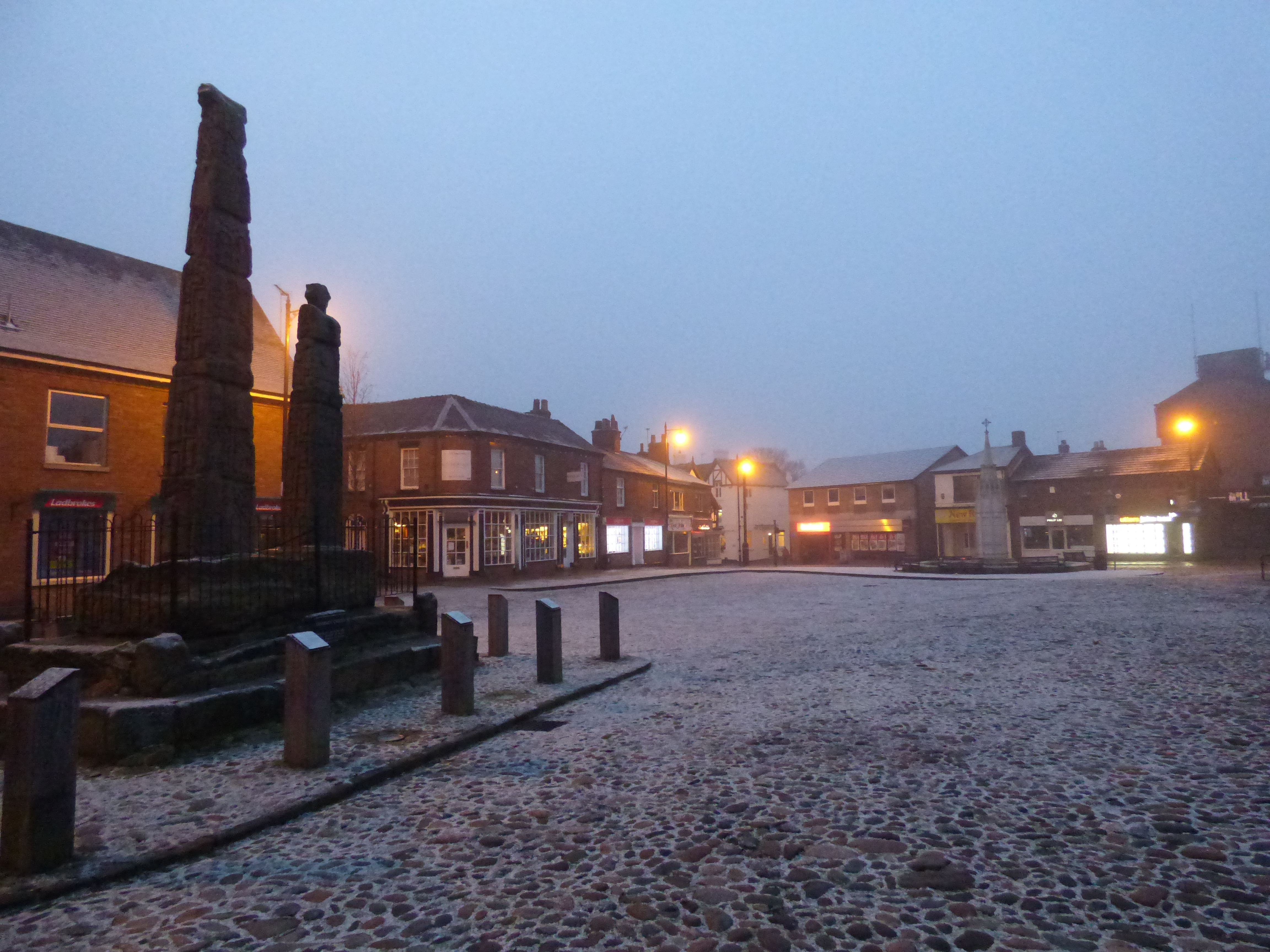
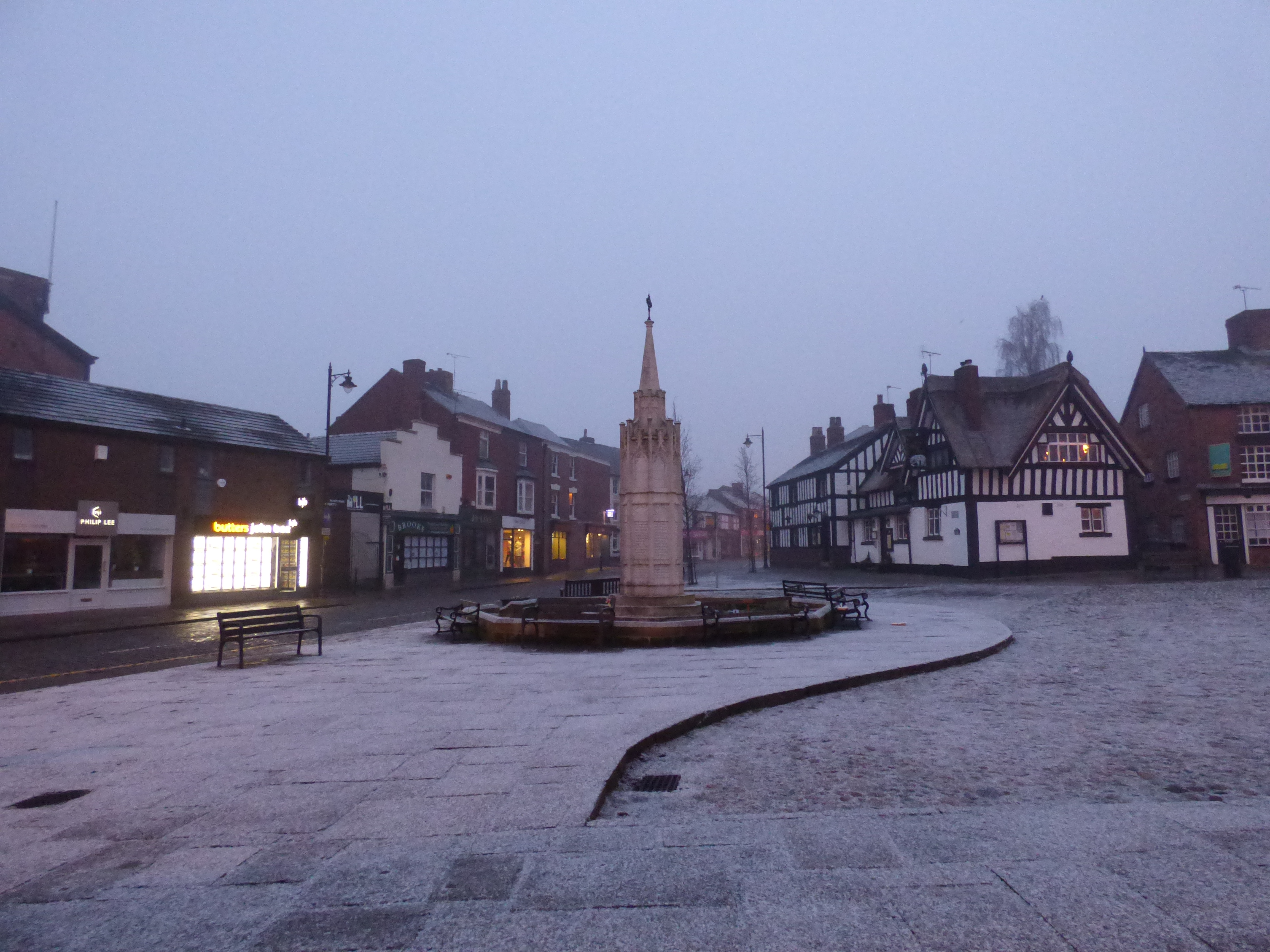
scotland trip jan 15 018There is a saying that ‘mad dogs and Englishmen go out in the noonday sun’. It was barely daylight, there was no sun, only a thin, white blanket over the world. But our sanity with this trip had already been called into question by a number of our friends, so it came as no surprise that we were out before dawn, all excited, to search the snow-dusted town for a couple of bits of carved stone. Not just any bits, mind you; the Sandbach Crosses are justifiably renowned.

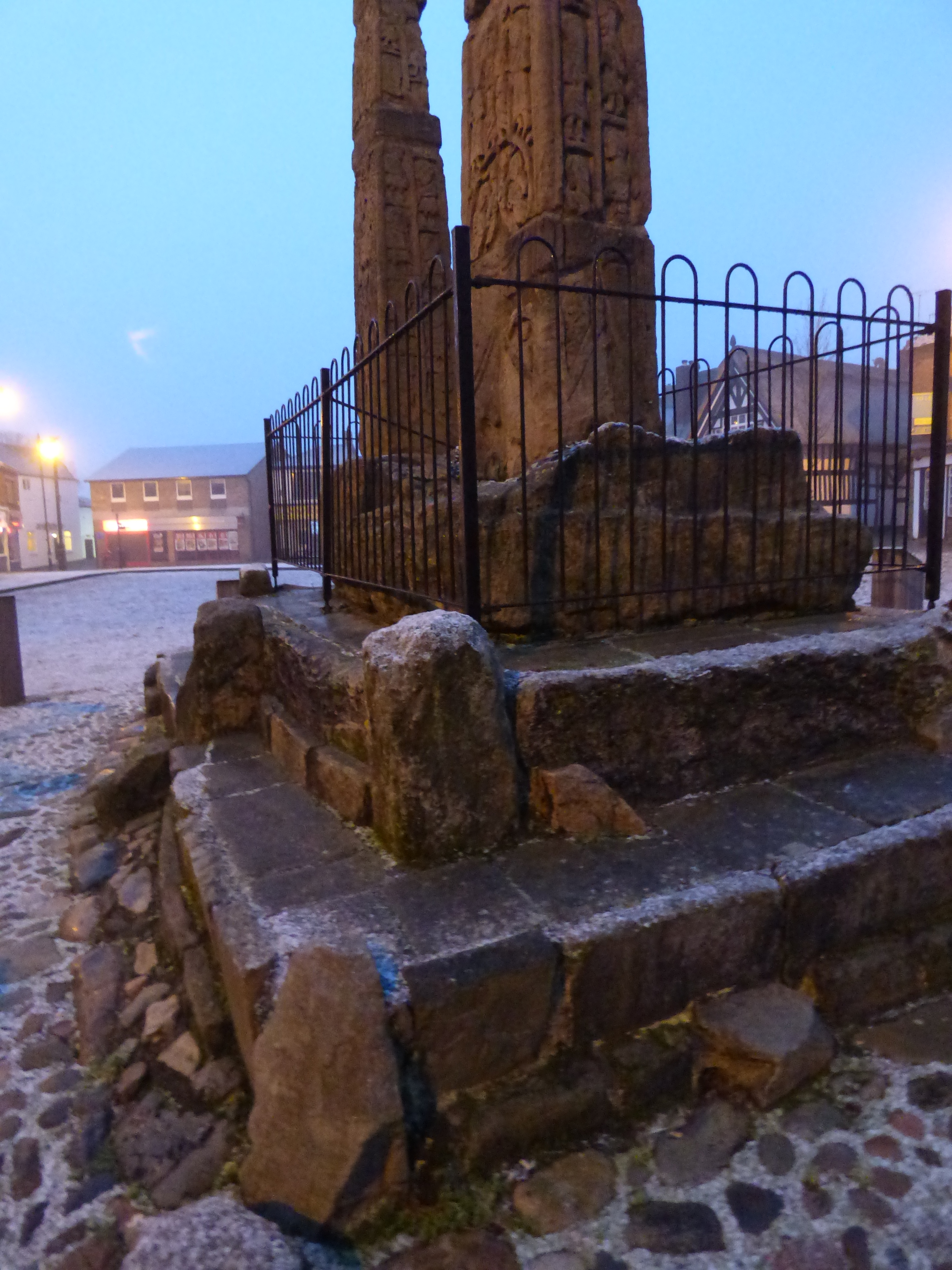
scotland trip jan 15 046We found them in the silent market square, long before there was anyone about. To be fair, you couldn’t really miss them, towering as they were, darkly into the sky. It is only as you approach that you begin to see the carvings… and it was for these we had come. We had seen pictures, but even so, my first thought at the size of these things ran to a whole, unprintable four letters.

scotland trip jan 15 034You see, the Bakewell Crosses we know well. One is shorter than I, the other a fair bit taller. No more than that. The Eyam and Ilkley Crosses a little taller still. These two, standing proud on the stone steps, are huge. And even then they are incomplete… truncated from their original height… and may, in fact, be three, not two.

Continue reading at France & Vincent

Posted in adventure, Ancient sites, Photography, scotland road trip | Tagged , , , , , , | Leave a comment

The King of Castle Hill… Stuart France

*

…There once was a king who lived in a castle on a hill.

He was lord and master of all he surveyed.

One daughter he had sired but his wife had died in giving the child life.

His daughter was very beautiful and the king looked forward to the day when she would come into her own.

By a cunning device of his mother the King of Castle-Hill had been made invulnerable and was possessed of a baleful eye which was capable of blighting all that it gazed upon.

Continue reading at The Silent Eye

Posted in Stuart France, symbolism, The Silent Eye | Tagged , , , , , , , , , , , | 2 Comments

The Shrieking Womb: Plot…

*

… At Emain Macha, Connavor prepared a magnificent feast

for all the nobles of Ulster…

*

And so they came, one and all,

and their bellies were filled with delicious

meats, and exotic vegetables,

and rare fruits, and they were plied

with vat after vat of wine…

*

Continue reading at France & Vincent

Posted in Photography | Tagged , , , , | Leave a comment

Ani’s Advent Calendar 2020! A poem from Maggie

Dear Santa,

There are some of my friends missing from this year’s Advent Calendar. One of them is Maggie, who lived, held in love, from puppyhood to a wonderful old age.

Two years ago, she sent me a poem. It is a reminder that not all homes will celebrate this time of year as a time of plenty. Many have lost loved ones, both two legged and four. There will be empty chairs… and hearts that miss those they love. This year, especially, has been a year filled with worry and lots of homes will have less than they planned, as their livelihoods are threatened or taken by the virus.

Me and Maggie have always been well looked after. Not all dogs are so lucky… and not all two legses either. Mine remembers Christmasses when her pups were little and there was nothing with which to make a Christmas, so she made things for them instead.

Continue reading at The Small Dog’s Blog

Posted in Ani's Advent 2020, Dogs | Tagged , , , , | 4 Comments

On the Doorstep ~ Opening Doors

As we could not, due to COVID, gain access to visit Holy Trinity at Bledlow on our recent sortie, I will tell you about our previous visit… what we found… and what we missed…
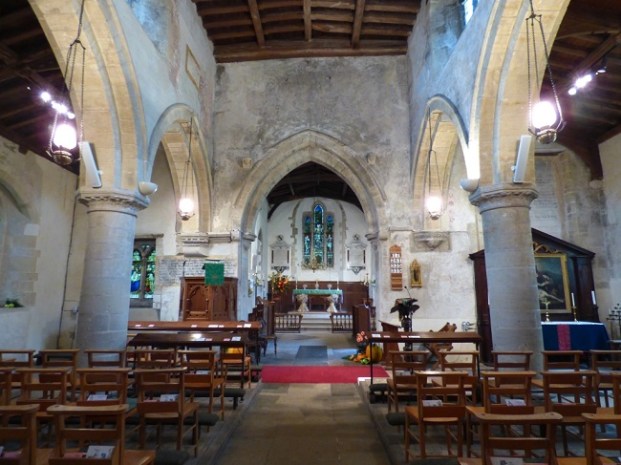
The door that has served Holy Trinity for seven hundred years… possibly the oldest working doorway in the county… had once again opened for us. It was our second visit and a stroke of luck; the church was being dressed for Harvest Festival and the parishioners had better things to do than to supervise us as we explored their ancient church.

And there is plenty to see. From the six massive pillars that have supported the nave for eight hundred years or more, each with their own particular design of carved foliage sprouting from their capitals, to the glowing colours of stained glass and the faded ghosts of mediaeval wall paintings.

The oldest survivor in the church is the font. It is of the ‘Aylesbury’ type, found frequently in this area, meaning that it is a huge, footed bowl, in this case, fluted and carved with foliage and scallop shells, a symbol of baptism. It was probably carved in the twelfth to thirteenth centuries by stonemasons engaged to do the work by the abbot of St Albans.
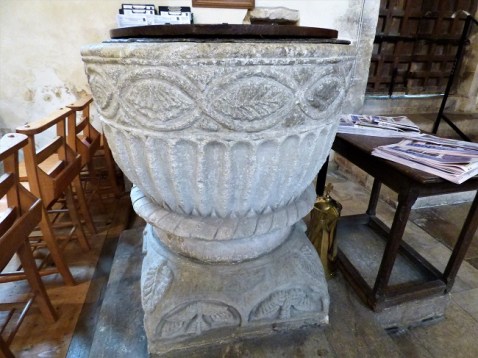
I love to see the old fonts still in place and in use. It is such a statement of continuity and community, regardless of whether or not you subscribe to Christian beliefs. Up until recent years, that would not have been a choice, as Christianity prevailed in Britain and the church would have been the hub of every community.

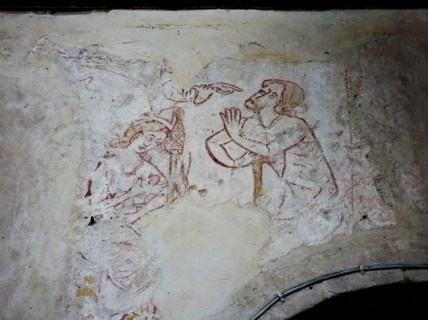
Above the old door, there are fragments of wall paintings showing scenes from Genesis… and, more specifically a completely unique depiction of the Labours of Adam and Eve, watched over by a finger-wagging angel with outspread wings. This used to be a popular scene… the punishment of humankind for disobedience, but where Adam may be shown tilling the soil, here he seems to be digging with a spade, while Ever spins. The distaff beside her is often seen… and rarely her ‘labour’ is shown by her holding a child, whereas here, she is shown suckling a babe while spinning.
On the wall opposite there is a faded St Christopher, placed opposite the door as the saint carried a special blessing for pilgrims who looked upon him. When the paintings were cleaned a few years ago, traces of water swirling around the feet of the saint were uncovered along with the head of a swimming eel.
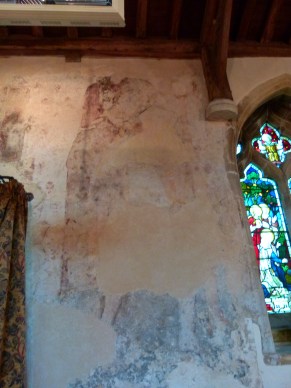
There are other wall paintings too, fragments of wider scenes, now lost to conjecture, newly uncovered and tantalising. There are also painted texts, the only ‘pictorial’ scenes allowed under Cromwell, covering who knows what beneath their stark simplicity.

The pre-Reformation lectern we missed. These days, we might have noticed that the eagle whose outspread wings bear the bible, is looking back over it shoulder at the reader, rather than out over the congregation. The bird, in heradic terms, would be known as Eagle Reguardant.
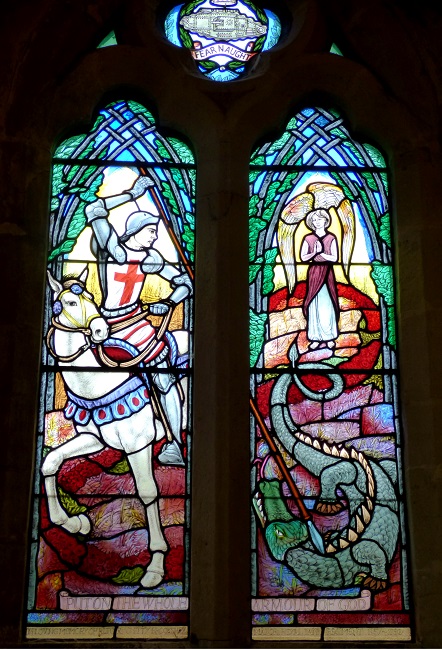
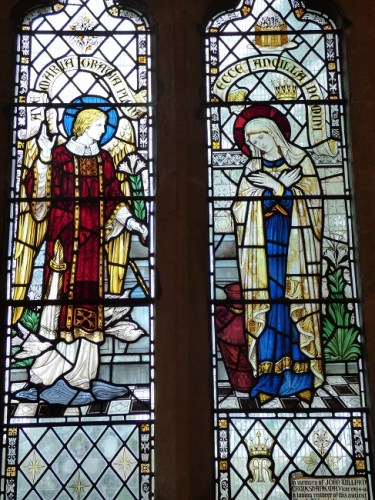
There are wings too in many of the windows and artwork too, from those of the angel watching St George hold the dragon at lance-point, to those of the drumming angel, after a  part of the  Linaiuoli Triptych  of 1433 by Guido di Piero, known as Fra Angelica.
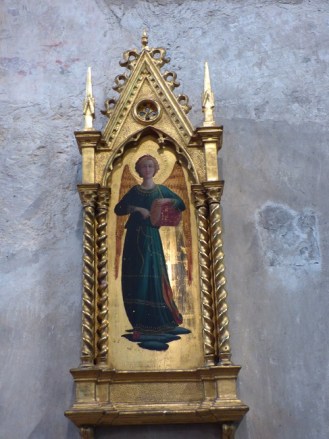
he gilded icon was presented to the church by aviatrix Amy Johnson who lived close by for a couple of years from 1930, and came to the church to worship. Johnson died in 1941 when her aircraft crashed into the Thames.
In th south aisle is a wooden altar table which may have been the high altar at one time when Queen Elizabeth I had decreed that ’every Paryshe Church to have a stoute oaken table from which to celebrate the Lord’s Supper’.
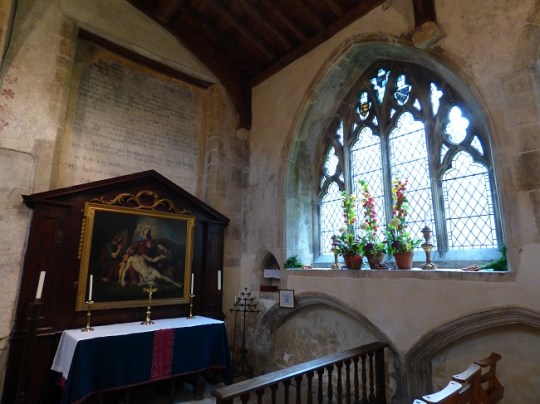
Above it is a painting of the Deposition, “Descent from the Cross,” by Samuel Wale (c. 1770). Besdie it are two tomb recesses and a thirteenth century piscina for the holy water and oils to be returned to the fabric of the building… not left to be stolen and abused by local witches.
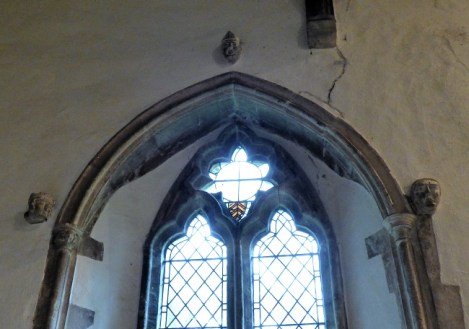
There are strange faces looking down from many vantage points in the church, as well as fragments of medieval glass and clues to the evolution of the building itself. When we visited, all those years ago now, we had barely begun to learn about these wonderful repositories of human, local and social history.

We had barely scratched the surface of the architecture, the terminology or the artistry…or joined the dots with how they connected with the spiritual history of these isles.

We had yet to scratch the surface of the symbolism and the strange stories we would find, hidden in plain sight, in the windows and carvings that adorn buildings that date back almosy a thousand years… and which yet speak to us in a language we still understand.

But we had begun to learn… both how to look and how to document our visits with photography… and, with out churches still closed to visitors for the foreseeable future, in revisiting these photographs, we can revisit the churches and share them while we wait for the doors to open once again.

Posted in albion, Ancient sites, Churches, History, Photography, Sacred sites, Spirituality, symbolism | Tagged , , , , | 11 Comments

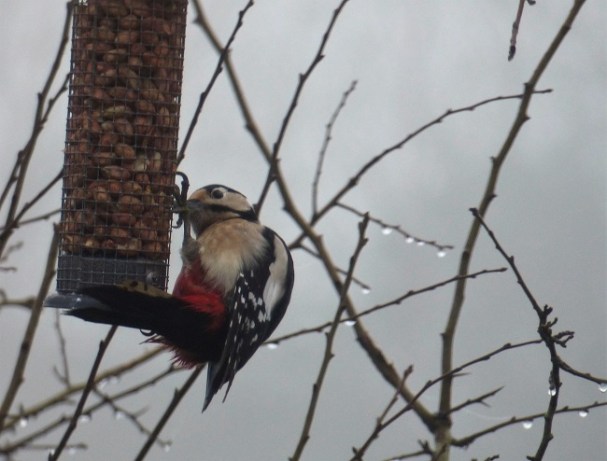
Spotted #midnighthaiku

great spotted woodpecker (female)

Cloaked in mist and gems

Always spotted seldom seen

Reclusive diner

great spotted woodpecker (female)

Posted in Photography, Poetry | Tagged , , , | 26 Comments

Christmas starts now. Or it used to. ~ Thorne Moore

Reblogged from Thorne Moore:

I am nicking this post, looking at the history of Christmas, from my business website which won’t be there for much longer (I am officially retired!)

In 350AD the Pope decreed that the feast of Christ’s Nativity should be held on December 25. This was fortunate because in Northern Europe it was essential to find some excuse to celebrate the period of the winter solstice.

Communal feasting, lights, fire, song, dance and traditional ritual helped (and still help) to see people through the depressing time when the days are at their shortest, the nights are at their darkest, and the shadows are at their longest. This is probably why Christmas festivities have survived so strongly in otherwise secular societies, while more significant Christian feasts like Easter have lost their importance in the social calendar.
The Christmas season was a lengthy affair in the Middle Ages, beginning with the festival of St. Nicholas on 6th December and ending with Twelfth Night and the Feast of Epiphany (January 6th). In a time when people relied on good weather and good light to work, there was little to be done except keep warm and make merry. Many animals would have been slaughtered, since little winter fodder was available, and the harvest had been gathered, so food was usually plentiful.

Continue reading at Thorne Moore

Posted in reblog | Tagged , , , , , , , | Leave a comment

Discovering Albion – day 3: No Room at the Inn

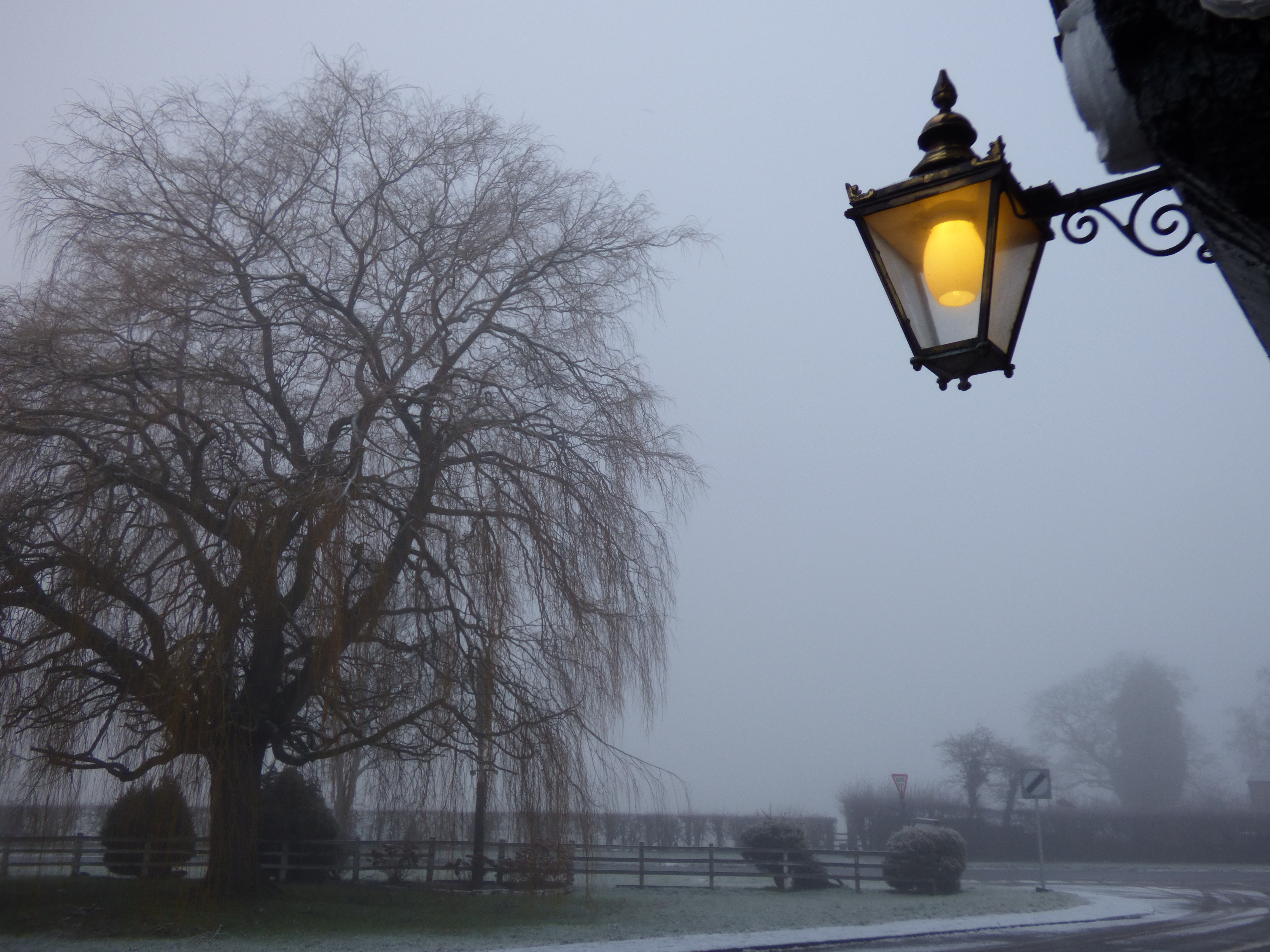
scotland trip jan 15 078For some strange reason we had thought it would be a good idea to leave Wales and head for our next destination. Wales is a very beautiful place and one I love, but technically, we weren’t really supposed to be there till the next big trip. There was still a little daylight left but the weather was looking unpromising and Wales is not somewhere you want to get stuck if it snows, at least not unless you are ensconced in a nice warm bar with somewhere to stay.

scotland trip jan 15 049I knew of a hotel in Sandbach… knew exactly where it was, in fact, having delivered there regularly in my white van days. Nice and handy for both the town and the motorway, which we guessed would be okay even if it did snow. Our plan was still to head north, but if the weather took a dramatic turn for the worse we would just head south to mine and work on the books from there. Either way, the motorway would be useful.

Continue reading at France & Vincent

Posted in adventure, Photography, scotland road trip | Tagged , , , | Leave a comment

The City and the Stars (8) : Longships ~ Steve Tanham

The traditional picture of the Vikings – looting, marauding, raping invaders – may not be entirely true of their time on Orkney, though they did rule this gentle archipelago with an iron fist for five hundred years… (1300 words, a ten-minute read)

(Above: the glory of St Magnus (Viking) Cathedral, Kirkwall)

History can be complex. Patterns of events that fit in one situation may not, even from the same peoples, dovetail into another. To understand why Orkney’s history of these times is likely to have differed from what might be expected, we need to put ourselves in the minds of the Vikings and examine what Orkney represented to them.
Continue reading at The Silent Eye

Posted in reblog | Tagged , , , , | Leave a comment