Barb Taub reviews WRITEDOWN by Margaret Elphinstone et al #Lockdown #Galloway #Scotland #RBRT

Reblogged from Barb Taub:

n my last post here, I talked about the ‘forgotten’ flu pandemic of 1918. The coronavirus seems an overwhelming force across the globe, and I wonder what its legacy will be. After reading the incredible new group lockdown diary, Writedown, one thing I’m sure of is that this pandemic will live in our collective memory. 

One of the contributors to Writedown is also one of my favorite writers, Mary Smith. (If you haven’t had a chance to read her incredible Afghan adventure serial diary, give yourself a treat and start with this one, take a look at some of her funny and heart-tugging books here, her blog series My Dad is a Goldfish about caring for her father with dementia, or most recently her ongoing cancer journey.

I invited Mary to describe the Writedown project, and here’s what she shared.


Author Mary Smith, one of 22 contributors to Writedown.

The Writedown project came about through author Margaret Elphinstone. She tutors a writing group, Glenkens Writers but, of course they could no longer meet at their usual venue during lockdown. She decided to try an online project and invited her existing group to take part but also widened the net further by inviting others with a connection to the Galloway Glens. The initiative was inspired by the Mass Observation project which encouraged ordinary people to keep wartime diaries (http://www.massobs.org.uk – a fascinating project) and 22 of us took up the challenge.

Continue reading at Barb Taub

Posted in reblog | Tagged , , , , , , , , , , | 4 Comments

Solstice of the Moon: Desormais…

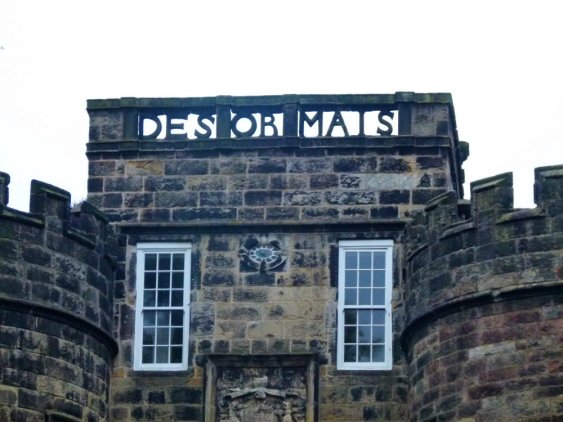
Desormais… henceforth… that is the motto over the gatehouse at Skipton Castle. It was probably the first word of French that I learned as a child and almost certainly the first I remember seeing written… even though it is written in stone. I had been there any number of times with my grandparents and, even though it is a castle and much younger than my normal preference, it does hold a fairly special place in my heart.

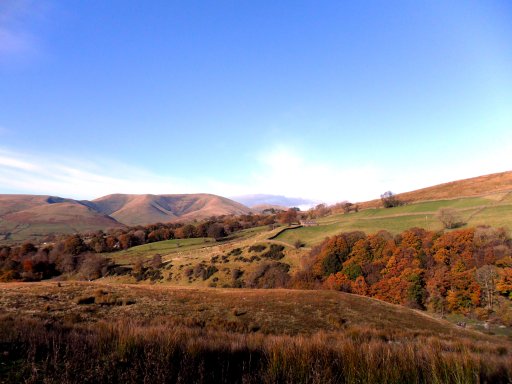
I had been looking forward to Skipton for a while, at least in some respects… it held the hotel where we would spend the last night of our journey. Not that I was in any hurry for the day to end. We had left the motorway in Cumbria and driven cross-country through the Yorkshire Dales, my home county. This was familiar territory and, although less majestic perhaps than Scotland, it is equally beautiful.

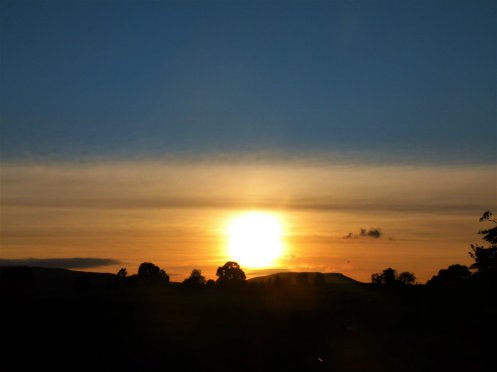
We had accidentally timed our journey to perfection… seeing a golden sunset over the Dales, but having just enough of the fading light to see us to our destination. From Pitlochry, through Aberfeldy to Fortingall and Glen Lyon, then on to Lochs Tay and Freuchie… it had been a very long and eventful day.

The hotel was an unexpected delight. We travel as economically as we can, but the old Georgian hotel with its chandeliers and gracious, curving staircase had been carefully modernised and I could barely wait to soak muscles stiffened by the long drive in the huge jacuzzi bath.

First, though, we needed to stretch our legs and Skipton is a market town, full of old and beautiful buildings and right on the doorstep of the moors. Because of that, it was once voted the best place to live in England. I like it too for its mix of ancient and modern, and the solidity and security of the architecture… much of it local stone.

We wandered up to the castle gate… long since closed for the night. It is about all you can see from the town, though beyond it I remembered the remains of the moat and the bridge across it. The rear of the castle stands on a precipice above Eller Beck and the stream and rock guard it well. Once again, I rather wished for more time… there would be none for us to visit the next day, as we were to meet a friend at Ilkley a few miles down the road. Even so, I remembered the great tree in the conduit court, the deserted chapel and the solar… the room with high windows that let in the light by which the ladies of the castle could sew and spin. Conduit court is so named because there is a cistern beneath it for collecting rainwater. Wooden pipes brought fresh, running water into the castle from beyond the gates, but in times of siege, the only water supply was the rainwater from the cistern.

Continue reading at France & Vincent

Posted in adventure, Ancient sites, History, Photography, Sacred sites, travel | Tagged , , , , , , , | Leave a comment

Grey…

*

… Now Grey set light to his brand and went out on his watch with Fin’s dog, Bran, trotting along up ahead.

He came to the same house that Brown and Black had visited but looking inside he found it to be full of dead bodies.

‘A wonder here and no mistake!’ thought Grey to himself, ‘if I hide myself among the dead bodies I may discovery what is afoot.’

So Grey lay down under a pile of the bodies and before long an old hag entered the house.

Continue reading at France and Vincent

Posted in Ancient sites, france and vincent, Mythology, Sacred sites, Stuart France | Tagged , , , , , , | 1 Comment

The City and the Stars (4) – The Ring of Brodgar

Steve Tanham's avatarThe Silent Eye

You look at the landscape around you… This magnificent place, where the natural features are as spectacular as the Neolithic discoveries, lies between two lochs surrounded by a natural amphitheatre. You are encircled on all sides by the hills and the monuments that make up the heart of Orkney’s Neolithic World Heritage Site. Welcome to the Ring of Brodgar, in the valley of the stars…

(1500 words, a twelve-minute read)

The Ring of Brodgar lies on the isthmus between the Lochs of Harray and Stenness. It is one of the best stone circles in the world and originally comprised 60 megaliths, of which 27 remain upright. It is a perfect circle, 104 metres in diameter.

It is breathtaking, and unlike many ancient circles, if you go at the right time, you can have it all to yourself… When we visited, in September 2020, there were less than twenty people there.

View original post 1,461 more words

Posted in Photography | Leave a comment

Feeding the imagination…

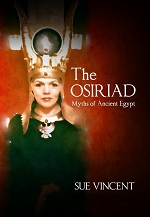
osiris

“We were not Gods, but were of God, the strands of our existence
not yet teased apart by Becoming, our function not yet defined.”

So much for a Saturday evening… the night of the week most folk sit relaxing by the hearth or meet with friends. Me? I was taking dictation from a Goddess…or that was what it felt like as I wrote.

I had done plenty of research, burying myself under a small mountain of respectable tomes to remind me of the details of the great story I was working with as I wrote The Osiriad. The names on the spines… Budge, Spence and Frazer, Iamblichus and Herodotus… suggested that ancient Egypt had something to do with the whole process, as would the printed papyri that littered the table. I had been feeding my imagination on tales of Egypt for years.

“There was a time we did not walk the earth.
A time when our nascent essence flowed, undifferentiated, in the Source of Being.”

But research isn’t everything. There are scholarly accounts in abundance out there with an academic weight I could never match. Nor did I intend to try. I hoped to speak to the emotions and imagination instead, so it was enough to get a broad overview of the subject. Having immersed myself in the scholarly works, I set them aside to write, hoping to weave the disjointed myths of Egypt into a single story. Which is where it began to feel as if I was taking dictation… and I wrote non-stop until the book was done.

“We wore flesh like a garment, clothing our immanence…”

Continue reading at France and Vincent

Posted in Books, france and vincent | Tagged , , , , , , , , , , | Leave a comment

A foggy morning

fog 014I scrape the ice from the windscreen, looking with little enthusiasm at the heavy pall of fog that blankets the world. November… we’ve done well to make it this far without ice on the windows. Even so, my fingers are already that peculiar shade of blue that I forget about through the summer, only to be painfully reminded by the first frost. I must dig the gloves out, I suppose.

The oversized fleece is warm, the sweater beneath making me feel heavier than I should.  I slide into a car that feels damp and chill. I have things to do outside today at my son’s home, but first I have to get there, and, of course, it is rush hour, such as it is in lockdown. The roads are choked with slow-moving traffic, the morning rat-run exacerbated by roadworks. I wait, feigning patience, for a gap through which I can dart into the flow of traffic.

Cars, mostly silver on this grey day, glide like silent ghosts, too slowly for their engine noise to pierce the shrouding fog. Their outlines are blurred, visibility is poor and the inside of the windscreen is fogged by my breath as I join the snaking line of cars that move in macabre procession towards a town where few wish to be. You can almost feel the reluctance of the drivers who head to work, called to spend our days earning the living which leaves us so little time or energy for life. We move so slowly it feels like a funeral.

I can see the silhouettes of birds perched in spectral trees, the looming monsters that seem to appear without warning as the trucks come towards you on the narrow road, their lights predatory eyes that open to pounce upon the unwary. The camera is in my bag and I would love to be able to stop and explore, capturing the misty magic of the fields and woods, seeking the beauty I know awaits just off the beaten track. There are so many ways I could have chosen… over the hills, through little lost villages… beneath skeletal trees denuded of leaves…

Continue reading at The Silent Eye

Posted in Landscape, Life, Spirituality | Tagged , , , , , , , | 2 Comments

Present #midnighthaiku

From past to future

Guiding our feet unerringly

The path is present

*

Posted in Photography, Poetry | Tagged , , | 6 Comments

Life on the beach ~ Tallis Steelyard

Reblogged from Jim Webster aka Tallis Steelyard:

I have written previously about the Rattlestone Sisters of Philanthropy. But perhaps I ought to delve more deeply into the impact they inadvertently had on Rattlestone. This collection of perfectly sensible and modestly well-to-do ladies effectively recreated Rattlestone. But not necessarily as they would have hoped to.

One of the early impacts was on the local young women and girls of the village. They had a life path laid out for them. They would do what their mothers did, marry a fisherman, keep house, have children, be widowed young, marry again, be widowed in middle age, and then grow old alone. To be fair, it wasn’t a bad option compared to that of the sons of Rattlestone. The Rattlestone graveyard is interesting in that very few named males are interred there. The men of Rattlestone die at sea and their bodies, if found, are washed ashore in a condition where they’re no longer recognisable.

When the ladies of the Rattlestone Sisters of Philanthropy summered in Rattlestone, they didn’t bring domestic staff with them. Indeed many couldn’t afford them anyway. Back at home in Port Naain, they might have, ‘a woman who does’ but that was the limit to their extravagance. But now, on holiday, they rather begrudged time given to washing clothes and similar. So many would pay a handy local girl to do those essential domestic chores.

The system worked well. Young women earned cash! That’s something young men rarely saw, they merely had a share of the catch credited to them for their ‘keep’ and were reminded that after all, they were going to inherit a boat.

Continue reading at Tallis Steelyard

Posted in reblog | Tagged , , , , | 7 Comments

Solstice of the Moon: Pure Magic

“!!!”
The distinctive smell of tortured gears wafted into the car. It was not surprising. The lane we had chosen after the road closure, was not only so narrow we could not have passed an oncoming rabbit, it was also climbing at an alarming angle and had thrown in a hairpin bend with an adverse camber, just for good measure. Had there been anywhere to turn around at that point, I might have considered it, except for the irrational fear that any loss of traction would send us sliding back down the slope. Then there was a break in the wall to our left and…
“Ohmygodlook….”

To hell with the gears… the car has been needing a new clutch for a while anyway. The incredible view over the valley was worth it. We were already high and still climbing. Thoughts of other impossible roads crossed my mind. If the narrow track over Ben Lawers had been out of the question, how come we were now climbing just as high? The road, I later found, is listed as eleven miles of officially dangerous road, linking Kenmore with Amulree, climbing steeply up to well over seventeen hundred feet and full of hairpin switchbacks. And it is glorious.

Not that we cared… We had driven through the Cairngorms just the day before, but somehow, following the valley roads and looking up at majesty, does not really give you a true sense of place. There is a feeling of security in the glens, as if the earth hold you in the hollow of its hands. Here, in the wild, high places, where the land spreads out far below and around you, eye to eye with the mountain-tops, you begin to understand just how small we are and how vast and beautiful our home.

Continue reading at France Vincent

Posted in adventure, albion, Ancient sites, france and vincent, historic sites, Photography, road trip, Scotland, travel | Tagged , , , , , , | Leave a comment

Alternative archaeology

‘Shadowing’ is the apparent… and disputed… reproduction in the stone of many ancient monuments of prominent features in the landscape. A monolith in a stone circle that aligns with and captures the shape of a nearby peak… the capstone of a tomb that follows the contours of the horizon… and in some places, whole arrangements of stone that seem to mirror, in miniature, the skyline of the land in which it stands.
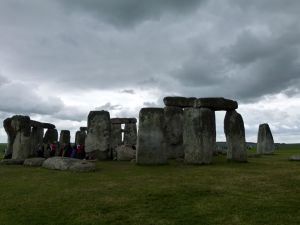
stonehenge 003There are many who dismiss the idea as fanciful. There are many who speculate upon the unlikelihood of primitive man being able to envision or achieve such feats… regardless of the scale and precision of places like Stonehenge, Avebury or Silbury. Bearing in mind that these same primitive ancestors were contemporary with the pyramid builders of Egypt, we feel that there may be more than just the visible monument to understand at these ancient sites, but as their builders are long gone, only the silent stones remain to plead their case.
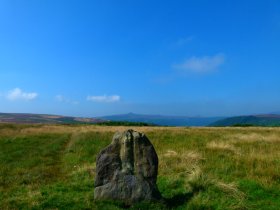
Over the past century or so, many theories have moved from precarious positions on the lunatic fringe into the accepted realms of archaeology. We cannot know all the answers to what was being built into the sites that remain, any more than it is possible to replicate the entire picture of a jigsaw puzzle when half the pieces are missing. However, the work of pioneers like Alexander Thom and John Michell, building upon the work of Aubrey Burl, William Stukeley and their ilk, has carried forward the notion of a knowledge of geometry, land and sky that is far in advance of that for which the ‘primitives’ were once given credit.

There are now hundreds, if not thousands, of books proposing theories about the sacred geometry that our ancestors used in constructing ancient sites of sanctity worldwide. The plethora of theories, some of them very far-fetched, often clouds the central agreement that there was an understanding of geometry in use, thousands of years before Pythagoras was born. It may not have been the intellectual application of degrees and angles that we know today. It may have been closer to an artistic vision that understood the rightness of harmony… but whatever it was, its mark on the landscape provides a fascinating study for the mathematically minded.
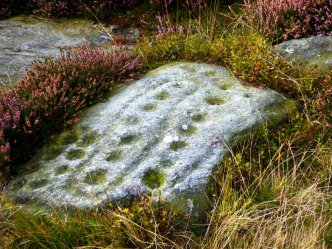
Nick Birds SE Ilkley 2015 uffington avebury cropton Helmsley 130Pioneers of archaeoastronomy were also dismissed with their lunatic theories. It is now a part of mainstream archaeology. The idea is not that our ancestors had scientific knowledge that rivalled that acquired by NASA, but more that they understood the movement and cycles of the heavens. If all you have to look at when the fire flickers low is the vault of stars above, you are going to see more than we do, when the light of the stars is drowned by our cities, cars and televisions. What was learned through such observation was woven into symbolic stories and they learned how to use their understanding, creating structures to capture, record and predict the passing of the heavenly bodies through their cycles. For what reason? Again, we do not know for certain… but we know that they did.

Continue reading at France & Vincent

Posted in Ancient sites, Books, History, imagination, Landscape, Photography, Sacred sites, Spirituality, Stuart France and Sue Vincent | Tagged , , , , , , | 3 Comments