

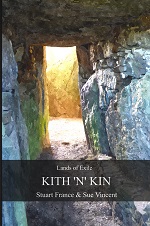
It is a magical place. You are in no doubt of that as you walk along the path to the site. Hoary stones nestle in the hedgerow. Bluebells, those delicate woodland flowers that bloom only in spring, are blooming on the hillside at midsummer, scattered through the grass as if giving warning that here, time holds no sway and to step into the enclosure is to step out of this world’s realm and into another.

Your first sight of Pentre Ifan takes your breath away. I saw it first many years ago, on a day that invited no other visitors… we had the place to ourselves for hours and time to get a feel for this sacred space. And, although many things here may be debated and pondered upon by minds scientific or spiritually inclined, there is no doubt about the sanctity of the site.

It is the gigantic head of a bird that greets you, its beak held aloft by stone as insubstantial as a feather, looking out over the valley. It is not just the stones that ‘get’ you, it is the place itself. Little wonder, when there are so many tales of the Fair Folk being sighted here, especially as the moon rises on a summer night.

Some tales tell that they are red-capped and resemble small soldiers. Others, less forthcoming but more believable, speak of insubstantial beings, impossible to capture but who converse with those rare few who can see them.
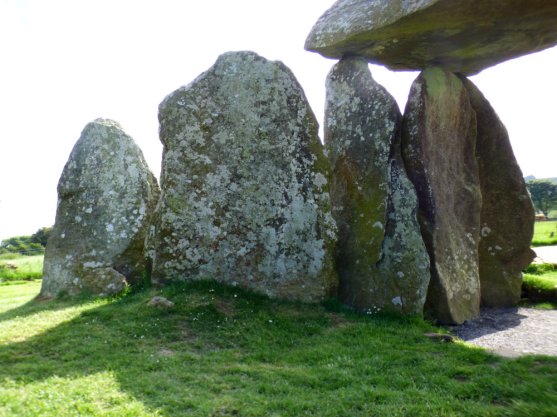
Pentre Ifan was built around six thousand years ago and is the oldest of the tombs we visited on this trip. The site sits within its enclosure still; even though the perimeter stones are largely lost within the edges of the oak wood and the hedgerows, the shape of the space can still be traced. There are all the usual debates over the purpose and construction of the site, but it is always referred to as a tomb. Here, I can see that, though not because of the archaeology. Very few artefacts have been discovered here and no finds to show that it was ever a burial chamber, which, in itself, seems a little odd for a tomb. I wonder if the stones were part of the death rites, rather than a final resting place? Or perhaps the death was more symbolic… a ritual initiation… a re-beginning for the shamans.
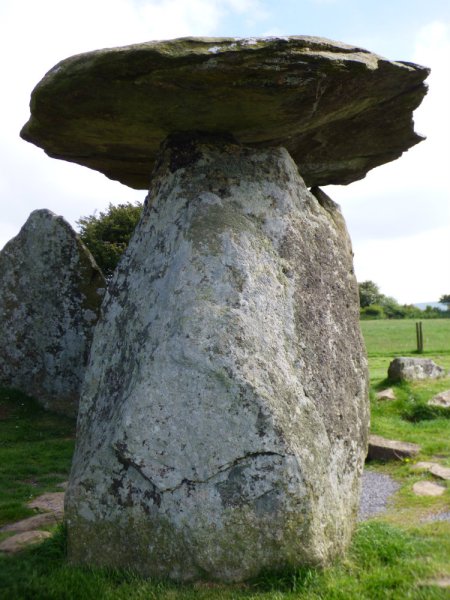
One legend about the place says that it was a druidic college. Pentre Ifan was not always its name either… it was once known as Arthur’s Quoit, Coetan Arthur, like the first site we had visited. But Arthur, as a legend, is a mere babe compared to the age of these stones, and I wonder why the warrior-king who sought the Grail was so often associated with them. Perhaps folk memory remembered something we have now lost and saw in these stones a portal to a different mode of being.
Continue reading at France & Vincent


































 Sue Vincent's Daily Echo