We were up bright and early for the final day of our journey home. We drove once more to Cerne Abbas, finding the village almost deserted and the church just being opened by the old gentleman who is the Keeper of the Key. We wanted to go in and get all the photographs we had not taken on our previous visit, as we had been talking to the Ikon painter, Ikon John. The old gentleman insisted on sharing some local history with us and showed us a couple of things we would never have noticed, like a date carved into a wall outside the church. John Coleman, the icon painter, had told us of another church we now wanted to visit, not far away, and this was to be our next port of call.
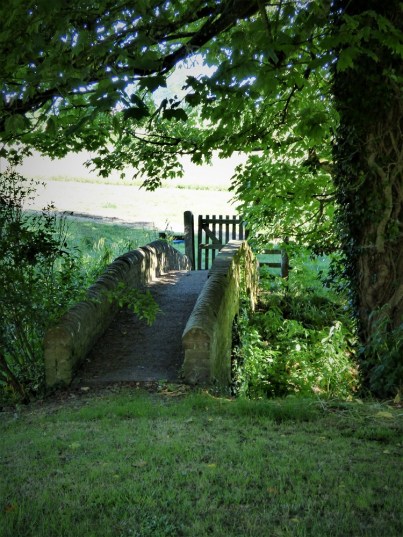
The church of St Edwold, he had told us, is a chapel at Stockwood, ‘just up the road’. It is a redundant church where regular services are no longer held, but which is still a consecrated place, cared for by the Churches Conservation Trust. It proved to be a little tricky to find as it is so small that it is hidden behind a tree in what appears to be someone’s garden. It is also surrounded by a stream and can only be accessed via a tiny stone bridge.
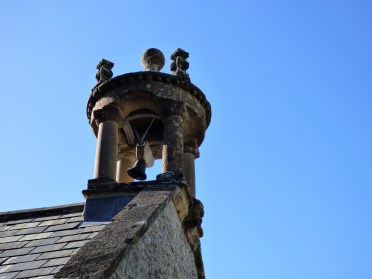
The church is a single-celled building, a mere thirty by twelve feet, topped, incongruously, with a seventeenth century bellcote supported on four pillars and sporting a grotesque mask. This and a handful of gravestones beneath an old yew are the only clue to its presence.
Our reason for visiting was simple… John had told us the story of St Edwold, a member of the Royal House of Mercia who had chosen to become a hermit and found his way to Cerne, long before it became Cerne Abbas. The story told locally says that he was the one for whom the Silver Well was named, when he gave a silver coin to the shepherds by the spring. He lived in harmony with the wild things, over a thousand years ago, long before St Francis of Assisi came to fame for preaching to the birds.
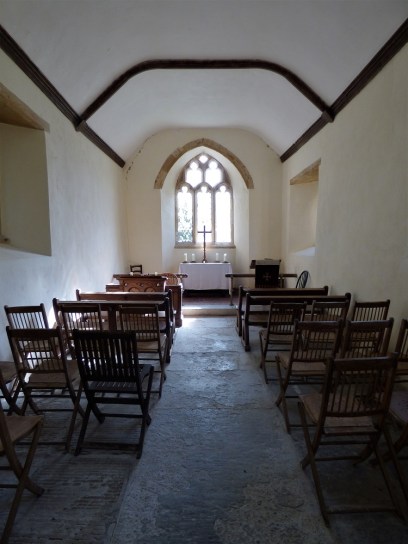
We were told that Edwold had a hermit’s cell at Stockwood but also lived by the Silver Well in Cerne and was much beloved by the local people. After his death, his relics were preserved and were eventually laid to rest in the Abbey Church, now the church of Cerne Abbas. Pilgrims came from far and wide in reverence, but the bones came under threat when the Dane, Canute, plundered the monastery in the eleventh century.
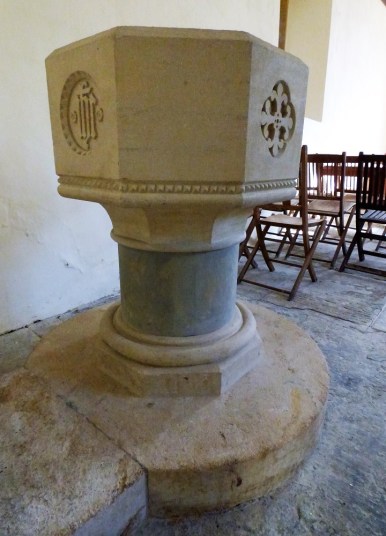
The devout monks removed the relics and they were hidden until the threat had passed. Canute became a benefactor of the monastery, but Edwold’s bones were buried in secret beneath his old hermitage at Stockwood.
Continue reading at France & Vincent

































 Sue Vincent's Daily Echo
Great Photos! Interesting story!
LikeLiked by 1 person
Thank you.
LikeLike
Oh my, the wandering potential… 💜
LikeLike
Boundless…
LikeLiked by 1 person
Here as well. We are fortunate indeed.
LikeLiked by 1 person
💜
LikeLiked by 1 person
So tiny!
LikeLike
It is… very small indeed.
LikeLiked by 1 person