
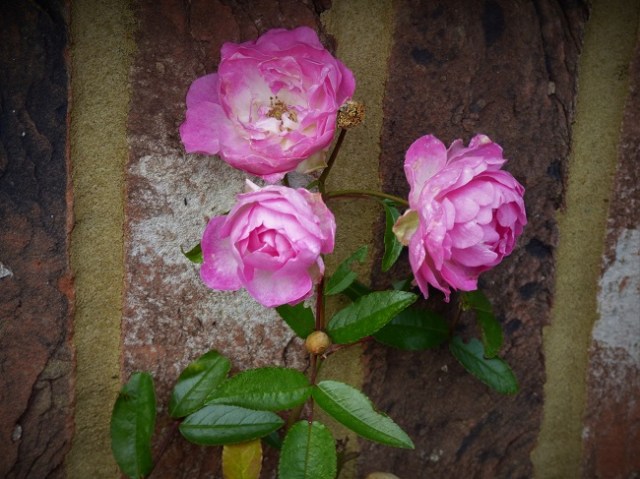
Artwork by deviantART artist Scooterek
Following on from posts One and Two:
“Birds sing after a storm; why shouldn’t people feel as free
to delight in whatever sunlight remains to them?”
Rose Fitzgerald Kennedy
Last spring when we went into lockdown and we were encouraged not to burden our doctors, I did not take my concerns to the surgery… and lost six months of potentially treating a now untreatable cancer. Now we are back in lockdown again, with the unconvincing prospect of everything being alright again once the vaccine has been fully distributed. We might, suggest the government, if enough people have the vaccine, even be able to begin lifting restrictions in mid-March.
At my last appointment on New Year’s Eve, the oncologist gave me three to six months. It is, I know, just a ‘guesstimate’ based on experience. He could be wrong, it might be longer… but it could equally be even less. The thing is, with this type of cancer, the treatments stop working quite suddenly and the tumours grow back quickly. There may be a case for more chemo, but that would be a rough journey without guaranteed results. There may be alternative therapies to try… but they are alternative for a reason and, like mainstream medicines, do not work consistently for everyone. And my heart, which has been constantly beating at least twice its normal speed since the collapse, could now give out at any point between here and the nebulous ‘then’.
March might be a tad too late for me.
And that is just a start on rolling back restrictions. There’s the whole vaccine thing to come into play too. Sufficient doses have been purchased… but not yet delivered. Some need further quality control checks… others are waiting to be put into the vials that are in such short supply. No guarantees appear to be in place about delivery times.
And then you obviously have to wait your turn, based upon pre-determined vulnerability and, one assumes, your perceived usefulness and/or the likelihood of catching and transmitting the virus to the vulnerable. There are nine high-priority groups, covering about thirty million people. The higher group into which you fit, the quicker you will be offered the vaccine, but even with it, you will still be required to wear a face-covering and practise social distancing… because you may still get the virus and may still transmit it to others. The vaccine is not going to mean an instant release from COVID jail.
Just the timescales alone mean that offering the vaccination to a whole population is going to take a while. Then there are the logistics of actually delivering the vaccine and ensuring the right numbers of appointments can be booked, filled and supplied… and getting the estimates on take-up right etc, etc…
But there is a really helpful calculator online that gives you an estimate, based on current predictions of take-up rate and actual vaccinations carried out per day. So, of course, I tried it.
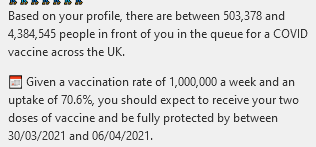
First I put in just my own details, finding that my place in the queue would be somewhere between half a million and four and a half million (roughly) down the line. According to their figures, that would mean I should be vaccinated and ‘fully protected’ some time between the end of March and April. That is also assuming there is only a 70% uptake from a population that has been taught to fear the virus and to believe that the vaccine offers the best way out of this imprisoned lifestyle… and that the vaccine can be delivered on a daily basis in high enough quantities to meet the demand.
Again, the dates mean it will probably come a bit late for me and for the thousands of other terminally ill patients currently facing the prospect of dying without their nearest and dearest able to support them properly… and also for those who are about to lose their loved ones to terminal illnesses without the chance of saying decent goodbyes, which always makes the loss and the grieving so much harder. COVID had already closed all the organised support groups and stopped all the additional therapies offered to help get through these hard months. Too many are having to face this final journey alone… and not everyone is equipped or able to use the various technologies that at least let you see people through a screen. Nor is it quite the same.
But looked at from a purely practical point of view, why waste a vaccine of someone who is dying anyway? Just lock us away in our shielded homes from every joy that makes life worth living… from the hugs, the smiles, the warmth of another human being’s presence, the landscapes and horizons… After all, we will be dead soon and unable to complain.
But I was curious to see why there was such a wide gap in the figures and, being suspicious, reset everything on the calculator except my age to the default positions. I then checked when the vaccine would be offered to a care home worker…. and the difference between that figure and when it would be offered to a family/unpaid carer is stark and horrifyingly illustrates how little family carers are valued by the system. It was about here that I went from simply annoyed to really blowing a fuse…

This same system is saved the cost of the NHS, every non-covid, year by family/unpaid carers. They pick up the slack the system simply could not cope with. There are now an estimated 13.6 million unpaid carers in the UK… many of whom are carers seven days a week, day and night, with minimal breaks or training, often little or no support and no health and safety protection. And those are just the ones we know about. There are many others.
Imagine if the country actually had to pay them for what they do… finding the money for that on top of everything else. And yet, while the care home worker will be ‘fully protected’ by the end of March, the family carer has to wait until the end of September… and who knows what could interrupt the vaccination schedule in those six extra months?
The family carer comes almost nineteen million places behind the paid care home worker in the queue. The only justification for that is that the care home worker may come into contact with other vulnerable people. But what about the mother who cares for the rest of her family… her own children, parents and grandparents, as well as holding down a job? For that is often the case. Or the child who supports physically or mentally challenged parents and does the caring for the elders that they would normally do, on top of being a child themselves? Contact with multiple vulnerable people is not limited to front line workers.
COVID, care and cancer. The relationship between them and how it has been handled is telling. “How a society treats its most vulnerable is always the measure of its humanity.” This quote can be found on the UK government’s website, attributed to one of the UK Ambassadors speaking to the United Nations.
Perhaps we might want to take note…
 Reblogged from Countingducks:









































 Sue Vincent's Daily Echo