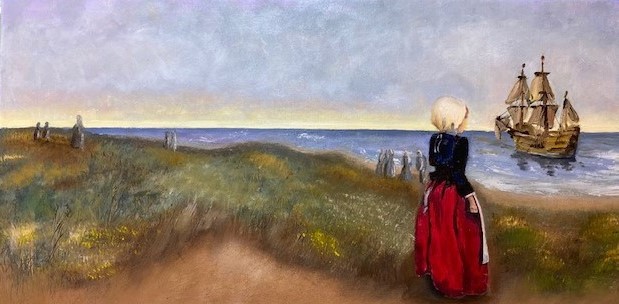
The thin shoulders of the Pilgrim women bore much of the work to ensure the survival and growth of the early Plymouth colony. Despite the vital role these women played, historians and writers of historical fiction have largely ignored their contributions. The Last Pilgrim attempts to capture this.
Growing up in Plymouth, Massachusetts, I was steeped in Pilgrim history. Costumed in period clothing, I portrayed various girls and young women in the weekly reenactments of the Pilgrims’ progresses up Leyden Street. Under the direction of the indomitable Rose Briggs, I learned the goodwife arts of cooking on a hearth, making candles, and the washing, carding, spinning and dying of wool at the Harlow House. Then, after a year of studying for the role, I became one of the first tour guides at the re-creation of the early Pilgrim village at Plimoth Plantation.
I chose to focus on one woman, Mary Allerton Cushman, who was only four years old when she sailed from England. She held the honor of being the Mayflower’s youngest passenger until the birth of Oceanus Hopkins. Mary lived through the entirety of the colony’s history, first as Isaac Allerton’s daughter and then as Thomas Cushman’s wife. She lived to see her 83rd year (1699), as the oldest surviving passenger of the 1620 voyage. She was indeed the last Pilgrim.
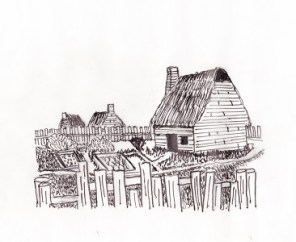
I wrote The Last Pilgrim across the tapestry of Plymouth’s history – its leaders, economy and growth, interactions with the native populations, wars, disease and continuous threats to its survival. I’ve made every effort to stay true to the real events and surroundings.
I took a writer’s license in opening the book in Isaac Allerton’s voice, since Mary was so young – in order to make the unlikely survival of the Mayflower’s passengers and challenges of the colony’s first years more immediate and real. As times passes and Mary grows, the story transitions to Mary’s voice.
Mary’s mother died during the first winter. Only five married women – goodwives – and a few older girls survived to support the forty-one survivors from the Mayflower, as well to care for the children and the baby Oceanus Hopkins. It occurred to me that as the youngest by two years of all the children, Mary might have been overlooked and frequently left to her own devices, without the instruction and care she needed. So I created Mary as a somewhat fractious child.
At that time, a common practice was to put children with other families, so they might grow in godly ways, without the ‘over-love’ of their parents. While boys were usually ‘put out,’ it seemed natural to me that Isaac Allerton, lacking a wife but with two other young children, might place Mary in the Bradford home to receive the instruction and discipline she lacked.
As for her marriage to Thomas Cushman, I decided to introduce an element of romance and love. So many of the Pilgrim marriages were based on immediate need and practicality, but Mary must have known Thomas for a long time before they married. I took the liberty of continuing her forthright nature in their relationship.
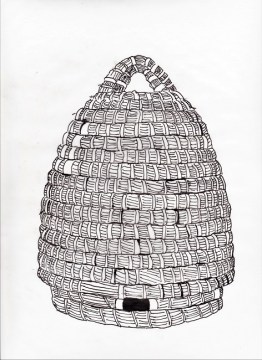
Another elaboration entails the acceptance into the Mary and Thomas Cushman’s household of a young Wampanoag boy, following King Philip’s War. This was not such a stretch since after the war, some of the orphaned native children were taken in as servants. I wondered how these children might have been treated. Knowing Thomas Cushman was a man of God, I decided that the child Samuel would grow up in a caring household.
The treatment of the native populations by the settlers in New England and New York was reprehensible to our way of thinking and sensitivities, and I found most of what I discovered about the Wampanoags and what happened to them ineffably sad and cruel. Nevertheless, my objective was not to rewrite history through modern eyes, and I therefore tried to maintain a balance in telling of the Pilgrims’ interaction with the tribes surrounding them. To any I might have offended, please understand this.
Disease and, above all, childbirth ranked as the major causes of death in 17th century New England. I feel fortunate to have found The Midwives Book, written by a 17th century midwife, Jane Sharpe. This allowed me to describe childbirth, and the role of the Plymouth midwife Bridget Fuller, in detail appropriate for the time. My husband, an obstetrician-gynecologist, was amazed at the correct procedures and detailed anatomy described by Mistress Sharp. With regard to herbal remedies and the treatment of injuries, I depended on many online resources and books. My introduction of laudanum to the Plymouth colony might have been a little premature. While its properties had been known for centuries, it wasn’t until the 1660s that English physician Thomas Sydenham marketed it as a cure-all.
By the way, the Pilgrims were not Puritans but a more severe offshoot of the Puritan sect called Separatists. They were not called Pilgrims until William Bradford, the second governor of the colony, called the Plymouth colonists ‘saints and pilgrimes’ in his book, Of Plimoth Plantation. The manuscript for his book was lost for two centuries and was only published in 1856, when the name Pilgrim was finally given to these intrepid people.
I hope my readers enjoy learning about the lives of Isaac Allerton, Mary Allerton Cushman and her family, and especially the women of the Plymouth colony as much as I did in writing about them.
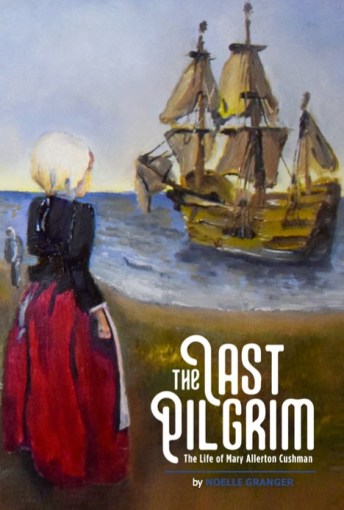
The Last Pilgrim
by Noelle Granger
The Last Pilgrim: The Life of Mary Allerton Cushman captures and celebrates the grit and struggle of the Pilgrim women, who stepped off the Mayflower in the winter of 1620 to an unknown world – one filled with hardship, danger and death. The Plymouth Colony would not have survived without them.
Mary Allerton Cushman was the last surviving passenger of the Mayflower, dying at age 88 in 1699. Her unusually long life and her relationships with important men – her father, Isaac Allerton and her husband, Thomas Cushman – gave her a front row seat to the history of the Plymouth Colony from its beginnings as the first permanent settlement in New England to when it became part of the Massachusetts Bay Colony in 1691.
Mary’s life is set against the real background of that time. The Last Pilgrim begins from her father’s point of view – she was, after all, only four when she descended into the small living space below deck on the Mayflower – but gradually assumes Mary’s voice, as the colony achieves a foothold in the New England’s rocky soil. Hers is a story of survival – the daily, back-breaking work to ensure food on the table, the unsettled interactions with local native tribes, the dangers of wild animals, and the endless challenges of injury, disease and death.
What was a woman’s life like in the Plymouth Colony? The Last Pilgrim will tell you.
Now available via Amazon
 About the Author
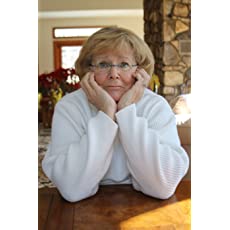
N.A. GRANGER is a Professor Emerita at the University of North Carolina School of Medicine. After forty years of research and teaching undergraduates and medical students, plus earning her EMT licence, she decided to turn her hand to writing and created the Rhe Brewster Mystery Series.
Having grown up in Plymouth, Massachusetts, the author worked as one of the first reenactors at Plimoth Plantation when it opened, which is where the idea of writing a book to honor the Pilgrim women took seed. This stayed with her over the years, resulting in The Last Pilgrim, the story of Mary Allerton Cushman, the oldest surviving passenger on the Mayflower.
The author has also written for Coastal Living and Sea Level magazines and several times for the Bella Online Literary Review. You can find more of her writing and musings on her website: saylingaway.wordpress.com and on her author site: na-granger.com. She lives in Chapel Hill, North Carolina, with her husband and a Maine coon cat who blogs, and she spends a portion of every summer in Plymouth and in Maine, researching for her books.
Find and follow Noelle
Sayling Away Blog Twitter @rhebrewster
Goodreads Facebook Amazon author page
Other Books by N. A. Granger
Click images or titles to go to Amazon
 Death in a Red Canvas Chair
On a warm fall afternoon, the sweet odor of decay distracts Rhe Brewster from the noise and fury of her son’s soccer game. She’s a tall, attractive emergency room nurse with a type A personality, a nose for investigation and a yen for adrenalin. This time her nose leads her to the wet, decaying body of a young woman, sitting in a red canvas chair at the far end of the soccer field. Her first call is to her brother-in-law, Sam Brewster, who is Sheriff of Pequod, the coastal Maine town where she lives. Sam and Rhe’s best friend Paulette, Pequod’s answer to Betty Crocker, are her biggest sources of encouragement when Rhe decides to help the police find the killer. Her discovery that the victim is a student at the local college is initially thwarted by an old frenemy, Bitsy Wellington, the Dean of Students. Will, Rhe’s husband and a professor at the same college, resents her involvement in anything other than being a wife and mother and must be manipulated by Rhe so that she can follow her instincts. Rhe’s interviews of college students leads her to a young woman who had been recruited the previous year to be an escort on a Caribbean cruise ship, and Rhe trails her to a high class brothel at a local seaside estate. The man behind the cruise ship escort service and the brothel is the owner of a chain of mortuaries and is related to the dead student. When Rhe happens on the murder of a young hospital employee who also works for the mortuary chain, she becomes too much of a threat to the owner’s multiple enterprises. She is kidnapped by two of his thugs and is left to die in a mortuary freezer. In the freezer she finds frozen body parts, which are linked to a transplantation program at her hospital. Despite all the twists and turns in her investigation, Rhe ultimately understands why the student was killed and who did it. And she solves the riddle of why the body was placed in the red canvas chair on the soccer field.
Read a review by Irene A. Waters
Death in a Dacron Sail 
On an icy February morning, Rhe Brewster, an emergency room nurse with a nose for investigation, is called to a dock in the harbor of the small coastal town of Pequod, Maine. A consultant to the Pequod Police Department, Rhe is responding to a discovery by one of the local lobstermen: a finger caught in one of his traps. The subsequent finding of the body of a young girl, wrapped in a sail and without a finger, sends the investigation into high gear and reveals the existence of three other missing girls, as well as a childhood friend of Rhe’s. Battered by vitriolic objections from her husband about her work, the pregnant Rhe continues her search, dealing with unexpected obstacles and ultimately facing the challenge of crossing an enormous frozen bog to save herself. Will she survive? Is the kidnapper someone she knows? In Death in a Dacron Sail, the second book in the Rhe Brewster mystery series, Rhe’s nerves and endurance are put to the test as the kidnapper’s action hits close to home.
Read a review by author Luccia Gray
 Death by Pumpkin
At the annual Pumpkin Festival in the coastal town of Pequod, Maine, Rhe Brewster, an ER nurse and Police Department consultant, responds to screams at the site of the Pumpkin Drop. Racing to the scene, where a one-ton pumpkin was dropped from a crane to crush an old car, Rhe and her brother-in-law, Sam, Pequod’s Chief of Police, discover the car contains the smashed remains of a man’s body. After the police confirm the death as a homicide, Rhe embarks on a statewide search to identify the victim and find the killer. During the course of the emotional investigation, she survives an attempt on her life at 10,000 feet, endures the trauma of witnessing the murder of an old flame, and escapes an arson attack on her family’s home. There is clearly a sociopath on the loose who is gunning for Rhe and leaving bodies behind. With Sam unable to offer his usual support due to an election recall and a needy new girlfriend, Rhe realizes that the only way to stop the insanity is to risk it all and play the killer’s game.
Maine’s most tenacious sleuth is back, this time to confront a menace that threatens to destroy her life and those closest to her. The latest installment of the Rhe Brewster Mystery Series, Death by Pumpkin, is a murder mystery and thriller that tests the limits of Rhe’s strength and resolve like never before.
Read a review by Kate Loveton
 Death in a Mudflat
The fourth installment in the popular series that takes readers on a suspenseful ride through the picturesque small town of Pequod, Maine.
Death in a Mudflat follows fearless detective, ER Nurse and devoted mother Rhe Brewster as she is thrown into a new case – and this one gets a bit muddy. When an idyllic seaside wedding is suddenly interrupted by the grotesque sight of a decaying human arm poking out of the tidal mud, Rhe finds herself trying to solve a mystery full of duplicity, drugs, and of course, murder.
With her best friend Paulette and her main man Sam, the Chief of Police, Rhe seeks to solve the puzzle of the body found in the muck while also working with the FBI to identify the source of shipments of tainted heroin flooding the local campus and community. Maine’s opioid crisis has hit the town hard, with an escalating number of overdoses. More murders are uncovered, testing Rhe’s detective skills and steely resolve. While she follows the clues, Rhe encounters some sinister inhabitants of Pequod’s underbelly, including a practitioner of the Dark Arts, a hydra-headed crime gang, and an embittered, unhinged lobsterman with an axe to grind and nothing to lose. In her relentless drive to solve the crimes, Rhe narrowly escapes a watery grave, trades blows with Russian goons, and unknowingly prompts Paulette to put her life on the line in an attempt to catch a murderer in the act.
“Death in a Mudflat is a hugely enjoyable, fast-paced mystery with excellent attention to forensic and scientific detail.” –Christoph Fischer, author of The Body in the Snow, Black Eagle Inn, and Time to Let Go

Launching a book?
If you are a writer, artist or photographer…If you have a poem, story or memoirs to share… If you have a book to promote, a character to introduce, an exhibition or event to publicise… If you have advice for writers, artists or bloggers…
If you would like to be my guest, please read the guidelines and get in touch!
Press a button or two to share... go on, make my day :)

 Welcome to this week’s #writephoto prompt!

 An invitation to writephoto writers…

 Family sit on the bank,
 G. Michael Vasey, with whom

 the guardians pine
 I sat on the grass





































 Sue Vincent's Daily Echo