Why does a tiny village like Kilpeck hold such a fabulous church? Because once it wasn’t a small, forgotten place, but the seat of nobility and, according to the information board, parts of the castle still remained. We left the church by the straight, modern path that crosses the remains of the moat and leads to the castle. The old path through the churchyard to the church door zigzags like the Norman decoration of the arches… the devil and unquiet ghosts, it was believed, can only follow a straight path. It felt as if we were the ghosts in this place.
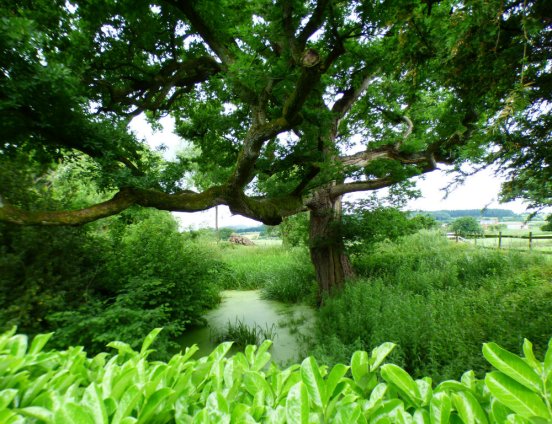
The sky was darkening, casting threatening shadows over the land and turning the damp greenery too vivid for reality. The rain had brought impossible colour to the summer landscape. Our first glimpse of the castle showed us the remains of a large, steep-sided mound with the jagged and broken teeth of crumbling walls as its crown. Little remains of the stonework, but the earthworks are impressive enough.

The first known ‘castle’ on the site was a motte and bailey topped by a timber structure. It was built around 1090 by William Fitz Norman de la Mare, who was given the lands by William the Conqueror. The area was then known as Archenfield and the castle was to be an administrative centre. The timber structure was later replaced by a stone keep of which little now remains.
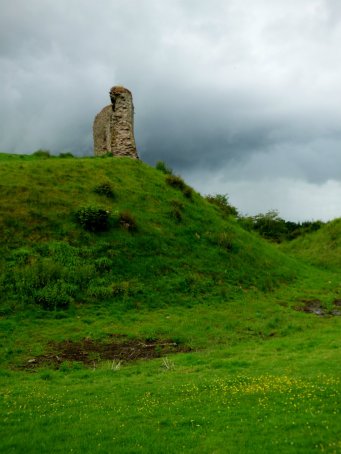
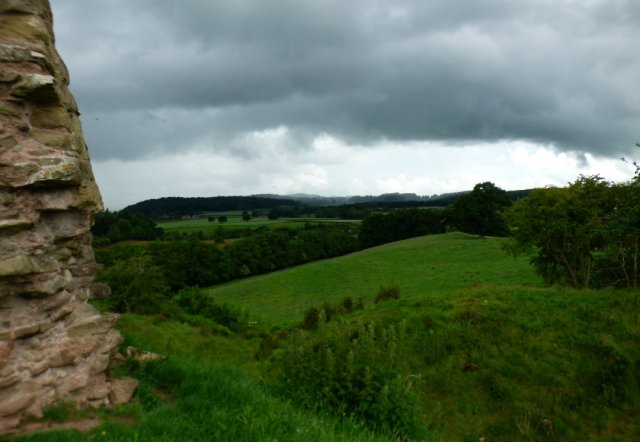
The earthworks are still impressive though and from the summit, not only can you see for miles, but you can still see the depth of the ditches and easily defensible height of the motte, with its steep drop into the river valley below.
Continue reading at France & Vincent









































 Sue Vincent's Daily Echo