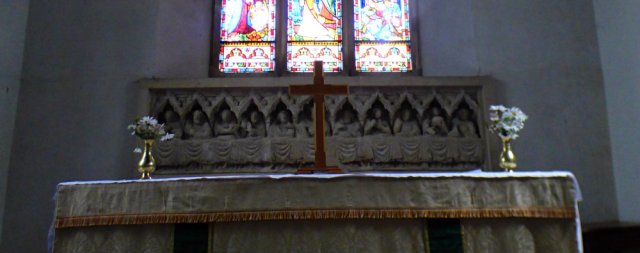
 Behind the altar of the church at Somerton is a remarkable reredos, carved in high relief. It would be easy to overlook from a distance, but it repays a much closer inspection. It is a depiction of the Last Supper unlike any other I have seen, dating back seven hundred years, to the fourteenth century, and it is a fascinating artistic survival from this time.
The reredos is in superb condition for its age. In places you can still see the colours of the original, medieval pigments used to paint the carving. One reason for this is because, for centuries, the reredos was hidden away to preserve it from the Puritanical forces of Cromwell and his troops and was only reinstated in 1822. There were originally thirteen figures, though only eleven are now immediately apparent… and therein lies a tale.

“Now there was leaning on Jesus’ bosom one of his disciples, whom Jesus loved. Simon Peter therefore beckoned to him, that he should ask who it should be of whom he spake. He then lying on Jesus’ breast saith unto him, Lord, who is it? Jesus answered, He it is, to whom I shall give a sop, when I have dipped it. And when he had dipped the sop, he gave it to Judas Iscariot, the son of Simon. And after the sop Satan entered into him. Then said Jesus unto him, That thou doest, do quickly.” John 13 KJV.
The ‘beloved disciple’ leans upon Jesus’ breast in the manner told in the Gospels. Only one figure is severely damaged…almost obliterated… and that is the figure of Judas Iscariot. Scarred stone remains where once he knelt before Jesus. The image suggests that this may have been the moment when Jesus dipped the sop into the wine to indicate his betrayer… the moment when He set in motion the events which led to the inevitability of the Crucifixion and Resurrection. Reading the account in the biblical texts, there is no blame from Jesus laid upon Judas. Perhaps He saw him as the necessary instrument of destiny.
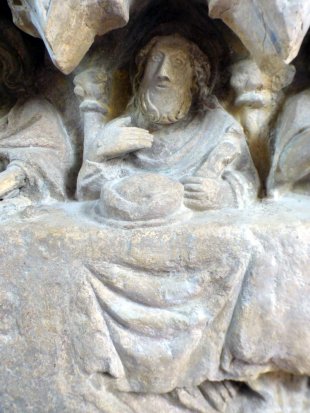
Indeed, there seems to be more censure in His words to Peter when “Peter said unto him, Lord, why cannot I follow thee now? I will lay down my life for thy sake. Jesus answered him, Wilt thou lay down thy life for my sake? Verily, verily, I say unto thee, The cock shall not crow, till thou hast denied me thrice.” John 13 KJV.
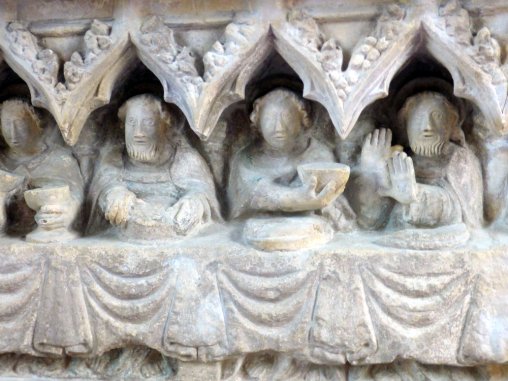
Even so, Jesus and the Apostles are not portrayed in the stiff symbolic postures we are used to seeing. There is no sense of this being a ‘last’ supper, a solemn communal act before the events of the Crucifixion. We seem to get a glimpse of a party…of friends enjoying time together, before they knew that destiny was about to strike.
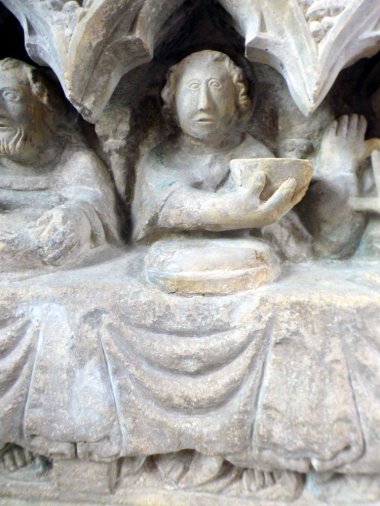
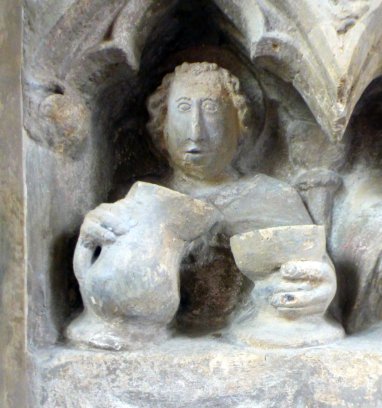
Each of the disciples is individually carved and portrayed as a person… a human being with feelings, tastes and habits of their own. These are not just static characters from a holy book, they are people… fallible human beings, just like those in the congregation. They, who chose a path of faith and devotion, serve as a reminder and example that all the faithful can serve the Light in their own way. 
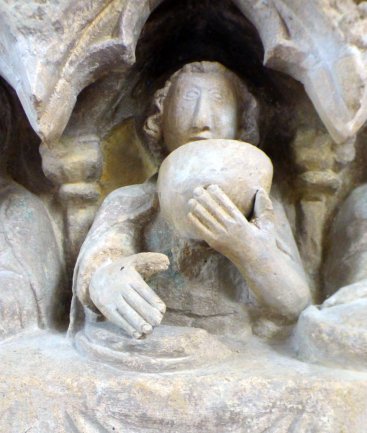
One refuses the cup that is offered to him. Not only can it be seen as an amusing refusal of yet another drink, it is also a direct contradiction of the symbolic Cup that is accepted by Jesus. “He went away again the second time, and prayed, saying, O my Father, if this cup may not pass away from me, except I drink it, thy will be done.” Matthew 26 KJV.

Others are deep in conversation… or dayrdreaming…
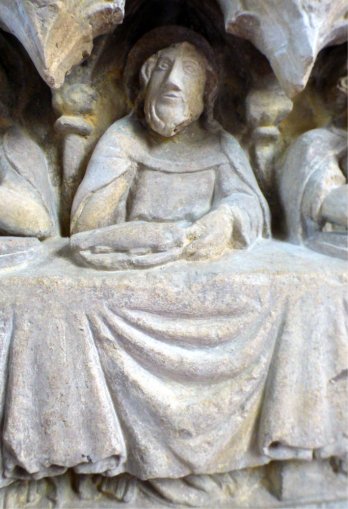
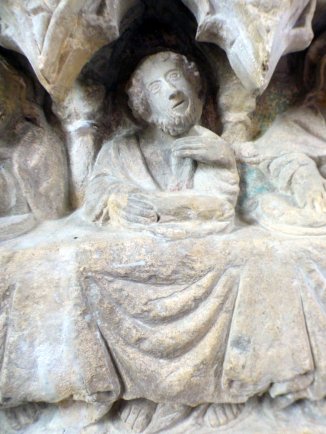
or lost in their thoughts…
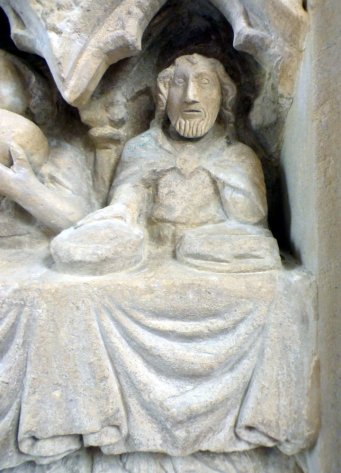
It is a superb piece of art in its own right, let alone for the theological symbolism it may hold. It also makes you wonder if the sculptor modelled the disciples on living people, on his friends, family or local notables, for there is a reality and life to these figures that seems to transcend simple imagination.





























 Sue Vincent's Daily Echo
Really fascinating and great to see the sculpted faces up close. The style almost seems modern to me.
LikeLiked by 1 person
It does.. very simple, but hugely expressive…and quite amusing in places. You would never put it at seven hundred years old, would you?
LikeLike
It’s a lovely piece of art, and with so much meaning 🙂
LikeLiked by 1 person
It is a really stunning piece 🙂
LikeLiked by 1 person
Fascinating, Sue.
LikeLiked by 1 person
It is one of the wonderful carvings I’ve seen, Mary.
LikeLiked by 1 person
This is amazing! I love stumbling upon things like this. Thanks for sharing the pictures. I love the close ups of the individual figures.
LikeLiked by 1 person
It is only when yyou get close that you see the faces and body language properly…and they are priceless 🙂
LikeLiked by 1 person
Reblogged this on Die Erste Eslarner Zeitung – Aus und über Eslarn, sowie die bayerisch-tschechische Region!.
LikeLiked by 1 person
Wonderful images and a wonderful description. Thank you. Have a great and blessed week ahead. Michael
LikeLike
Thanks, Michael. It is such a fabulous thing to see 🙂
LikeLike
Such an amazing piece. I can’t stop staring at the faces.
LikeLiked by 1 person
Generations of a single family…
LikeLiked by 1 person
The hands are so expressive! Amazing is correct. (K)
LikeLike
Yes, it was the hands…and the face of the guy in the last picture…that got me too.
LikeLiked by 1 person
It enlightens us to the fact people were much like us in those days. Basically, we haven’t changed all that much. 🙂 — Suzanne
LikeLiked by 1 person
I ahree with you there, Suzanne. People are and have always been ‘just’ people. 🙂
LikeLiked by 1 person
The guy in the last picture, his expression is priceless … who drank all the wine?
LikeLiked by 1 person
I thought so too… the most expressive of the lot. I wish they’d left Judas in the picture though… the story could not have happened without him.
LikeLiked by 1 person
Reblogged this on Stuart France.
LikeLiked by 1 person
How fascinating, Sue. I must look and see where Somerton is.
LikeLike
This Somerton is in Oxfordshire, not far from the motorway, but at the other side of the country, I believe, to where you will be.
LikeLike