
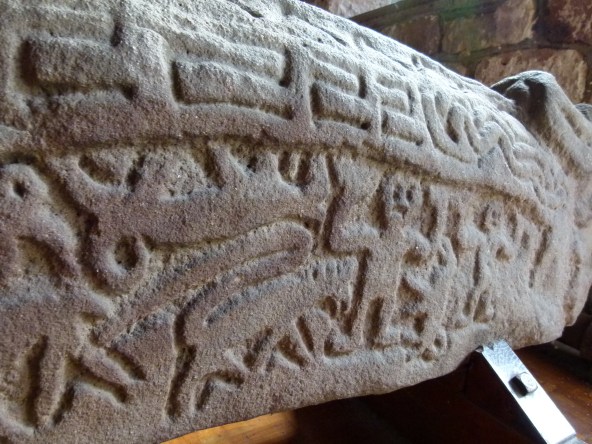
Image: Sue Vincent
Sue has been kind enough to invite me to write a blog post to celebrate the publication of a short collection of stories. The collection is called Tales from the Northlands, and is, as you might expect, about things Nordic.
The stories came about because for the last couple of years, on and off, I’ve been writing a historical fantasy saga set in an alternate ninth century on the north-western fringe of Europe. I have been living and breathing ninth century customs, language, history and legend, and it has made me acutely aware of some of the difficulties involved in writing historical fiction, one of them being the language—using a vocabulary that isn’t full of modern imports.
English has changed drastically from Old English based on Old Norse and Anglo-Saxon, the Latin/French-influenced Middle English, to our melting pot of Modern English with its additions from Greek and the languages of the former colonies. Keeping the language of my story coherent has been a challenge.
However, I have a big advantage in that I was brought up in the West Riding of Yorkshire where folk speak a dialect based on Old Norse. At the time, I understood very little of it, being of Irish stock and speaking a different variety of English at home. Since moving away, I’ve made a nostalgic study of Yorkshire dialect and used many of the words in my saga.
Of all of us, my dad had the most difficulty understanding the natives, and until the Pakistanis started to arrive in the 1970s he spoke to few people outside our Irish community. I remember pestering him to buy me a hamster. We’d had one, Custard, donated by a school friend, and it died. My dad promised to replace Custard and went down to the pet shop in the village a mile away at the bottom of the hill. I was hoping he’d come home with a Custard II, but he said he’d have to go back to collect it because he needed something to bring it home in. He went down the cellar and spent the rest of his Saturday hammering and sawing. When he emerged, he had a thing like a scaled down cattle crate, the top held down with rope, and filled with straw. The crate sat in the hallway until the following Saturday. My mother would give it murderous looks from time to time, and I was too non-plussed to ask what was going on.
Saturday arrived, my dad picked up his crate, proud as punch at his handiwork, and set off down to the village. About an hour later he was back and put the crate down in the hallway. The crate rocked back and forth, shedding straw as the occupant threw itself about inside. We all stood back as my dad undid the lid, opened it, and the biggest guinea pig I have ever seen shot out with an irate squeal. He was speckled grey like a wild boar and as bristly. I named him Napoleon and was ecstatic, until I was given orders by my mother that Napoleon was to be removed immediately to the school pet’s corner in the sport’s field where he would ‘be happier’.
When asked why he hadn’t got a hamster, my dad explained that he’d asked for one, but there must have been a misunderstanding. The pet shop man, who spoke pure Yorkshire and very little Standard English, had nodded (true Yorkshire folk don’t speak if a silent nod will do) and gone out to the back room where the ‘bastes’ were kept. He’d come back with this thing like a wild piglet in his hands saying it was “a wick ’un” (Yorkshire speak for “a lively little beggar”). My dad said he didn’t want a Wickan he wanted a hamster but the pet shop man wasn’t having any of it, showed off the prowess of the “wick ’un” and how difficult it was to keep the critter from rampaging off the top of the counter. That must have been the only rodent he could lay his hands on at the time. My dad, not being one to start an argument he didn’t stand a chance of winning, or even being able to play an active part in, gave up and went home to build a cattle crate.
Anyway, that short trip down memory lane was by way of explaining my attachment to the north and northern folk. If you’re up for a raid into Viking Sweden and Anglo-Saxon Northumbria, I have just the thing. I won’t clutter up Sue’s blog with an excerpt. That’s what the Kindle look inside feature is for.
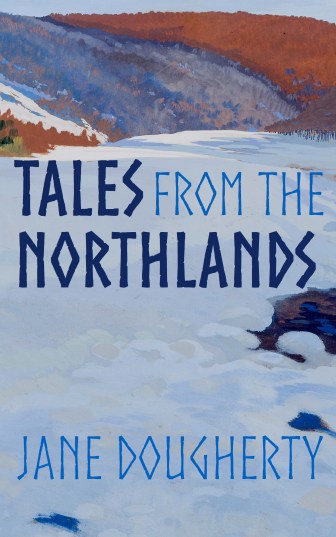
Tales from the Northlands
Find Jane
Goodreads Blog Book website Facebook
and Twitter@MJDougherty33
 About the author
Jane Dougherty writes stories where the magical and the apocalyptic mesh, where horror and romance meet, and the real and the imaginary cohabit on the same page.
She grew up in an Irish emigrant community in Yorkshire’s Brontë country. Her first job was with a wine merchant in London, and despite the obvious attraction of riotous tasting parties and getting paid for drinking lots of wine, she moved on to Paris where she fell under a powerful enchantment and has been wandering from French pillar to French post ever since.
Her postal address might be in South West France, but she’s rarely at home, much preferring the strange world she inhabits, where she writes the rules, creates the landscapes, the people and the magic. She also bends the rules of physics, plays Cupid and hands out happy endings to deserving characters.
Jane shares her home with husband, children, a big bad dog, and a motley crew of cats.
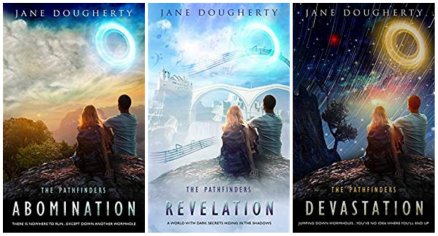
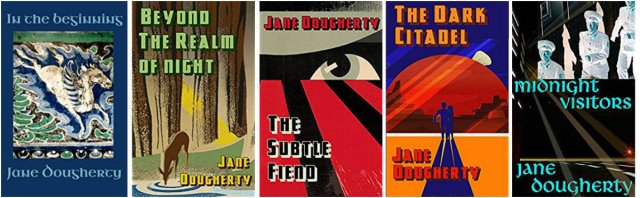
Click title or image to go to Amazon
A rickety wooden escalator carries a child from his safe, comfortable world of department store Christmas glitter to the midnight zone inhabited by legendary nightmares.
On the windswept east coast of Northumbria, a Saxon thegn avenges his murdered chief by selling his village to the sea wolves, and a ruthless war leader prepares for battle, gloating over the blood dream sent him by the wicce.
In Viking Sverige, Jussi and Solveig plan a future juggling bride price, parental expectations and the knarr they have yet to acquire, but their future falls beneath the shadow of the mountain.
Antar seems like the answer to Inna’s dream of escaping the bleak steading on the fjord, but her father and his chosen son-in-law have other ideas.
What links these tales is the North Sea that beats the coast, brings the cold and the long ships, laps the winter nights in snow, when the wind howls stories of trolls and giants. It brings the herring, the sea mews and the grey seals, and it joins a people with the same vision of the world—harsh, vivid and full of magic.


















 Sue Vincent's Daily Echo
Thanks for the invitation, Sue 🙂
LikeLike
My pleasure, Jane 🙂
LikeLiked by 1 person
Reblogged this on Jane Dougherty Writes and commented:
Sue Vincent invited me to her blog. It turned into a nostalgia fest.
LikeLiked by 1 person
Jane, your books sound very intriguing. I will look for them on Amazon. However, I wonder if I will have trouble understanding the Norse words. Do you clarify their English meaning in the story?
LikeLiked by 1 person
Hi Lyn. The Norse words I’ve used, the ones that are still current in Yorkshire dialect are all self-evident, no need for a glossary. Otherwise, in the stories set in the Northlands, I try to only use words that have their roots in Old English unless there’s no alternative. For example I would use follower rather than disciple, healer rather than physician, outlander rather than foreigner. They’re all English words, but date back to pre-Norman times.
LikeLiked by 1 person
Jane, did you ever read Hild? If no, I guarantee you’d love it. I’d send a copy but I got mine at the library, do read it.
LikeLiked by 1 person
I haven’t, but I’ll look it up right away.
LikeLike
To say I am a fan of Jane, to say I am someone who admires her greatly, to say I hold her in high esteem, to say her work is often sublime, all that and more. She is a true inspiration to others here on WP Land and even if she were not so talented she is a genuinely lovely human being and a bright and inspirational spirit. But the fact that she IS so darn talented motivates all of us, though we could never quite inhabit the magic of her mind I truly believe she’s of the faye, but either way I have grown in love with her work and cherish her friendship dearly, so glad she is being given a little highlight for all that she does illuminating the creative muses of us all. She cannot be replaced.
LikeLiked by 1 person
That is a beautiful tribute 🙂
LikeLiked by 1 person
Well, this is where I hide my blushes, back away quietly and pull the curtains tight closed behind me. To think that I’ve made such an impression is reward enough. Thanks so much, Candice 🙂
LikeLiked by 1 person
Reblogged this on Die Erste Eslarner Zeitung – Aus und über Eslarn, sowie die bayerisch-tschechische Region!.
LikeLike
Thank you 🙂
LikeLike
Jane is one of my favorites. I am sure this collection will not disappoint.
LikeLiked by 2 people
Thank you, Bernadette! They are stories for anyone who enjoys the darkness and harshness of thee early medieval period.
LikeLiked by 2 people
Maybe you would want to share a snippet of one of the stories at the Senior Salon?
LikeLiked by 1 person
I’ll do that, Bernadette. Thanks for the invitation 🙂
LikeLiked by 1 person
Love this post and the part about the guinea pig. Belonging to Orkney and married to Becca who hales from Yorkshire we have realised that a lot of our words are similar. Definitely linked by old Norse. Looking forward to reading the tales.
LikeLiked by 2 people
Thanks Adèle 🙂 Yorkshire is riddled with Old Norse, and the Shetland and Orkney dialects too, as I discovered when I was researching for my epic saga set in the North Sea. To foreigners, the Yorkshire dialect is impenetrable!
LikeLiked by 2 people
Foreigners including anyone outside the borders of God’s Own County? 😉
LikeLike
Well, they are foreigners, aren’t they? Yorkshire is a pretty special place, and the West Riding is the most special of all.
LikeLike
You know I am going to agree on all points there 😉
LikeLiked by 1 person
I’d have been astonished if you’d disagreed.
LikeLike
It would be treason 😉
LikeLike
By ‘eck it would an’all.
LikeLike
🙂
LikeLiked by 1 person
I find it wonderful and people couldn’t understand me either when I came to the big mainland. To my ears they sounded too loud and coarse after the soft accent of the Orcadians.
LikeLike
I still get misunderstood here in the deep south… and then again when I go home 😦
LikeLiked by 1 person
Thats exactly it Sue, when I go to Dublin, I end up with a Dublin accent and when I go home to Orkney my accent which I say is my true voice, comes back strong.
LikeLike
I find it is the other way round… I am more northern in the south. Self defence, perhaps? 😉
LikeLiked by 1 person
I don’t know the isles at all, but I’ve heard the accents of the western islanders and thought how much more Irish than lowland Scots they sounded. There is a great mix of cultures in your parts.
LikeLiked by 2 people
There is, the Western isles also have the gaelic which is similar to Irish but my Mam said there were a few small difference.
LikeLiked by 1 person
There are differences, but it’s basically the same language. The people of the isles have a much softer accent though than the mainlanders.
LikeLiked by 2 people
Reblogged this on firefly465.
LikeLiked by 2 people
And thank you for reblogging 🙂
LikeLiked by 2 people
my pleasure 🙂
LikeLiked by 2 people
Reblogged this on Don Massenzio's Blog and commented:
Enjoy this guest post by author Jane Dougherty couresy of Sue Vincent’s blog
LikeLiked by 1 person
Thank you Don—always so generous 🙂
LikeLiked by 2 people
My pleasure
LikeLiked by 2 people
A great post from Jane – I do love her writing 🙂 And the guinea pig story was wonderful!
LikeLike
It was, wasn’t it? 🙂
LikeLiked by 2 people
Absolutely!
LikeLiked by 1 person
Thanks Helen! My dad never got used to the language. He did eventually get me another hamster though, and Napoleon got himself a lady friend called Candy 🙂
LikeLiked by 2 people
Haha well, it all turned out well in the end then 🙂 I seriously love that story though, your poor dad with his big crate. Did Napoleon and Candy live happily ever after?
LikeLiked by 1 person
I’m afraid not. That’s another story though; one of the less happy aspects of growing up Irish Catholic in Methodist Yorkshire.
LikeLiked by 2 people
Ah well, I’m sorry to hear that. I suppose not all romances have a happy ending.
LikeLiked by 1 person
Napoleon and Candy were very happy. They had two beautiful boys, Caesar and Nelson, and they lived with a colony of very well-behaved rabbits. It was one of the local under-achievers who broke into the school one weekend, let out all the animals and set his dog on them. The caretaker found them scattered all over the playing field.
LikeLiked by 1 person
Oh that’s so very sad. Why are people so awful? I’ll never understand.
LikeLiked by 1 person
We got quite a lot of abuse and physical violence. But killing the primary school pets like that was awful. That’s why I hate the way people are encouraged to keep their religious and cultural differences. It just produces hatred. If we want to get along together we have to start acting as a single group of humanity not paddling our own daft little canoes.
LikeLiked by 2 people
Yes, so agree – wouldn’t it be great if we could focus on our similarities, rather than our differences?
LikeLike
Amen to that.
LikeLiked by 1 person
It’s the only way to survive intact.
LikeLiked by 2 people
Indeed.
LikeLiked by 2 people
What a wonderful story 😀 … that’s something my father would’ve probably done too.
LikeLiked by 1 person
I have a feeling fathers are responsible for most pets introduced into households and it’s mothers who end up cleaning out the cat tray/hamster cage/guinea pig compound 🙂
LikeLike
Or being left with the leftover dogs and aquaria… 😉
LikeLike
and the vet’s bills…
LikeLike
but of course…
LikeLiked by 1 person
Reblogged this on The Owl Lady.
LikeLiked by 1 person