
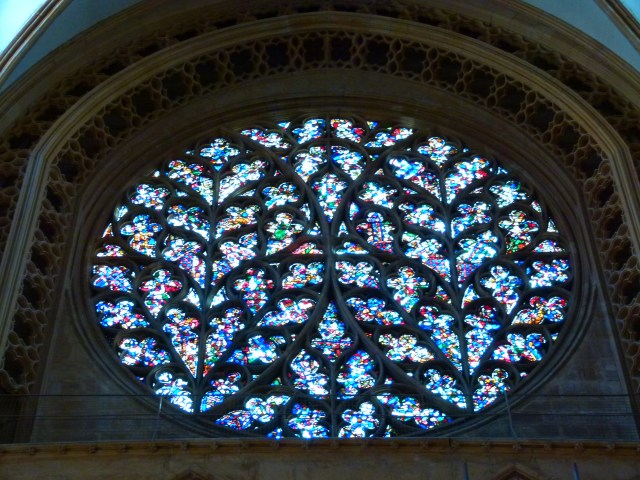
One of the things that have struck home over the past few years, wandering around the churches of Britain, is just how much we learn and understand from stories and images. The record held in these ancient places goes back over a thousand years, with artefacts much, much older preserved in many of them. And these are not random old buildings, but all aligned with a single tradition, a single faith, a single story that the builders, artisans and holders of the lore saw as paramount.

Painted walls, carved stone and wood, stained glass… these were marvels of media that recounted the biblical story for all with eyes to see. At a time when books were hand-drawn and precious, the masses untutored, unable to read or follow the Latin of the service, these images were the key to understanding. In many churches there are older, pre-Christian artefacts. Were they a remnant of the desire to convert almost through stealth or a genuine acknowledgement of the sacredness of the older pagan faith? That is not impossible given Pope Gregory’s instructions to Mellitus in the 6th century Mission, “Tell Augustine that he should be no means destroy the temples of the gods but rather the idols within those temples. Let him, after he has purified them with holy water, place altars and relics of the saints in them. For, if those temples are well built, they should be converted from the worship of demons to the service of the true God. Thus, seeing that their places of worship are not destroyed, the people will banish error from their hearts and come to places familiar and dear to them in acknowledgement and worship of the true God.” The whole letter is revealing.
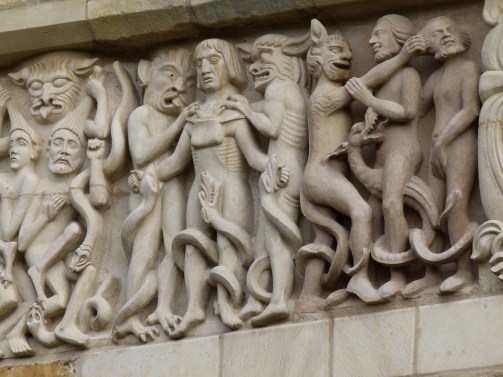
It is fascinating to see how the emphasis of the story has evolved and shifted to suit the needs of the prevalent authorities, secular and religious, and how thought has been subtly directed. Many of the oldest churches, particularly in areas where Celtic Christianity was prevalent, seem to focus simply on a gentle faith not dissimilar to some of the older tales, and we can trace many of the early stories of the saints back to pre-Christian deities, adopted and absorbed into the new story. Then comes the hellfire and brimstone, later still the break from Rome followed by the Puritanical obliteration of imagery in many places. Yet another thread winds through as the local barons and lords endow churches in a display of political power and wealth, matched in kind but surpassed in magnificence by the lords of the Church with the great cathedrals and abbeys. No matter who ruled the land, it was easy to see where the balance of true power resided.
Continue reading at The Silent Eye


































 Sue Vincent's Daily Echo