
There was time for one more visit before our ways parted. Gary knew the town well from time spent there with his father, but could not recall ever visiting the church. Stuart and I have been there before… and were fairly certain the church would have left an impression. But the church of St Peter and St Paul in Pickering has so much history preserved within, and on, its walls that you cannot absorb it all in a single visit. Or even two.
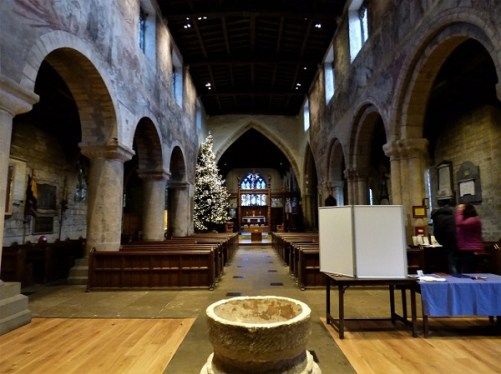
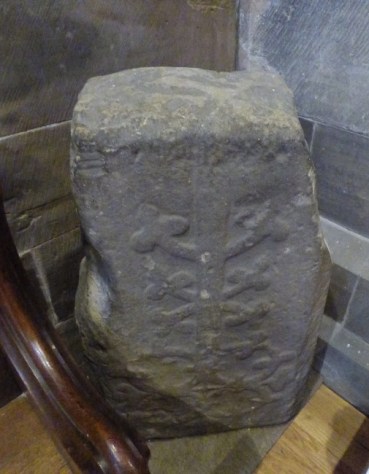
The church is a large one for a small town; built upon a hill near the ruins of the castle, its spire is visible far across Ryedale. There has been a church on the site since Saxon times, but all that remains of this early place of worship is the plain bowl of the font and a fragment of a carved stone cross.
The current building is Norman and was begun around 1140 and was built to a cruciform plan with a central tower over the Crossing. There were the usual additions over the years, then in 1200, the tower collapsed and was rebuilt at the west end of the church. As church services became more complex and ritualistic, the chancel was widened and chantry chapels were added.
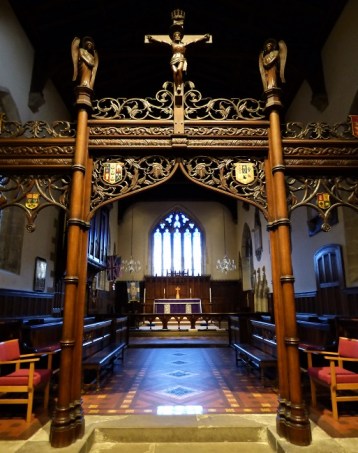
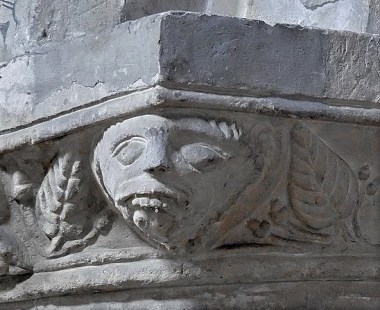
The chancel is unusual, wider than the nave itself and now separated from the body of the church by a carved screen added in the early twentieth century. It is a simple sanctuary when compared with the brilliance and colour of the nave and is watched over by a Green Man carved on one of the old pillars.
The northern chantry chapel, built in 1337, once housed the effigy of Sir William Bruce. Today, his image lies near the chancel steps, moved to make way for an organ. With his head under the wide branches of the Christmas tree and a wire trailing beside him, he looked rather forlorn and forgotten.
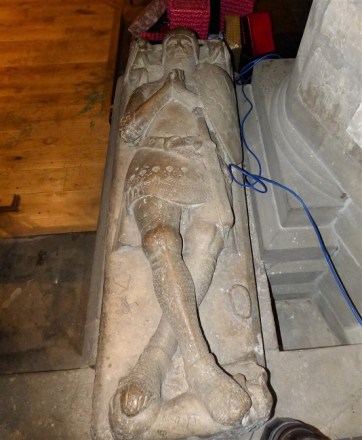
He is dressed in knightly armour and the crossed legs were long thought to indicate a knight who had taken part in, or was vowed to the Crusades. Or that they were Knights Templar. The current theory is that it may simply have been a stylistic fashion of the times.
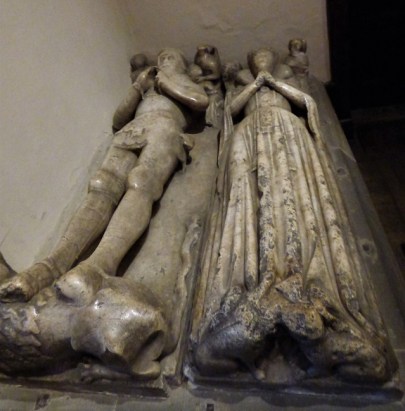
The south chantry chapel was built in 1407 to house the remains of Sir David and Dame Margery Roucliffe who rest there still, he with a lion beneath his feet, his lady with two dogs. The chantry chapels were built and endowed with funds that Mass could be sung for the souls of those buried there, a tradition that continued until the Reformation of the mid-sixteenth century.
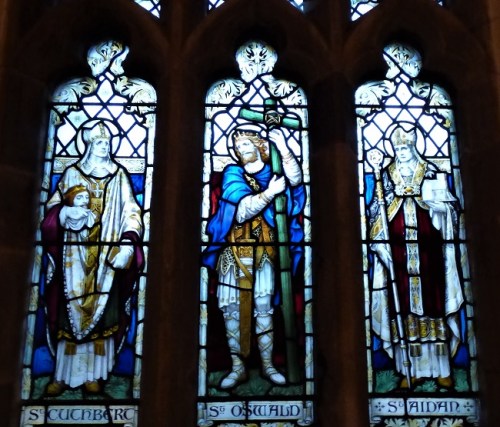
The Roucliffe Chantry contains some beautiful stained glass showing the saints of the Celtic church, including some of those we had encountered over the weekend in the story of the Synod of Whitby at the Abbey founded by St Hilda.
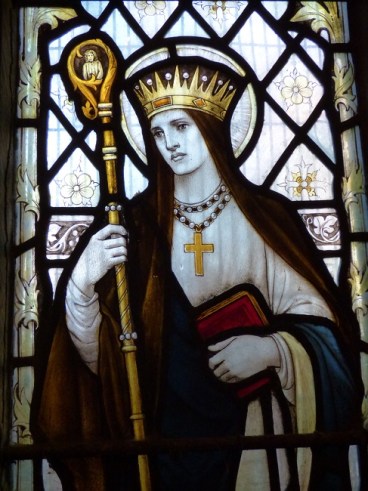
It was around the time that the Roucliffe Chantry was built that the last major structural changes were made… and the real glory of Pickering’s church was painted on its walls…




































 Sue Vincent's Daily Echo
Pingback: Whitby Weekend: One last wonder… — Sue Vincent’s Daily Echo – yazım'yazgısı (typography)
A beautiful church full of amazing history, Sue
LikeLike
There is more to come tomorrow on this one, Robbie… itis an incredible church.
LikeLiked by 1 person
Beautiful windows.
LikeLike
They are… and there wasn’t space to show them all…
LikeLike
It’s a stunning place. It has a wonderful atmosphere.
LikeLike
It does indeed… though I must say I preferred seeing it in the natural daylight of summer.
LikeLike
I went to visit Peterborough Cathedral just before the New Year. It has an interesting history, too, including the fact that Catherine of Aragon is buried there. What amazed me, and does so whenever we visit churches, or even Stately Homes, Palaces and museums, is how little attention people actually pay.
They walk around, looking, but never seem to stop and look closely at anything. As to reading any signs telling about things, no chance. They miss so much.
This church sounds fascinating.
LikeLike
Peterborough is a wonderful place… I haven’t been there for years though… I really must visit again.
LikeLike
Those windows and the stone features are fabulous!
LikeLike
It is a fabulous church all round .
LikeLiked by 1 person