The Slavic World Tree Myth and the Hexagram ~ G. Michael Vasey

Reblogged from The Magical World of G. Michael Vasey:

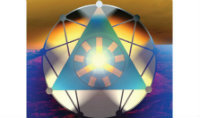
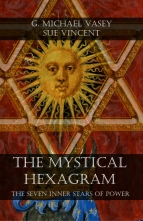
Several years ago, Sue Vincent and I wrote a book about the Hexagram. The book explores that symbol. “Not from some scholarly or deeply complex perspective, but seeing it as a representation relating to life and living. The forces and pressures that are associated with the hexagram are, after all the forces of life at both practical and Universal levels. By exploring and beginning to understand the symbol, we are able to learn and discover more about ourselves.” On the website for the book, I have occasionally pointed to how the hexagram is a key of sorts to help unlock deeper mysteries in many different occult symbols or methods. In the last few months, I have been exploring the Czech landscape – the slavic landscape to be more precise – and I came across yet another example.

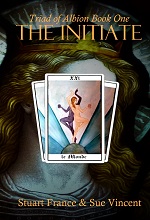
The Mystical Hexagram 2nd Edition

The Mystical Hexagram

In slavic myth, the world is seen as a tree – a tree of life if you will. In fact, it may be that the ancient Slavs worshipped trees and the Gods associated with them. So imagine from this slavic perspective that creation is a tree – a huge and ancient Oak. The huge Oak reaches up to the sky and its branches reach up to heaven while its solid roots reach to the underworld. The trunk is the world. Now, atop the tree and the ruler of heaven is the mighty Perun – God of thunder and lightening. Often symbolized by the Eagle and storms. A mighty warrior wielding a mighty battle axe riding a chariot. His weapon is lightening or golden apples that he throws at his enemies. He is representative of Fire and Air. Beneath him, ruling the underworld is Veles, a trickster, a shapeshifter and symbolized by the serpent. He is often pictured as having the head of a bear and the body of a serpent and he punishes with disease. Veles is representative of Earth and Water.

Continue reading at The Magical World of G. Michael Vasey

Posted in reblog | Tagged , , , , , | 2 Comments

Together ~ Joe M #writephoto

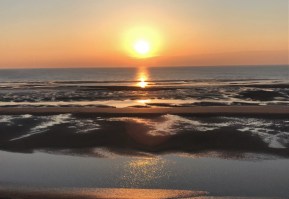
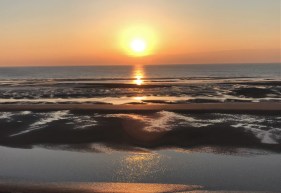
sun before setting
gold mellow tired satisfied
i rock on my porch

Reblogged from Joe M at Does Writing Excuse Watching?

Posted in photo prompt, Photography, Poetry | Tagged | Leave a comment

St Albans – the screen of the martyrs

The fifth post on our visit to the Abbey of St Albans a few years ago. Parts One, Two, Three and Four can be found by clicking the highlighted links.

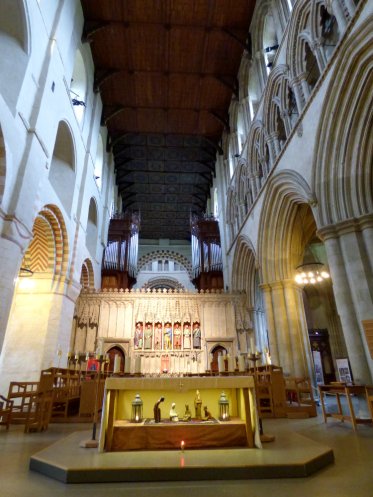
st albans january hols 047

In the Anglican year, our visit still fell within the season of the Nativity and the figures depicting the birth of Jesus still stood before the altar in the nave. The brightly coloured statues on the altar screen seemed incongrous somehow, even though such colour would have covered the walls long ago.

The stone rood screen was built by Abbot Thomas de la Mare, around the time of the Black Death (1349-51) to divide the lay side of the Abbey from the monastic. It was richly carved, filled with statues and surmounted by the Rood, or Cross. At either side of the screen, two doors were built through which the monks could process, bearing the relics of St Alban. These two doors remain, both flanked by a series of portraits of the Green Man.

The statues and carvings were destroyed during the Reformation, when Henry VIII broke with Rome and was declared head of the Church of England in 1534.  For centuries the niches stood empty.

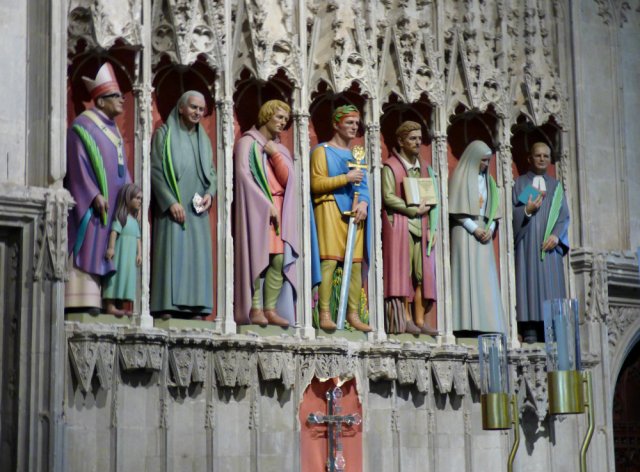
The freshly coloured statues that now stand there are a very recent commission by the Abbey from sculptor Rory Young. They depict seven martyrs, each carrying the martyr’s symbol of the palm branch, executed for their faith, from St Amphibalus and St Alban himself to some very recent figures. The Dean of the Cathedral writes that there are  “martyrs in every age – probably more now than there have been for many years – and inspire us to be braver ourselves in standing up for what we believe.” A sentiment that, in our time, where division and prejudice are still rife, may apply to each one of us, regardless of our faith … as long as it is applied with compassion and understanding for the beliefs of others.

There is a vast difference between affirming what we personally believe to be true and seeking to impose that belief on others… just as there is a huge gulf between sharing our beliefs in a spirit of understanding and coexistence and seeking to bully and blast people, both individuals and nations, into submissive compliance with the bigotry of the few.

I can’t say I particularly liked these statues… they may need a few hundred years to mellow before they are aesthetically pleasing. Nor do I like the fact that such deaths still occur. But they are beautifully executed… and I cannot help but agree with the message they are sending of the need for tolerant and peaceful coexistence.

st albans january hols 051

Oscar Romero – Roman Catholic Archbishop of El Salvador, under a totalitarian regime, he condemned poverty, social injustice and torture until his assassination during Mass in 1980.

St Alban Roe – a Roman Catholic, imprisoned for a time in St Albans Abbey Gatehouse and hanged in London in 1642 having been found guilty of treason for being a Roman Catholic priest.

St Amphibalus – a Christian priest sheltered by Alban, when Christianity was forbidden.

St Alban – The first British saint, beheaded in Roman Verulamium on the site of the Abbey in the third century AD.

George Tankerfield –  burnt to death in Romeland, an alley close by, in 1555 because, as a Protestant, he refused the doctrine of transubstantiation.

St Elisabeth Romanova – a granddaughter of Queen Victoria. Married into the Russian Royal Family, she embraced the Orthodox Church, becoming a nun and Abbess after her husband died.  She was murdered in 1918 by the Bolsheviks.

Dietrich Bonhoeffer – Lutheran pastor and theologian, sent to a  Nazi concentration camp, tried with neither witness nor defence, he was hung in April 1945.

Posted in Christmas, Churches | Tagged , , , , , , | 6 Comments

Together ~ Tina Stewart Brakebill #writephoto

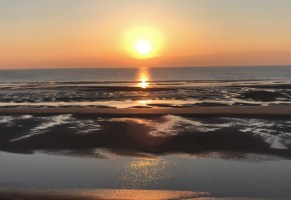
another day gone

the same sun setting on all

together apart

Reblogged from Tina Stewart Brakebill

Posted in photo prompt, Photography, Poetry | Tagged | Leave a comment

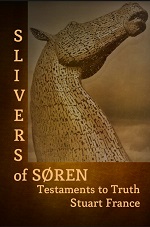
Slivers of Søren: Testaments to Truth ~ Stuart France

THE HAND THAT GUIDES…

…Can pick up a thing,
a train of thought, say,
or better…
a circumstance,
a way of life…
after years of apparent neglect,
and immediately,
unerringly,
hit-the-beat…
*
Had that song ever stopped,
even, or did we step out,
for a cycle,
a round,
a reel, or two, or three…
and then again jump in with renewed vigour?
*

Continue reading at France & Vincent

Posted in Photography | Tagged , , , , , | Leave a comment

Together ~ Brian F. Kirkham #writephoto

They’re quite a team – the Sun and the Moon

On the whole they’re quite phenomenal

Giving the people that live on Mother earth, summat to look at

Each day they work either side of this blue jewel

Continue reading at The Inkwell

Posted in photo prompt, Photography | Tagged , , , , , , , , | Leave a comment

Close to home: St Michael and all Angels, Waddesdon

IMGP0870

One of the reasons we have found for visiting and documenting our ancient churches is that we do not know for how long they will remain as they are. There is a fashion at the moment for revamping their interiors, adding facilities such as toilets, kitchens and modern flooring, moving fonts and generally bringing the church into the twenty-first century as useful community spaces. Many of the churches we visited during our earlier travels have been updated and features that have been in place for hundreds of years are now gone… but of some of them, at least, we now have a photographic record.

My own village church has just been revamped in this manner. Even the beautiful old pews were sold to anyone with space to house them. I have yet to bring myself to go inside and see what has been done and now, with the current lockdown, even exploring on my doorstep has to wait. I doubt if any of the features below will have changed…at least, I hope not.
IMGP0869

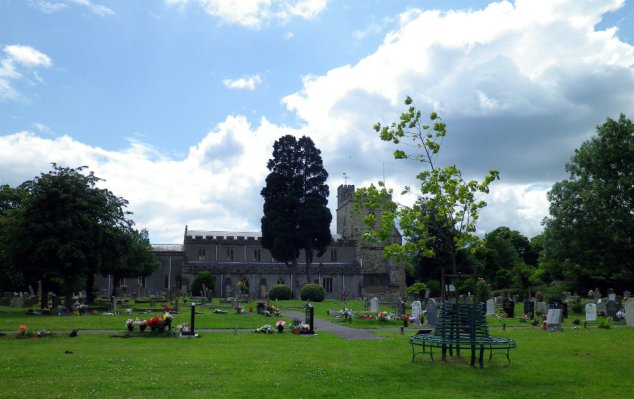
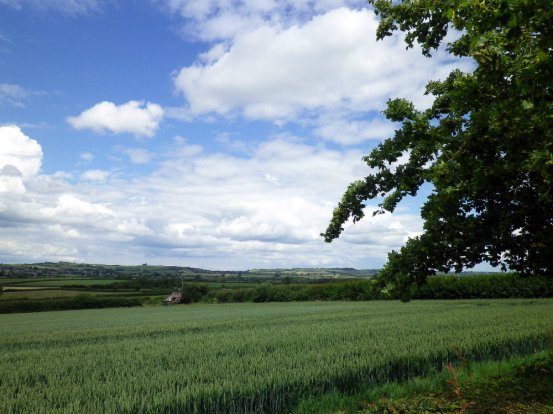
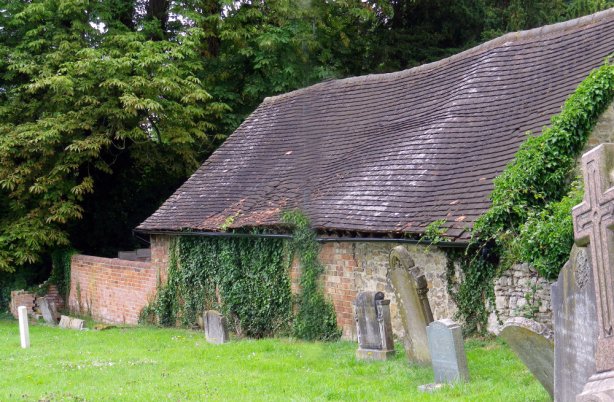
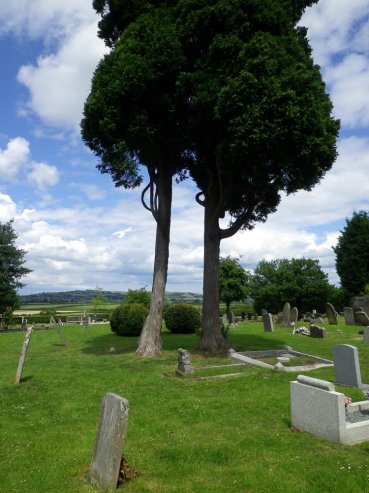
St Michael and all Angels is the Anglican church in Waddesdon. It stands right on the edge of the village, with open fields behind. It is a beautiful spot. The churchyard is walled, for the most part and on one side bounded by a mediaeval barn. The churchyard is still in use by families in the village and always well tended and full of flowers.
IMGP0874

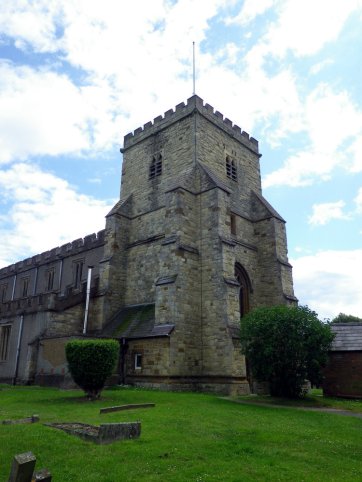
The church was first built around AD1190 and has served the community ever since. It has, like all our churches, seen many changes, being enlarged and restored over the centuries to suit the prevailing fashions. The newest changes are part of an ongoing evolution that tells the story of a changing world and the way that communities and church alike meet and adapt to those changes.
IMGP0866

Even from outside you can see the differing styles almost jumbled together, especially on the north side that faces the fields. The main approach is less higgledy-piggledy, but it is easy to identify the rebuilt nineteenth-century tower, the fifteenth-century clerestory and the various stages of building.
IMGP0873

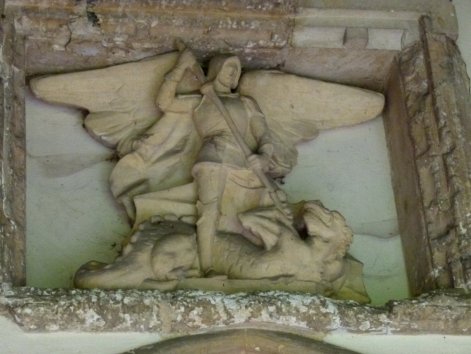
Above the doorway of the south porch, St Michael holds the dragon beneath the point of his lance. It is a curious sculpture… the dragon seems somehow both accepting and welcoming of its subjugation by a ‘higher power’, which is significant in spiritual symbology. The scene exudes an unexpected serenity.
revelation 001

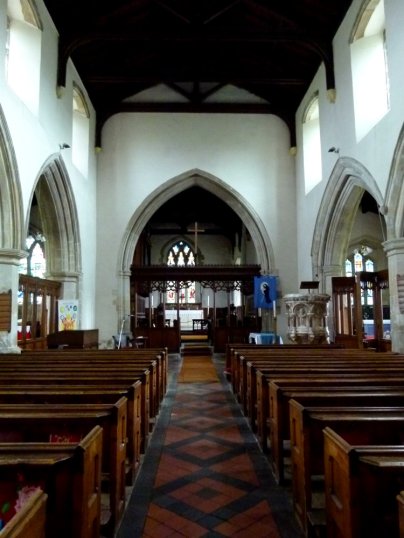
Inside the church is deceptively simple. Lozenges of blue and red tiles lead the eye between the medieval arches and high, clerestory windows towards the carved screen that separates the nave from the sanctuary altar, where Christ in Majesty gazes down from the stained glass window.
revelation 003

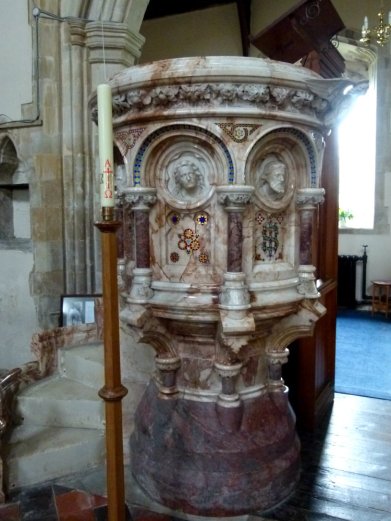
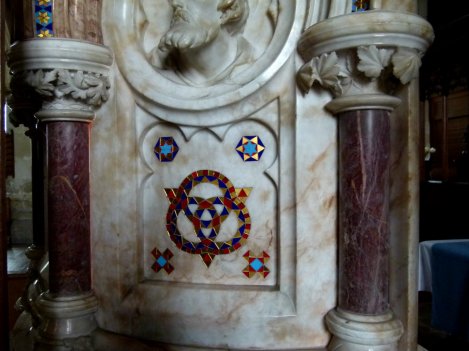
To one side, the ornate marble pulpit, inlaid with its mosaic symbols of gold, seems out of place. It was a gift to the church from its patron, the Duke of Marlborough… a thank-offering for his safe return from the Boer War. It was originally in the Duke’s chapel at Blenheim Palace, which explains its rich design, so out of place in a country church.
revelation 013

revelation 011

The font is some six hundred years old and has been used for the parish’s baptisms throughout that time, yet the carving is so crisp you could be forgiven for thinking it is modern.
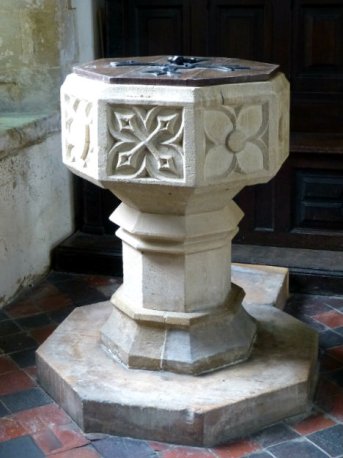
font

In contrast, the stained glass windows are mostly Victorian, yet they have that timeless quality that defies dating except by those who know the medium or recognise the style and artist. This one, by Kempe, is later still, being a memorial to a young soldier killed at Ypres during the First World War in 1915 and shows St George and St Michael with the Virgin and Child.
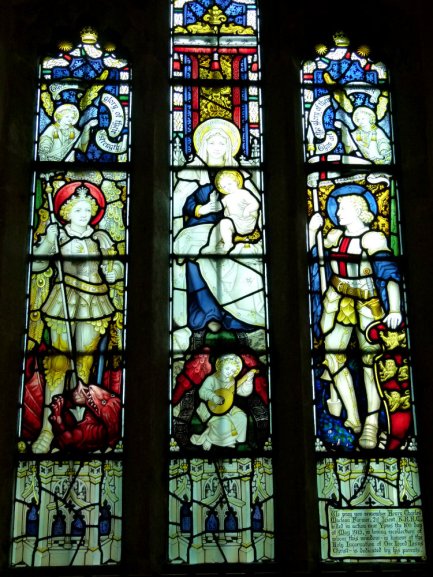
revelation 014

The young soldier is not the only warrior remembered in the church. There are a number of brasses to knights and their ladies and the sleeping effigy of an accoutred knight, dated to 1330, lies against the wall of a chapel.
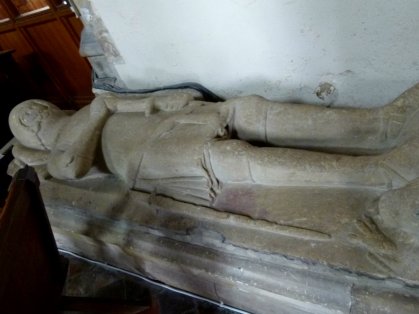
revelation 017

For me, though, the nicest finds were the smallest… a few tiny tiles of much earlier date have been preserved and are still set into the floor… a small but vivid link with the ongoing history of an old village church.
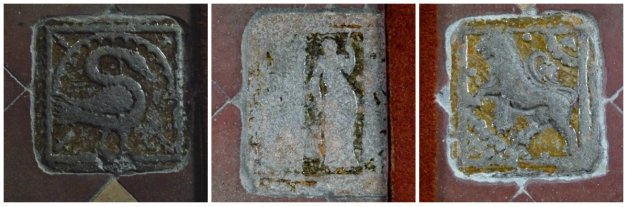
collage

Posted in Churches, History, Photography | Tagged , , , | 30 Comments

Together ~ Alethea Kehas #writephoto

At the edge of land the sand releases

back to the sea to be reborn

Oh to be one tiny grain tumbling into endless re-

union, pulled effortlessly back into the tide

Continue reading at The Light Behind the Story

Posted in photo prompt, Photography, Poetry | Tagged , | 2 Comments

Song #midnighthaiku

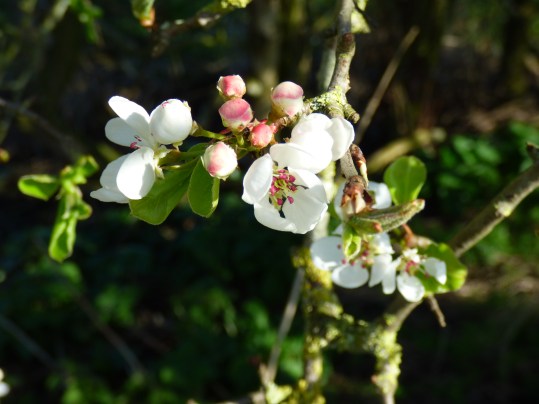
Blossoming hedgerows

A thousand joyful voices

Sing from the branches

*


Posted in Photography, Poetry | Tagged , | 14 Comments

Tranquility – Find your Peace ~ Glen Rogers

Reblogged from Art & Sacred Sites:

Imagine yourself in this landscape – enjoying the night time stillness at water’s edge, full moon shining. Breathe in and experience your inner peace.
“Bird with Moon”, Monoprint, 7″ x 5″

During these strange times, it’s important to stay centered and not give in to FEAR. Fear constricts and immobilizes. Yes, follow the protocols set out for us during our Covid-19 enforced home-stay. But after that, find your peace. Come up with your stay-at-home schedule. Be kind to yourself.

Continue reading at Art & Sacred Sites

Posted in reblog | Tagged , , , , , , , , | Leave a comment