
Reblogged from deadbutdreaming:
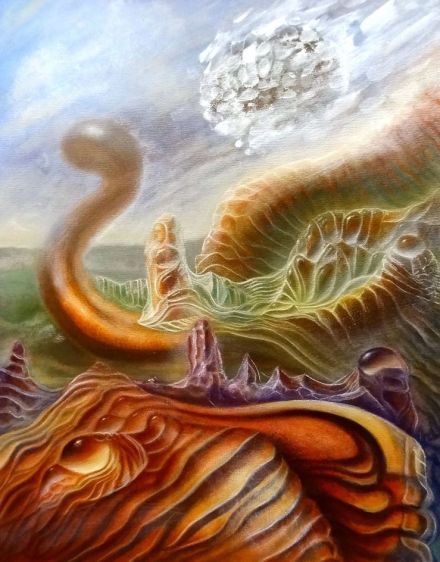
As a sideways break from my ruminations on the faeries and their abodes, here are some contemplations on the magico-folkloric tale of the Lambton Wyrm, from the North-East of England. A version of the article was originally published on the Ancient Origins website.
“Whisht! lads, haad ya gobs,
Aa’ll tell ye aall an awful story. Whisht! lads, haad ya gobs,
An aa’ll tell ye ‘boot the wyrm.”
(C.M. Leumane, 1867)
There are more than twenty folktales from north-east England and Scotland that include the motif of a ‘wyrm’, a huge dragon-like, wingless serpent that terrorises neighbourhoods – sometimes for many years – before being eventually slain (motifs classified in the Aarne-Thompson folktale index as B11.1.3.1, B11.2.1, and B11.11). These wyrm folktales are not exclusive to this geographical area – one appears in Somerset as the Gurt Wyrm of Shervage Wood, and there are several German, Scandinavian and Irish examples. Indeed, Dale Drinnon demonstrates that this folkloric motif can be found worldwide, in both stories and in cryptozoological anecdotes. But there does seem to be a cluster of the story type in Northumberland, North Yorkshire, County Durham and the Scottish Borders. Two of the best known examples are the Linton Wyrm and the Sockburn Wyrm, beasts that hide by day but then emerge at night to scorch the land, eat livestock and occasionally people. In all cases a hero appears on the scene, and due to various ruses, is able to dispatch the wyrm, thus saving the people from further predation. These folktales are always set during the medieval period, but only transfer from oral tradition to literary sources from the 16th century onwards. One of the fullest renditions of this folktale type is that of the Lambton Wyrm, from County Durham, first recorded in 1785, but evidently drawing on a much earlier oral tradition, with the action set in the late 12th century.
Continue reading at deadbutdreaming























 Sue Vincent's Daily Echo
Thanks for the re-post Sue – much appreciated…
LikeLike
My pleasure, Neil.
LikeLike
Reblogged this on The Militant Negro™.
LikeLiked by 1 person
Thank you 🙂
LikeLike