

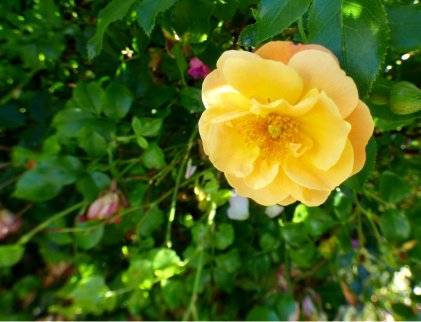
Spiralling within
A chalice of great beauty
Touched by sunlit tears
Press a button or two to share... go on, make my day :)
- Share on Facebook (Opens in new window) Facebook
- Share on X (Opens in new window) X
- Share on LinkedIn (Opens in new window) LinkedIn
- Share on Pinterest (Opens in new window) Pinterest
- Share on WhatsApp (Opens in new window) WhatsApp
- Share on Tumblr (Opens in new window) Tumblr
- Share on Reddit (Opens in new window) Reddit
- Print (Opens in new window) Print
- Email a link to a friend (Opens in new window) Email
- Share on Telegram (Opens in new window) Telegram
- Share on Mix (Opens in new window) Mix



































 Sue Vincent's Daily Echo
Reblogged this on Die Erste Eslarner Zeitung – Aus und über Eslarn, sowie die bayerisch-tschechische Region!.
LikeLiked by 1 person
An interesting fact: All known static spirals (as opposed to the moving ones, like galaxies and water going down a drain) are made by living things.
In his introduction to “Mind and Nature: A necessary Unity”, Gregory Bateson described a conversation with his daughter:
===================================
When she was about seven, somebody gave my daughter Cathy a cat’s-eye mounted as a ring. She was wearing it, and I asked her what it was. She said it was a cat’s-eye.
I said, “But what is it?”
“Well, I know it’s not the eye of a cat. I guess it’s some sort of stone.”
I said, “Take it off and look at the back of it.”
She did that and exclaimed, “Oh, it’s got a spiral on it! It must have belonged to something alive.”
Actually, these greenish disks are the opercula (lids) of a species of tropical marine snail. Soldiers brought lots of them back from the Pacific at the end of World War II.
Cathy was right in her major premise that all spirals in this world except whirlpools, galaxies, and spiral winds are, indeed made by living things. There is an extensive literature on this subject, which some readers may be interested in looking up (the key words are Fibonacci series and golden section).
What comes out of all this is that a spiral is a figure that retains its shape (i.e., its proportions) as it grows in one dimension by addition at the open end. You see, there are no truly static spirals.
===============================
Bateson, BTW, was English, although he spent much of his career in the US.
LikeLike
I believe I may have read that one back in the late 70s/early 80s. I don’t think it survived the travelling years thogugh. I may have to get it again. Thanks Bob 🙂
LikeLiked by 1 person
Reblogged this on By the Mighty Mumford and commented:
HAIKU AND FLOWERS SATISFY THE SUMMER HOURS!
LikeLike
Thanks for sharing, Jonathan 🙂
LikeLike
Reblogged this on anita dawes and jaye marie.
LikeLike
Thank you x
LikeLiked by 1 person
I wonder why snails like roses so much? They don’t seem to eat them…
LikeLike
No, I’d noticed that too…they just seem to like being in them.
LikeLiked by 1 person
In that case, I like them a little better now…
LikeLike
My liking for snails depends on whether I have hostas in the garden 😉
LikeLiked by 1 person
Ah yes, they love them, don’t they?
LikeLike
Unfortunately…
LikeLiked by 1 person
Snail wanted to stop and smell the roses. 🙂
LikeLike
I can’t think of anthing nicer than curling up in a rose 🙂
LikeLiked by 1 person