
 Pre-Raphaelite glass sits in walls pitted by Cromwellian gunfire, while a 1950s reredos graces a chancel that dates back to 1241. That’s why I love these old churches… the history of a community is written within their walls in wood and stone, glass and paint. In many ways they are living art galleries, recording the lives of the ordinary folk and their masters, both clerical and secular, throughout the ages. Faith is written here, but the images are made from life and echo their own time. The tombs of the great are intricately carved fashion statements that retain the details of another era, like the necklace of pilgrims shells around a lady’s neck. It is almost another world, and yet it is part of the foundation of our own.
 It took a good while before I finally got to the church at Ashbourne, even though I saw it every time I headed north. From a distance you can see there are stained glass windows of impressive complexity and the spire, at two hundred and twele feet high, is said to be one of the finest. Other than that, and a rough idea of age, we try not to research these places that catch our eye in passing before visiting, preferring to see what turns up without clouding the issue with facts.
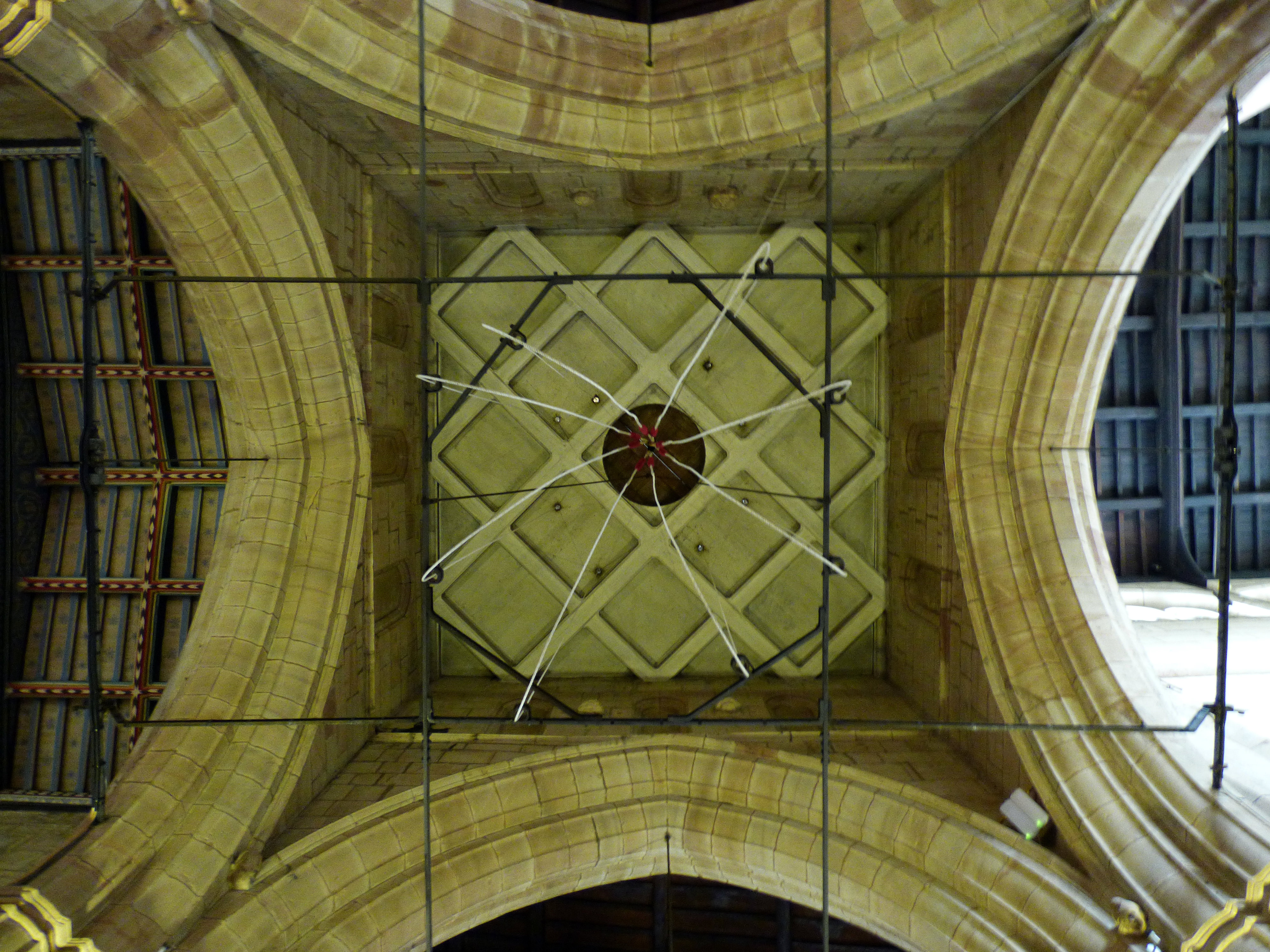 Sometimes, it works the other way and we fall over the facts before ever setting eyes on the building. It is curious how these things work out though. You do seem to see much more when you know less, perhaps because your attention is less tightly focussed, more open to discovery. On the other hand once you have been, seen and felt a place, you have to start digging and nine times out of ten end up having to go back and look some more. Ashbourne looked like it would be one of these and that proved to be the case.
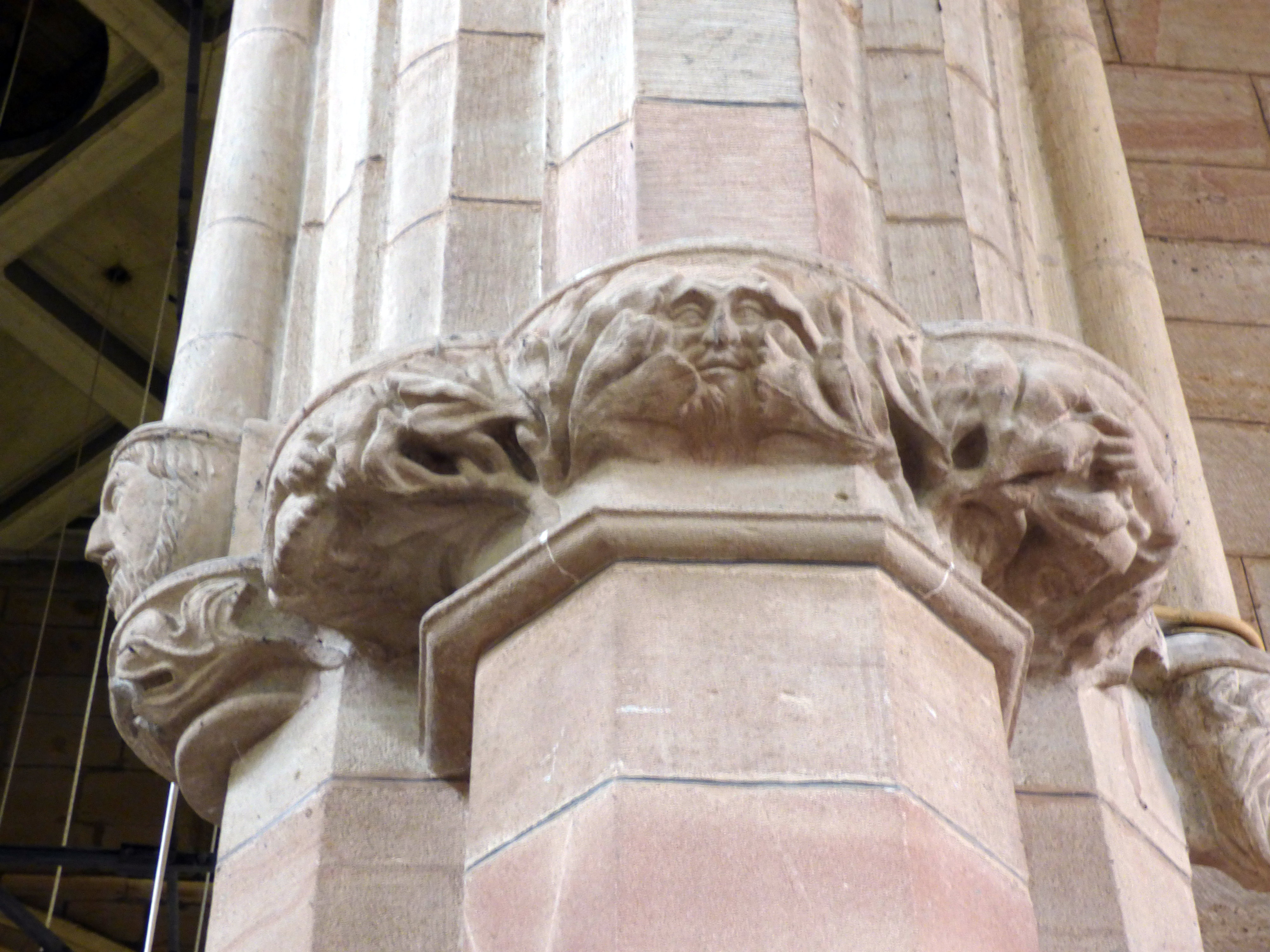 For a start it was the first St Oswald’s we had seen and Oswald had been cropping up regularly in the research for our books where we stumbled over some rather unorthodox ways of looking at bits of Old England. That gave us a good place to begin looking closer, but there are many other reasons too… stained glass, Saxon carvings, a couple of Green Men and some very strange and out-of-the ordinary heads to name but a few. Some serious digging was in order. Like why, exactly, in a Derbyshire church, is there a person wearing an Egyptian nemyss? Especially as the rest of the heads in that part of the church appear to be 14th century.
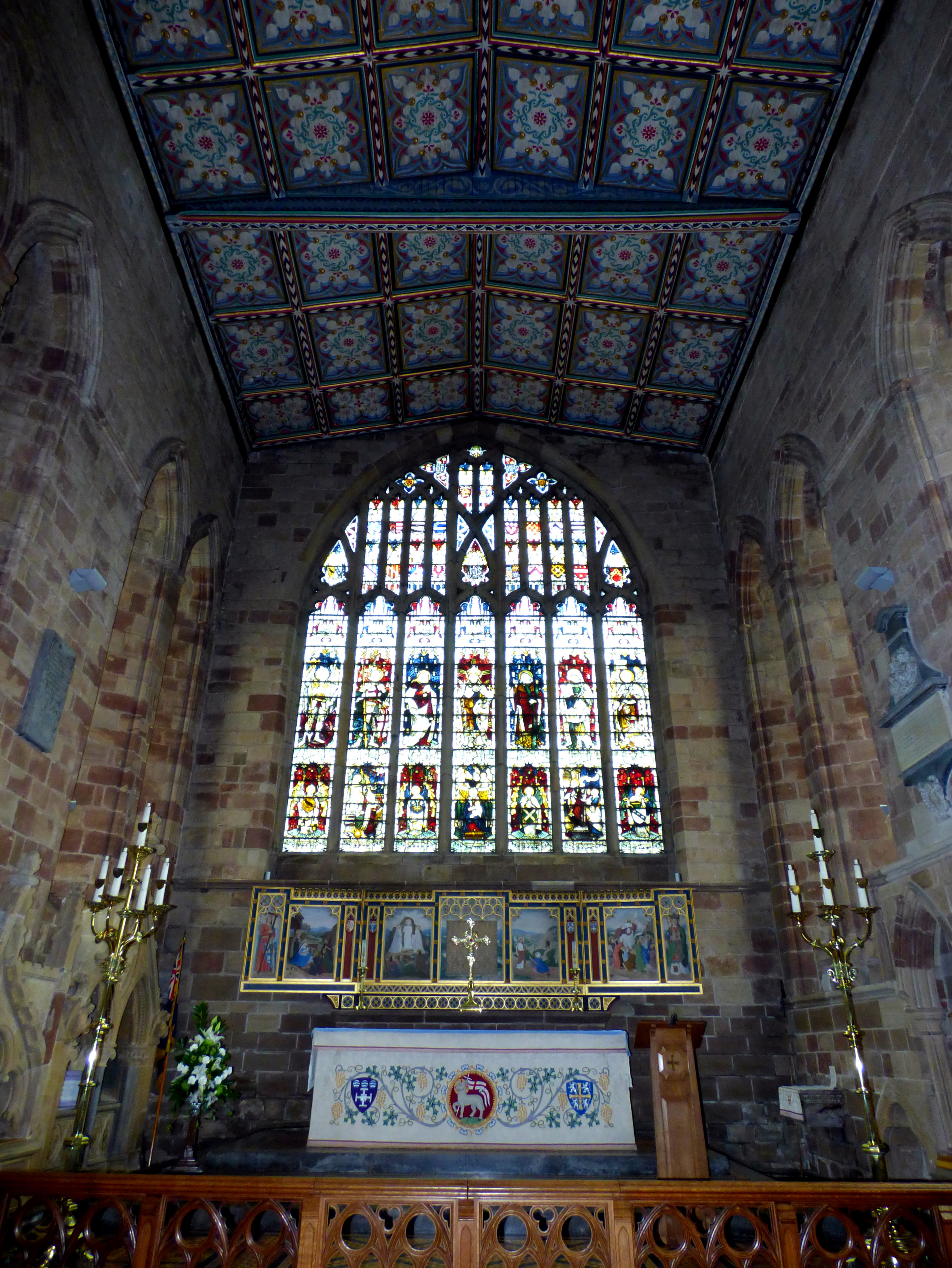 Mind you, had we realised that Scott had been involved in the restoration we could have guessed there would be Stuff to see. Sir George Gilbert Scott is another one of those names that keeps cropping up and, oddly enough, he was born just down the road from where I live. I really must investigate one of these days… it is only a few miles…
St Oswald’s was dedicated in 1240, though there had been an earlier Saxon church there and the crypt is Norman, which means there has been a place of worship on the site for over a thousand years. Oswald was a Northumbrian king, and his family was linked by marriage to the ancient royal house of Mercia who ruled over this part of the country in Saxon times. It was, in fact, in a battle against King Penda of Mercia that he lost his life and was beheaded and dismembered.
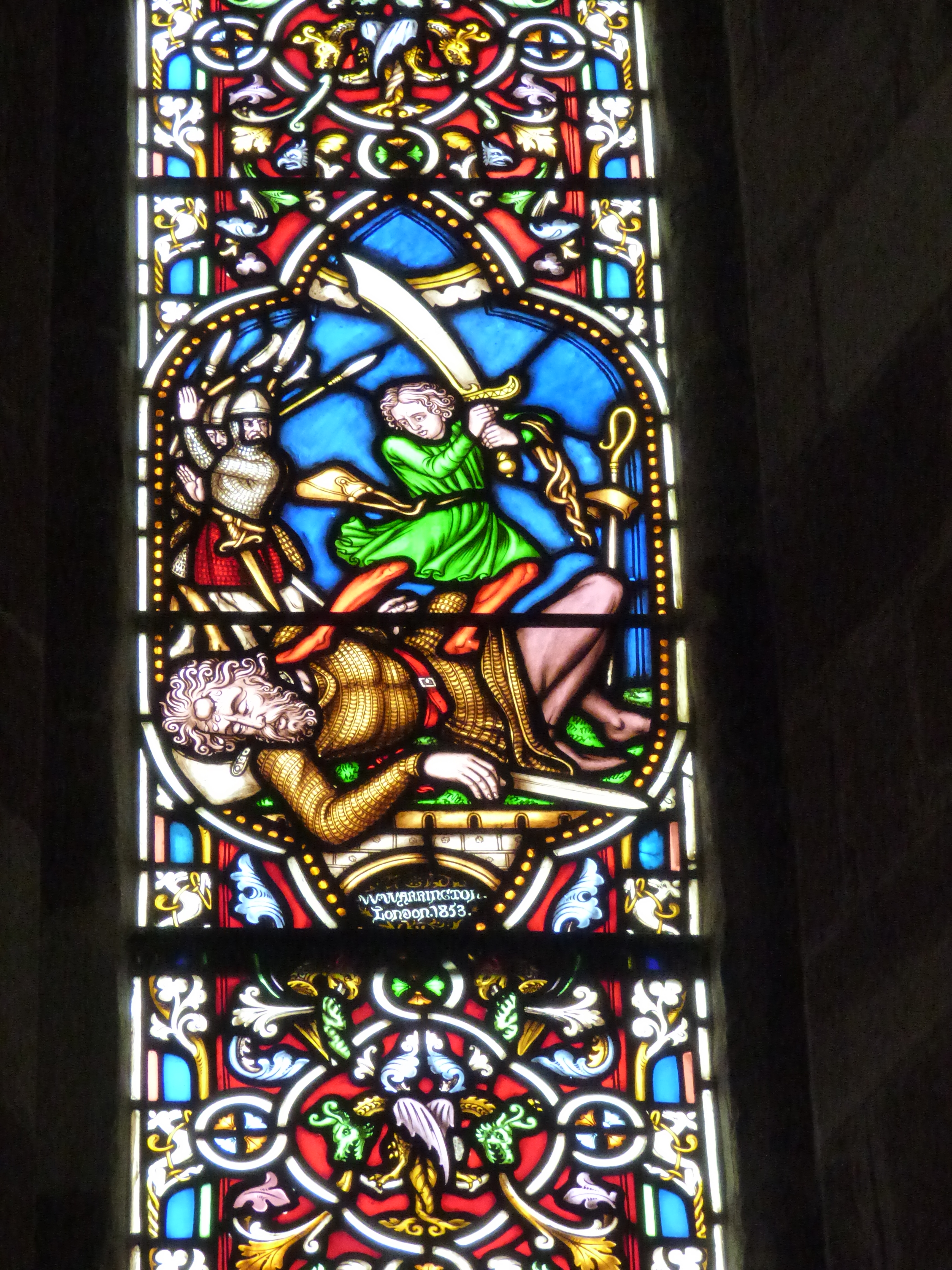 There are some incredible details in the place. The stained glass Tree of Jesse window by Kempe occupies much of the west wall, while all around the church are examples of the best of Victorian stained glass, interspersed with some 15th century scenes. Peering into the nooks and crannies between the fine monumental tombs of the Boothby chapel, filled with effigies of the family from the 1400s to the Tudor period, I discovered fragments of Saxon and Norman stonework and medieval tiles. There was a much older form of worship here though, it seems, as a spring was discovered beneath the tower during renovation work that is thought to be the site of ancient, pagan rites.
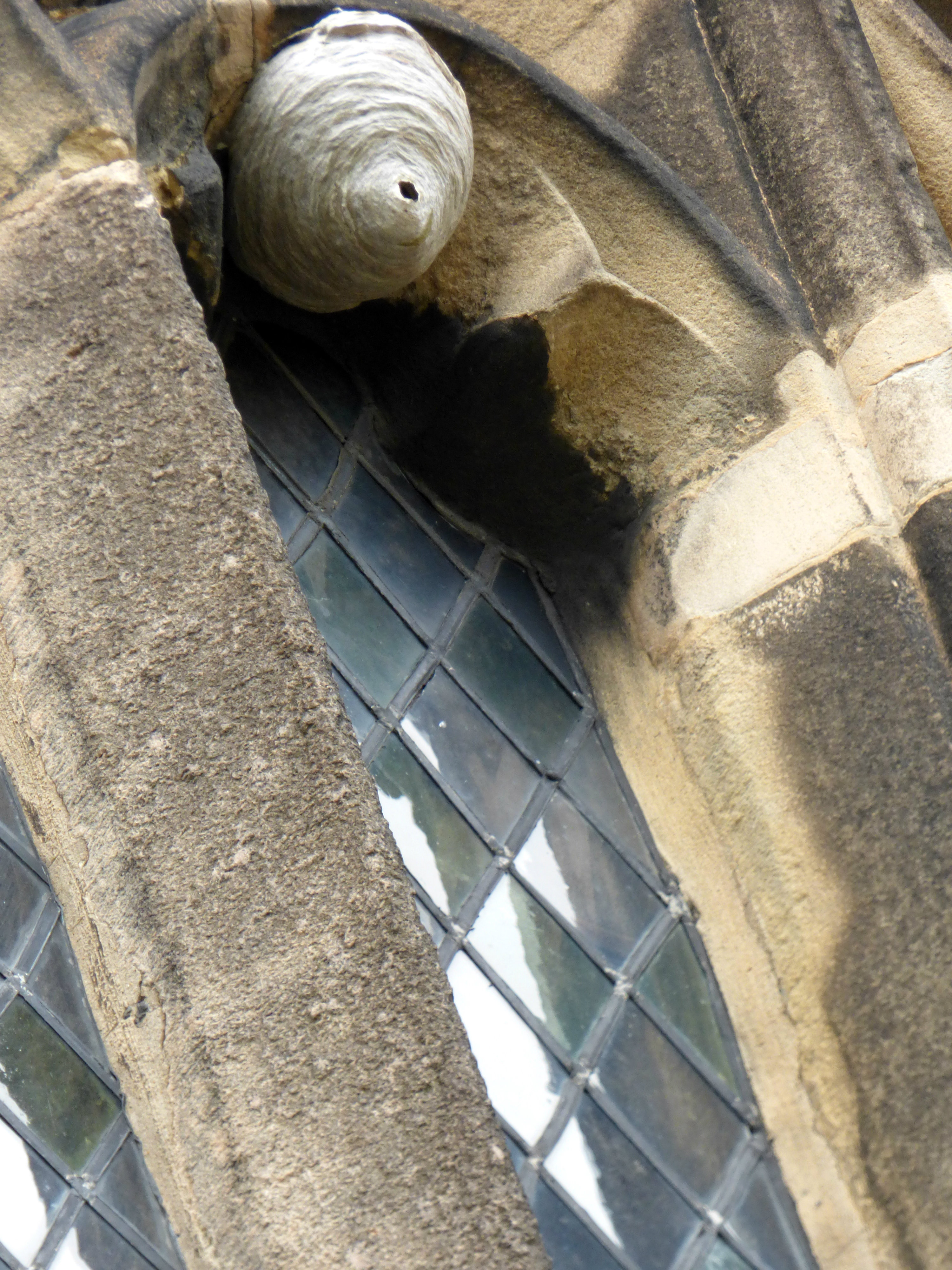
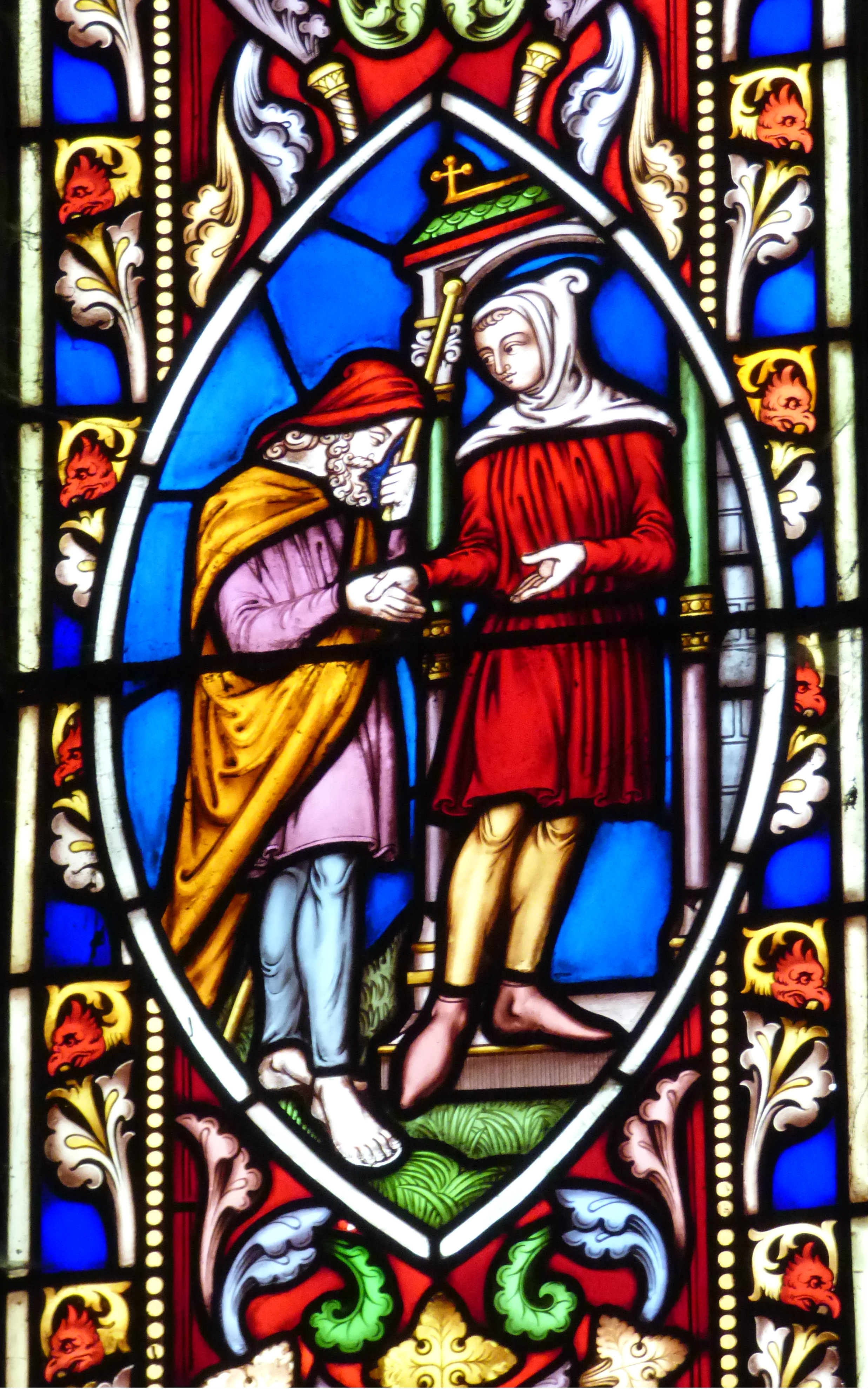 What was it about this particular spot that drew the first worshippers? If a spring, were they drawn to the waters of life, the blood of the earth… that connection with nature that runs so deep in all of us? Even now nature echoes that connection, as inside the chancel the floor is tiled with birds and bees, while the churchyard is filled with birdsong and a wasp’s nest clings to the tracery of the windows. How much has really changed in all those centuries? Only the outer form and the stories we tell, perhaps, as we search for the answers to the unanswerable and raise our eyes to Son or Sun in search of the Light.



































 Sue Vincent's Daily Echo
Have you ever visited Pugins gem at Cheadle, Staffordshire? Really worth a visit.
LikeLike
No…not yet…and we should as we pass near Cheadle fairly frequently. Thank you… we’ll have a wander 😉
LikeLike
Glad to recommend. I’m not sure of the opening times x
LikeLike
I’ll find out 😉 x
LikeLike
😊
LikeLiked by 1 person
Pingback: Ashbourne — Sue Vincent’s Daily Echo | yazım'yazgısı
Stunning stained glass… and a wasp nest?
LikeLike
The glass is superb…and yes, a wasps nest 🙂
LikeLiked by 1 person
Dear Sue, thank you for this beautifully illustrated and informative post. It is timely for me, having just returned from a tour of cathedrals, palaces, art museums, and forts in Spain and Portugal. Here in America we don’t have places like that or the churches you describe, records of ages past. But it is wonderful to be exposed to them, to be told, for example, that you are standing in the largest Gothic cathedral in the world, to enter a church and to see a masterpiece painting on the walls.. And of course i bear in mind that my ancestors were Welsh and lived in Wales.
Best wishes, David
LikeLike
We take so much of our heritage for granted here, because we are ‘used to’ it being around…and yet it is a real privilege to have records and buildings spanning thousands of years.
LikeLike
Magnificent stained glass. Your words ring true that nothing has really changed when it comes to connecting with nature. Fabulous post, Sue!
LikeLike
I don’t believe much has changed where humans are concerned… only the outer details.
LikeLiked by 1 person
Well put, Sue! And you are right.
LikeLike
Thanks , Jennie.
LikeLiked by 1 person
You’re welcome, Sue.
LikeLiked by 1 person
These are wonderful photos. I will never tire of seeing these ancient churches. Wonderful photos Sue 🙂
LikeLike
Thank you, Christine. 🙂
LikeLike
And people ask me why I am in love with churches and desotted by stain glass window. My question is why are they not. 💜
LikeLike
I hae to agree with you there, Willow ❤
LikeLike
🤭💜
LikeLiked by 1 person
What a beautiful place. The detailed stained glass, the ceilings, the strange carvings that I would love to get closer to. It must be tempting to tie a ladder to the roof of your car, Sue. 🙂 And the layered history is fascinating. I was tickled by the wasp’s nest – the cherry on the cake. What a wonderful “living” symbol of the connection to nature and the land. 🙂
LikeLike
We occasionally get a bit closer than we probably ought… but no ladders yet. Pews are handy though 😉
LikeLiked by 1 person
Ha! Maybe a little step ladder in the boot.
LikeLike
Well, I need one of those to reach most things 😉
LikeLiked by 1 person
Gorgeous detail … love the wasp’s nest. 🙂
LikeLike
So did I 🙂
LikeLiked by 1 person