
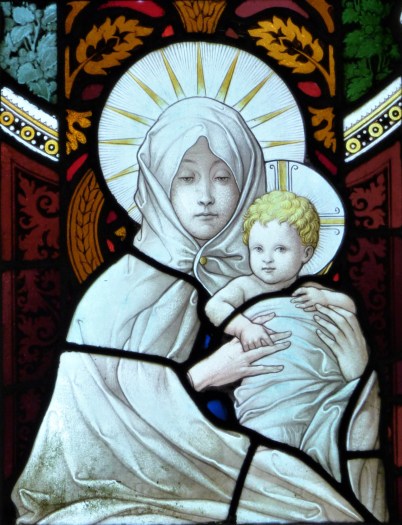
“Tell Augustine that he should be no means destroy the temples of the gods but rather the idols within those temples. Let him, after he has purified them with holy water, place altars and relics of the saints in them. For, if those temples are well built, they should be converted from the worship of demons to the service of the true God. Thus, seeing that their places of worship are not destroyed, the people will banish error from their hearts and come to places familiar and dear to them in acknowledgement and worship of the true God.” Pope Gregory’s letter to Abbot Mellitus, 6thC, on the conversion of Britain.
***
You have to admit, Pope Gregory was sneaky. The mission to bring the blessed isles of Britain into the Christian fold was not to be accomplished so much by conversion as subversion. To ‘convert’ means to turn in a new direction, to subvert means to destroy from below… and that, is pretty much, the definition of sneaky.
The instructions to the missionaries were clear… take and use the old sacred places for the new worship. The letter was quite detailed in how this should be done, but basically it meant allowing the people to celebrate the same festivals, in the way they had always done, and in the same places. The only difference wa that, while they were doing so, the clergy of the Church could gradually add a Christian gloss to the festivities. Many of the old gods were adopted as Christian saints and their stories rewritten accordingly, magical places were rendered ‘officially’ sacred by appropriating them for Christian myth and the symbolism of ancient festivals was reallocated to the Christian story.
Gregory was right. The people were soon turned to the new religion.
They may have neither noticed nor cared; when you worship God made manifest in Nature, the names and stories of the gods matter less than natural and cosmic force they represent… and Britain already had a long history of accepting ‘foreign’ gods into the pantheon. The new Jesus-god was little different from many who had come and gone before, after all. Miraculous births abound in religious history, across the globe and throughout the ages. Gods who walk the earth as men are not uncommon, nor are the gods who come to teach. Saviour gods and sacrificed gods were ten a penny, and Jesus was not the first to be hung upon a tree.
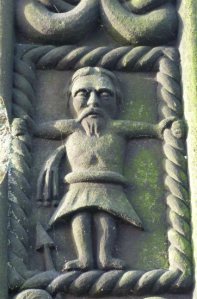
“Plus ça change, plus c’est la même chose.”
Gregory must have been well aware of this ready acceptance of new gods into the pagan fold. Throw in a few incentives…and eternal life isn’t bad for starters… add a dash of hellfire and brimstone to put the fear of God into the laggards, put learning, healing, economic and political power into the hands of the priests, and he was right; within a generation or two, the conversion was pretty much complete. The old gods faded into myth and their altars were forgotten…or repurposed.
But, let’s be honest, Gregory was not exactly the first to bring Britain to Christianity, whatever his letter might suggest. The process had been going on for quite some time. There were already Christians in Britain before the Romans left in 410AD. The very earliest missionaries, according to the legends, had arrived much earlier than that, when Joseph of Arimathea had come to Glastonbury, bringing with him relics of Jesus’ life and mission, and founding the first Christian oratory there. Joseph, according to the Bible, was the man who asked Pilate’s permission to remove Jesus’ body from the Cross… so, if the legends are true, then Christianity came to these shores within a few years of the Crucifixion.
Celtic Christianity, which carried a greater love and respect for the natural world, was already firmly entrenched in these isles before Gregory wrote to Mellitus. The last pagan warrior-king was Penda of Mercia…and he died in 655AD. So it was not so much Christianity that Gregory wanted to bring to the land, but Roman Christianity. be that as it may, after the Synod of Whitby in 664, Britain was officially under the sway of the Bishop of Rome and the spiritual landscape was confined to the churches and chapels.
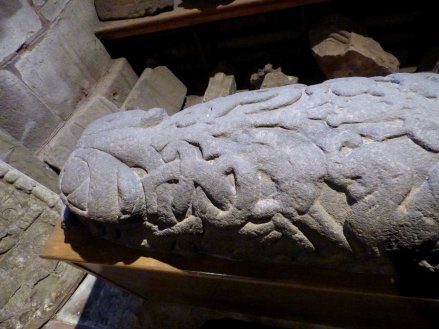
For those who seek a greater understanding of our spiritual past, Britain is particularly rich in archaeological remains dating back thousands of years. There are over a thousand stone circles, innumerable barrows and many other ancient monuments to baffle, intrigue and illuminate the seeker.
Continue reading at The Silent Eye































 Sue Vincent's Daily Echo
Reblogged this on tabletkitabesi.
LikeLike
And that is why, in the middle east, you find temple on top of temple, pillar-on-pillar. Because that spot has always held a temple and no matter which temple it holds, the concept does not truly change. It’s also why our holidays are stacked on more ancient (and even MORE ancient other holidays. That’s when we have always celebrated, so let us continue 😀
LikeLiked by 1 person
Amen to that 😀
LikeLiked by 2 people
I always enjoy your historical and archaeological posts, Sue. You certainly know a thing or two about a thing or two!
LikeLike
I’m ever-curious, Erik… life is an adventure to be explored fully 🙂
LikeLike