

I was distinctly sceptical…unsure what to expect when we parked at the entrance to the mines. So many ancient sites, once commercialised, seem to lose both their intimacy and essence, but I remembered watching something about the discovery many years ago and was curious to see for myself what had been found. A landscaping project in an area thought to be above Victorian mines had uncovered something much older which had astonished archaeologists and changed the way the nation’s ancient history was written.

At school we were taught that the Stone Age peoples were primitive… pretty much your archetypal cave-man, with a minimal survivalist technology and little else to recommend him. That never really added up to me, not when I had seen so many of the great stone circles as a child. It made even less sense when you looked at the incredible artwork of the caves at Lascaux and the ancient figurines and carvings that have survived. How could Ugg and his companions be so unsophisticated and yet produce such beauty?
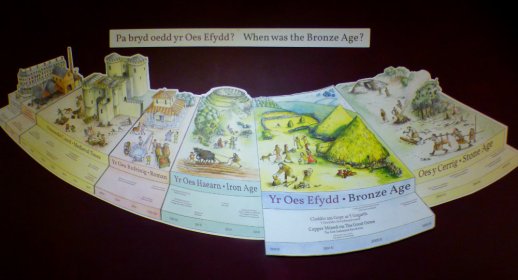
Working with the ancient sites in recent years, it became clear to us that the stone of the Stone Age was as much, and as complex, a technology in its day as electronics are to the Digital Age. We lack the context of their mindset; we do not understand a fraction of what they saw and built, in and upon the land… but we can see that it is a lack in our knowledge, not in theirs, that renders their monuments so mysterious to our eyes.
We have learned a little about the alignments and functions built in to structures often dismissed as crude in comparison to the cultural achievements of their global contemporaries. It is true that modern man finds it easier to recognise technological achievement in the stonework of the pyramids of Giza than in the great earthen mound of Silbury Hill, for example, but are they really so different? Egypt is a desert land, they looked to the stars for their gods. Were the ancient Britons in a closer relationship with the land? Or simply making use of the abundance of green earth? Either way, the pyramids that rose at roughly the same time in both lands are amazing feats of engineering. While one style is elegantly crafted in stone, the other evokes the primal power of the inner life of earth.
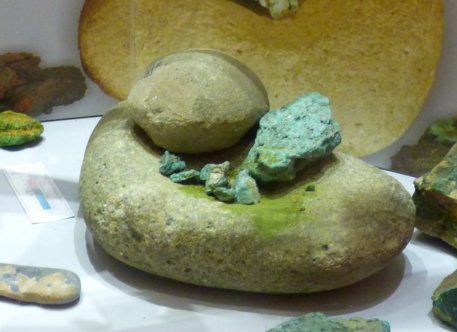
Over the past few decades, archaeology has been reconsidering its stance on the peoples of the Stone Age, and one of the most incredible finds was the copper mines of Great Orme…










































 Sue Vincent's Daily Echo
Pingback: THE WYRM AND THE WYRD: STONE AND BONE – SUE VINCENT | SERENDIPITY