
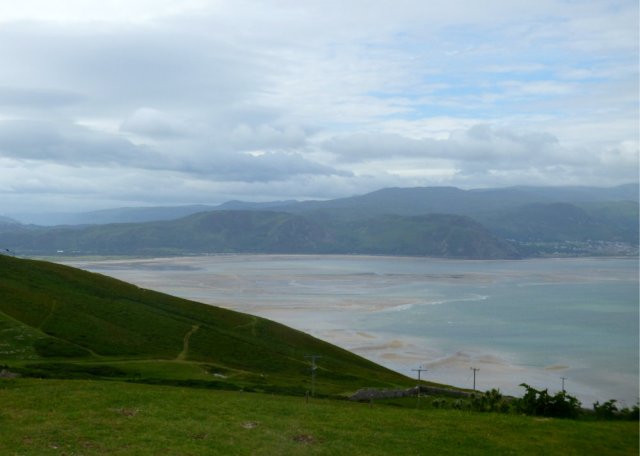
 Llandudno Bay is bounded by twin headlands of pale limestone. We stood on the larger of the two, Great Orme, looking out across a misty, morning sea, already certain that we needed far more time to explore than we would have. By tea-time, we needed to be in Tremadog, about fifty miles to the south… not much more than an hour’s drive on the fast road, perhaps, but we sort of had to call at a stone circle on the way and would take the mountain roads to our destination. We were meeting at five-thirty, which would give us plenty of time, but leave none for further exploration. Not that we would be complaining if it meant we had to come back…
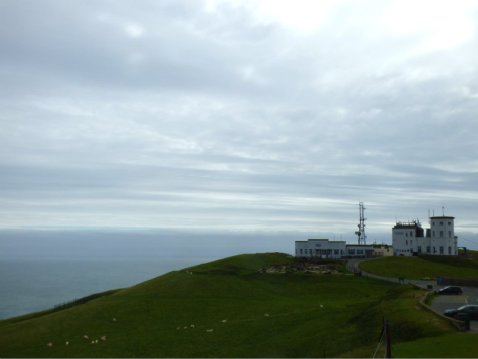
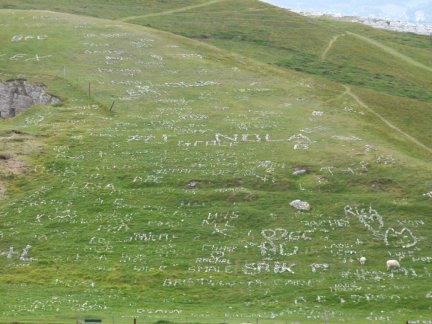
The name, Orme, comes from the Viking word for ‘sea serpent’ and the silhouette of the headland, as we would see on our return, does resemble a dragon’s head. It is a fair size… about a mile wide and two miles long… and the grass covered limestone is home to wildlife and wildflowers galore, as well as the sheep and goats that graze here. The Kashmir goats are the descendants of a pair gifted to Queen Victoria by the Shah of Persia and it is from their number that the regimental goat of the Royal Welsh regiment is chosen and given the honorary rank of lance corporal. There are many visitors to the Orme, including migrating birds and people drawn by the more obvious attractions…like the trams, cable-cars and Summit Centre. Some leave their mark in stone upon the green slopes, even today. But it was the traces of older communities that had caught our interest and we were here to go back in time.
The Orme has a long history in human terms, though we are but a blip on its timeline that is millions of years older than humanity. It is in such places as the Great Orme that time travel becomes a reality, not just the stuff of science fiction. Looking out across the tiny landscape, so many relics remain that carry the mind back, beyond its birth, to its roots in a common life. Secret experimental radar work had been carried out here during the war years and artillery had trained here… some of the gun emplacements can still be found tucked under the cliffs. In 1901, a cable tramway was built to carry people to the summit as tourism began its ineluctable march. It carried coffins too, taking the dead up to the medieval church. St Tudno’s was originally built in the 12th century and we would need to visit one of these days, not only the church but the holy wells. The saint for whom the church was named had made his home on the Orme during the sixth century and a chapel was built on the site. But we were going further back than St Tudno or the Romans who had reopened old mines on the headland.
Continue reading at The Silent Eye































 Sue Vincent's Daily Echo