The third post on our visit to the Abbey of St Albans a few years ago. Parts One and Two can be found by clicking the highlighted links.
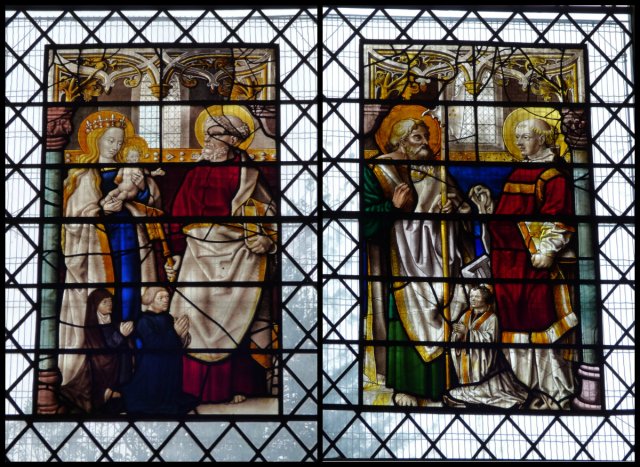
“Look,” said my companion, pointing at two small figures in a pair of stained glass panels, obviously older than those we had seen so far, “they had hobbits back then too…” I have long since accepted that title and the grey wrap I like to wear does nothing to dissociate me from that image.
We were barely halfway down the north aisle… we have evolved a method of looking round churches so as to at least attempt to document everything we can. Sometimes there is so much to see that the beauty, artistry and symbolism becomes overwhelming and it is not until you are sitting in front of the images on the screen that you begin to take it all in.

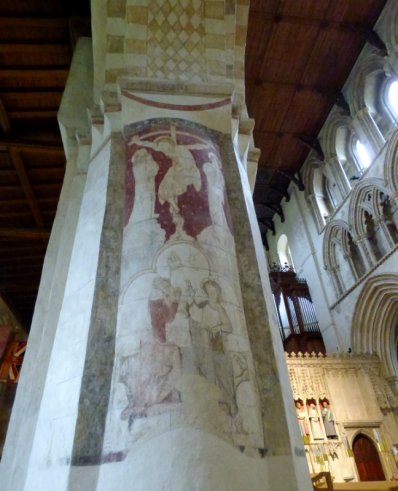
We had only gone a few yards, though, before we noticed the first of the wall paintings in the archways. There are a number of them still surviving, painted on the plaster of the columns by medieval monks. On some of them, the colours still seem fresh and we still know the name of one of the painters… Walter of Colchester, who painted here eight hundred years ago. Each archway bears an image of the Passion above another scene. There would have been little altars beneath them at which the pilgrims would pause to pray… a very early version of the Stations of the Cross perhaps, which did not come into church practice till the late seventeenth century. The curves of many of the archways are painted with stars, arching over each scene like the vault of heaven.
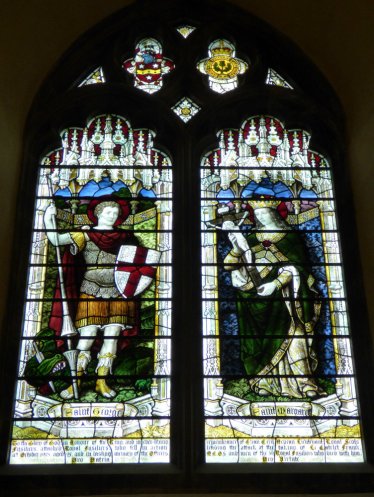
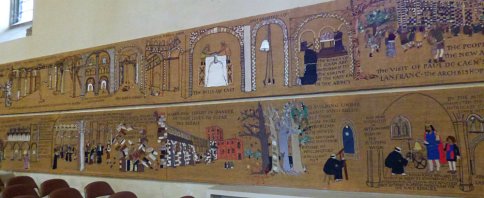
Stained glass windows pierce the outer wall every few steps… just this one aisle holds so much to see and we have barely begun. Along one wall, a long fabric collage tells the history of the Abbey… a modern application of an ancient way of telling stories in pictures that seems to meld with the rest of the art and craftsmanship here.
Each step revealed new treasures… we could only wonder what the rest of the church would hold. But we had been right about the funeral that was about to take place. Ushers stood by the gates at the Crossing to guide visitors away from the eastern chapels. There would be half a church upon which we would not have wished to intrude. But then the choir began to sing.
The acoustics in these old Abbey churches are unlike anything else… and the purity of the young voices coming unseen from behind the screen added another dimension of beauty to the old stones, bringing them to new life, as if they remembered the centuries of sacred music and woke to their song.
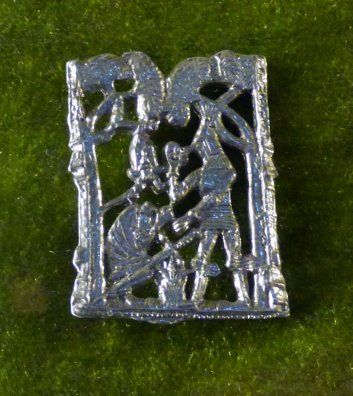
A little further and part of the aisle became a tiny museum, holding cases of treasures like the little badge portraying the martyrdom of St Alban that would have been available to the mediaeval pilgrims. It is a strange picture and once again tied in closely with the work we had been doing for the workshop… and took us right back to the beginning of our journey with our first book, The Initiate, too. In fact, that single small image seemed a bridge between the two.
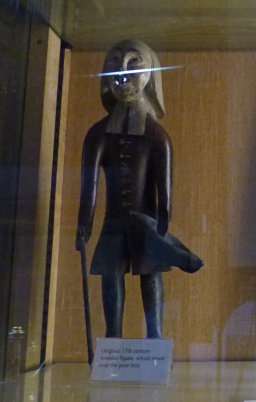
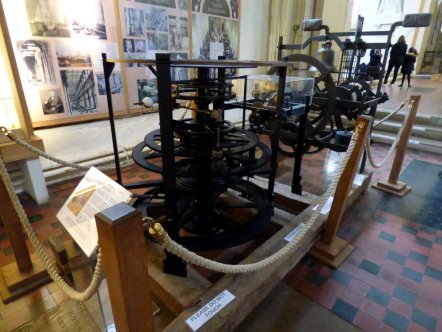
There were a good many small artefacts, as well as fragments of ancient carved stone, illuminated documents and the mechanism of the old church clock. A carved wooden figure in the dress of the 1600s stands behind glass, where once he stood guard over the poor-box. A little distance away are the dole-boxes… carved wood also, from which bread was dispensed to twenty poor women of the parish and which were still in use until the 1970s.
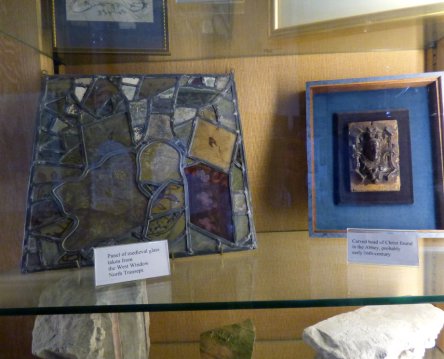
It was the broken and forlorn remnants that drew me though, things that might have ended up on some forgotten scrap heap, like fragments of mediaeval glass and a tiny carved head of Jesus some five hundred years old.
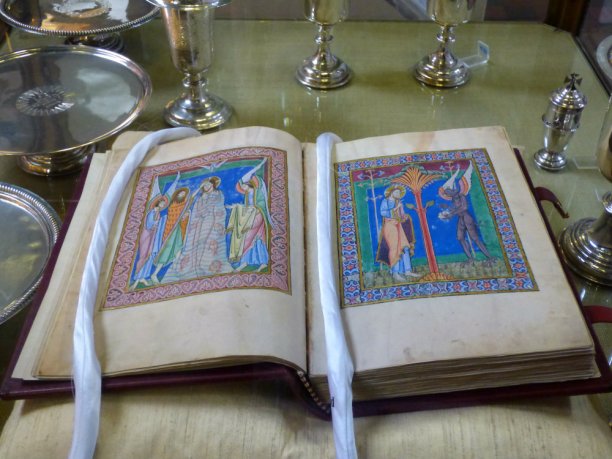
Pride of place, though, went to the psalter. Although this is a faithful facsimile, and not the original which is now in Germany, it is a thing of great beauty. The St Albans Psalter was made in the Abbey by the monks between 1119 and 1146, as a gift for Christina of Markyate, a holy woman and adviser to the Abbot. It is quite unique, holding over forty of these fabulously painted scenes. The pages are open at the Baptism and the Temptation.
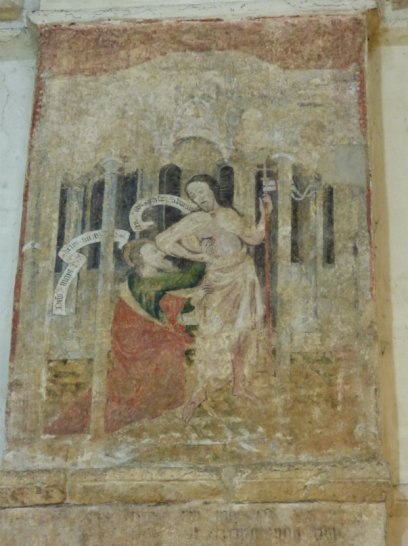
A few more steps and we emerged into the north transept from where you could see the reused Saxon columns of an older church, topped by arches of stacked Roman tiles. On the plastered wall, St Thomas placed his hands in the wounds of the risen Christ, frozen in doubt and wonder for six hundred years and rediscovered beneath the whitewash in 1846. The Christ carries the long cross usually seen with the Baptist, although here it is incongruously topped with the cross of St George. I would love to know what is written in the scroll… and once again the picture ties in with our own journey.
The north transept is dominated by the great Rose Window of Lord Grimthorpe who removed the original and beautiful fifteenth-century window in favour of his own design, which he filled with clear glass. The current glass was designed by Alan Younger, in 1989. The design uses the concentric circles to symbolise the universe with the Earth at the centre, with the triangular areas of colour representing ‘the infusion of spirit into matter’.
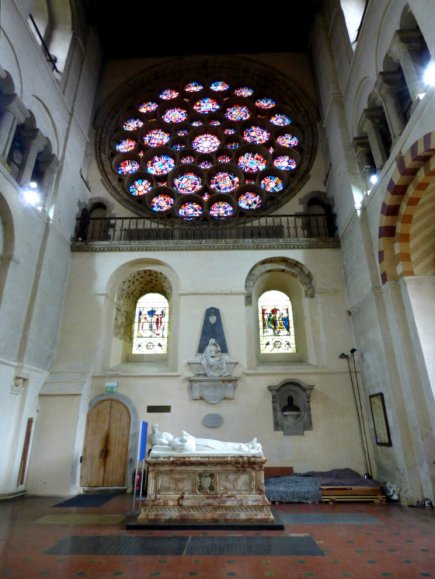
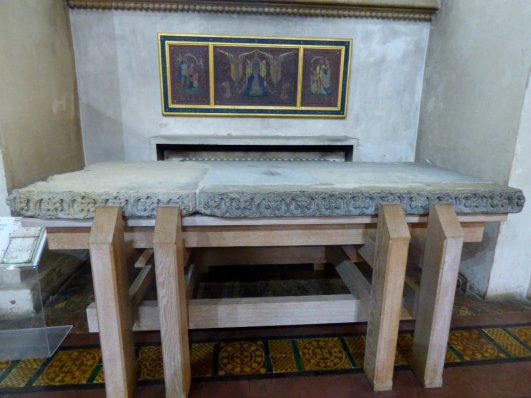
Beneath the great window, two older window placements remain, a reminder that this part of the church was built a thousand years ago. Medieval foliage still lines one of the embrasures, and the watching loft looks down on the sleeping figure of a Bishop. On the eastern wall is evidence of George Gilbert Scott’s less destructive approach; the base of the twelfth-century shrine of St Alban, smashed during the Dissolution of the Monasteries, now carefully reconstructed to form the altar of the Chapel of the Persecuted. Beneath the window, along the balcony, is painted a Latin phrase from the Bible that seems wholly appropriate. “a house not made with hands, eternal in the heavens.” Such a place as this is not made with hands, though they may be the tools we use… nor is it made by those who seek only to immortalise themselves in grand designs. It is raised, stone by stone, by the artists, artisans and craftsmen, with a love and faith that has echoed through the centuries of prayer.






















 Sue Vincent's Daily Echo
Your words and pictures really do the place justice!
LikeLiked by 1 person
Thank you…but I doubt anything could, apart from being there. But while we cannot travel or explore… revisiting some of these beautiful old places is the next best thing.
LikeLiked by 2 people