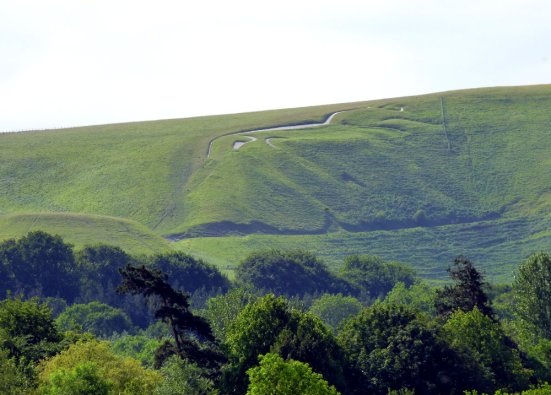
The ancient White Horse of Uffington. Image: Sue Vincent
Chalk horses carved into hill sides, whether they are ancient like the one at Uffington or more modern, like some others in the locality are fairly well known about. However there was a red horse carved into the hillside above the south Warwickshire village of Tysoe up until about 1914.
When I say “horse”, there was actually a succession of one after another. The earliest one to be mentioned was in 1606 by the cartographer, John Speed. The following year Camden mentioned in his book, Britannia. He was coming down the Fosse Way, north of Pillerton. So it would have been visible at a range of four miles.
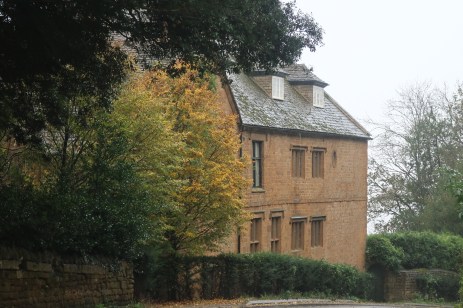
This sandstone house which used to be the Sunrising Inn. Image: Gary Stocker
Various other people mentioned it over the centuries. However it appears that they may have been talking about different horses. The first horse was thought to be from pre 1607 up until sometime in the late seventeenth century. William Dugdale mentions the first, large horse in 1656. A Celia Fiennes, about thirty years after, mentions what appears to be the second, smaller horse, which was cut in the same area where the first horse was. The third, even smaller horse, facing in the opposite direction, seems to have been described by a Reverend Wise in 1742.
Why all the different horses? The horse was created just by stripping the turf from the top soil. The top soil is red, which obviously created the red colour. However because of the fertility of the soil, it would have to have been weeded, or “scoured” on a regular basis, otherwise it would get grown over and lose its shape. So any disruption, whether caused by local or national problems, which kept it from being scoured, would mean it disappearing and a new one being cut. Cutting a smaller one, if you could get away with it, meant less work!
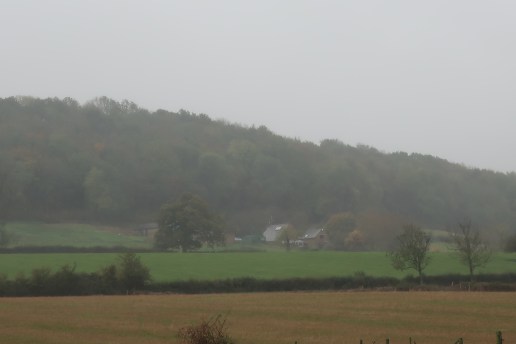
The first three horses were thought to have been in this now wooded area. Image: Gary Stocker
With the third horse, scouring was done every Palm Sunday as part of the tenancy agreement between the tenants and the landlord, the Earl of Northampton. After enclosures in the area, a Simon Nicholls, the landlord of the nearby Sunrising Inn, received the land. He ploughed it up. He thought that by doing so he liberated the “downtrodden peasants” from “feudal service”. However he scored a brilliant home goal. The “downtrodden peasants” actually enjoyed doing it and his pub did well as a result. After that they just stayed down in the village. Maybe he should actually have asked the “downtrodden peasants” first. He did cut a smaller horse closer to the pub, but he did not fool anyone. It disappeared during the course of the century. A new landlord cut a new one at the turn of the twentieth century, only to destroy it in about 1910. Apparently he did not like people visiting to look at it. The landlords there seemed to have a funny way of doing business (a bit like my local)! I am not surprised that the inn has become a private house.
A lot of research was painstakingly carried out in the 1960’s. Using a combination of old maps, old records, aerial photography, interviews (some older people vaguely remembered the last horse) and archaeology all of the above and more was found out.
Why is it there though and when was it first scoured? A common belief was that the Earl of Warwick had it put there to commemorate his horse which got killed in the Battle of Towton in 1461. Other people think that it may have been cut to mark a boundary between Saxon and Celtic territory.
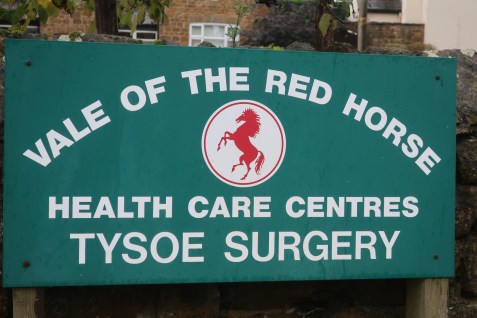
The red horse lives on in various place names. Image: Gary Stocker
Ghostly hoof beats have been heard around there and some say that it might be associated with whatever the red horse was put there to commemorate, rather than with the Battle of Edgehill, which was fought nearby.
Although it has sadly disappeared, the name is still commemorated locally with different place names and there was even some talk, a few years ago in the Banbury Guardian, about cutting a new one.
Sources: “Haunted Warwickshire” by Meg Elizabeth Atkins. Pages 155 – 156.
“Tales of Old Warwickshire” by Betty Smith. Pages 11 – 14.
https://en.wikipedia.org/wiki/Red_Horse_of_Tysoe
http://www.hows.org.uk/personal/hillfigs/lost/tysoe.htm
http://www.hows.org.uk/person…/hillfigs/lost/tysoe/tysoe.htm
http://www.whitedragon.org.uk/articles/redhorse.htm
About the author
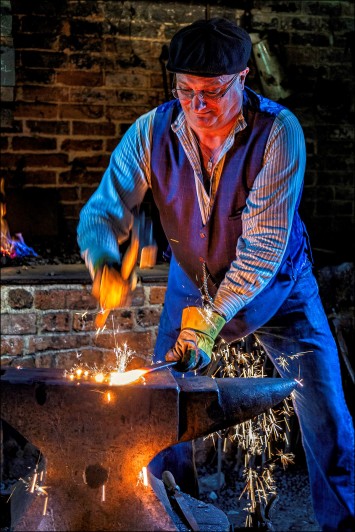
Gary Stocker graduated from Coventry Polytechnic in 1991 with a degree in combined engineering. He worked in civil engineering for nearly twenty years. For the last six years he has worked in materials science and currently works as a test engineer. His hobbies and interests include voluntary work, conservation work and blacksmithing. He is also interested in history, mythology and folklore and he says, “most things”.
 How did your granny predict the weather? What did your great uncle Albert tell you about the little green men he saw in the woods that night? What strange creature stalks the woods in your area?
So many of these old stories are slipping away for want of being recorded. legendary creatures, odd bits of folklore, folk remedies and charms, and all the old stories that brought our landscape to life…
Tell me a story, share memories of the old ways that are being forgotten, share the folklore of your home. I am not looking for fiction with this feature, but for genuine bits of folklore, old wives tales, folk magic and local legends. Why not share what you know and preserve it for the future?
Email me at findme@scvincent.com and put ‘Living Lore’ in the subject line. All I need is your article, bio and links, along with any of your own images you would like me to include and I’ll do the rest.





















 Sue Vincent's Daily Echo
Another fascinating post form Gary, Sue.
LikeLike
He has sent me so much too 🙂
LikeLiked by 1 person