
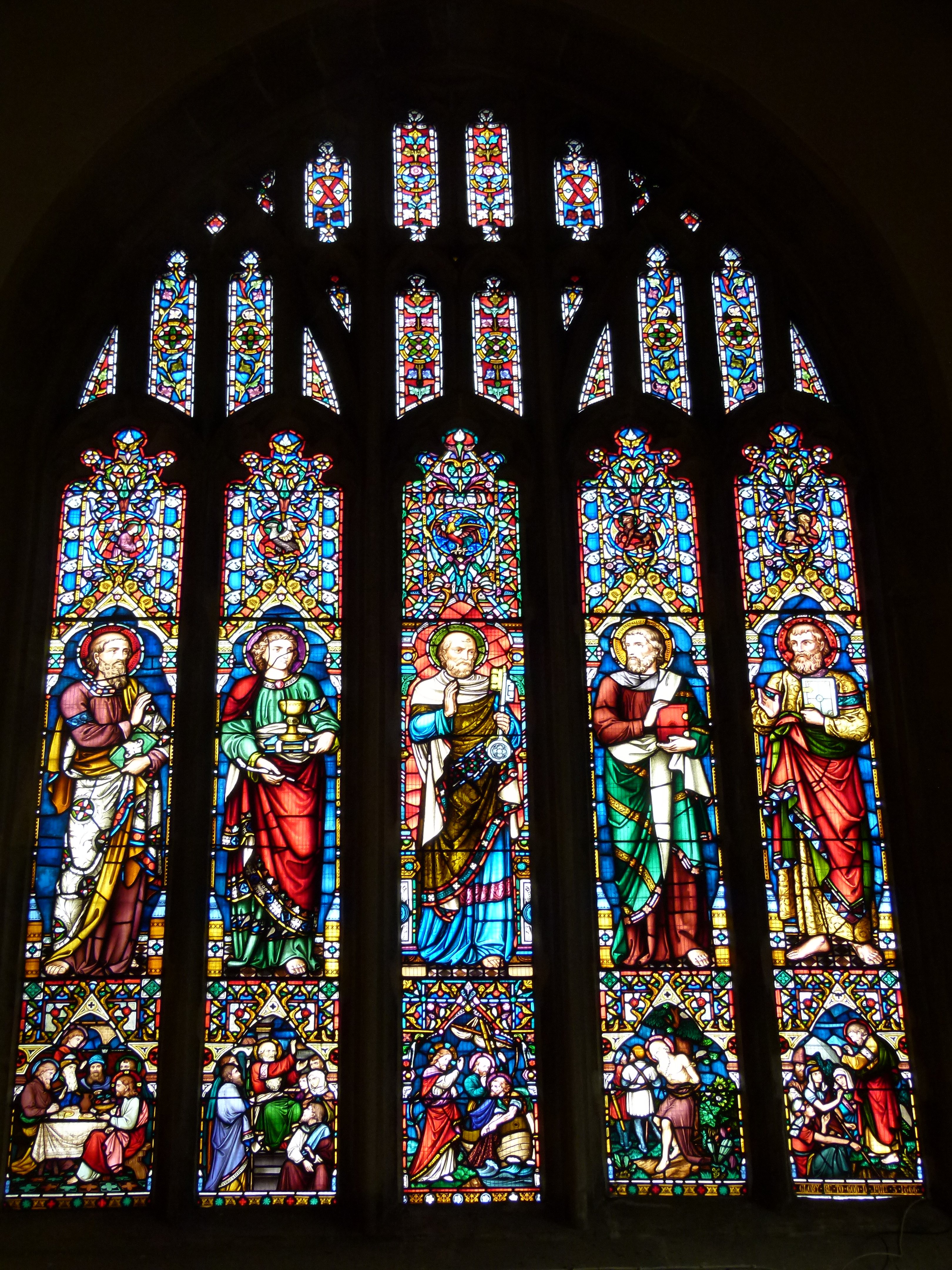
We sat in a disused church with coffee and cake, recovering from the visit to Merlin’s Mound in Marlborough; the very same church where Cardinal Wolsey, the alter rex in the reign of Henry VIII, was ordained priest. Quite apart from the historical interest the Cardinal’s appearance at that moment was something of a gift… or at least, his portrait was, coming on the heels of a comment about the next book. It was to be a time of such gifts, which you could call coincidence except for the frequency and manner of their occurrence.
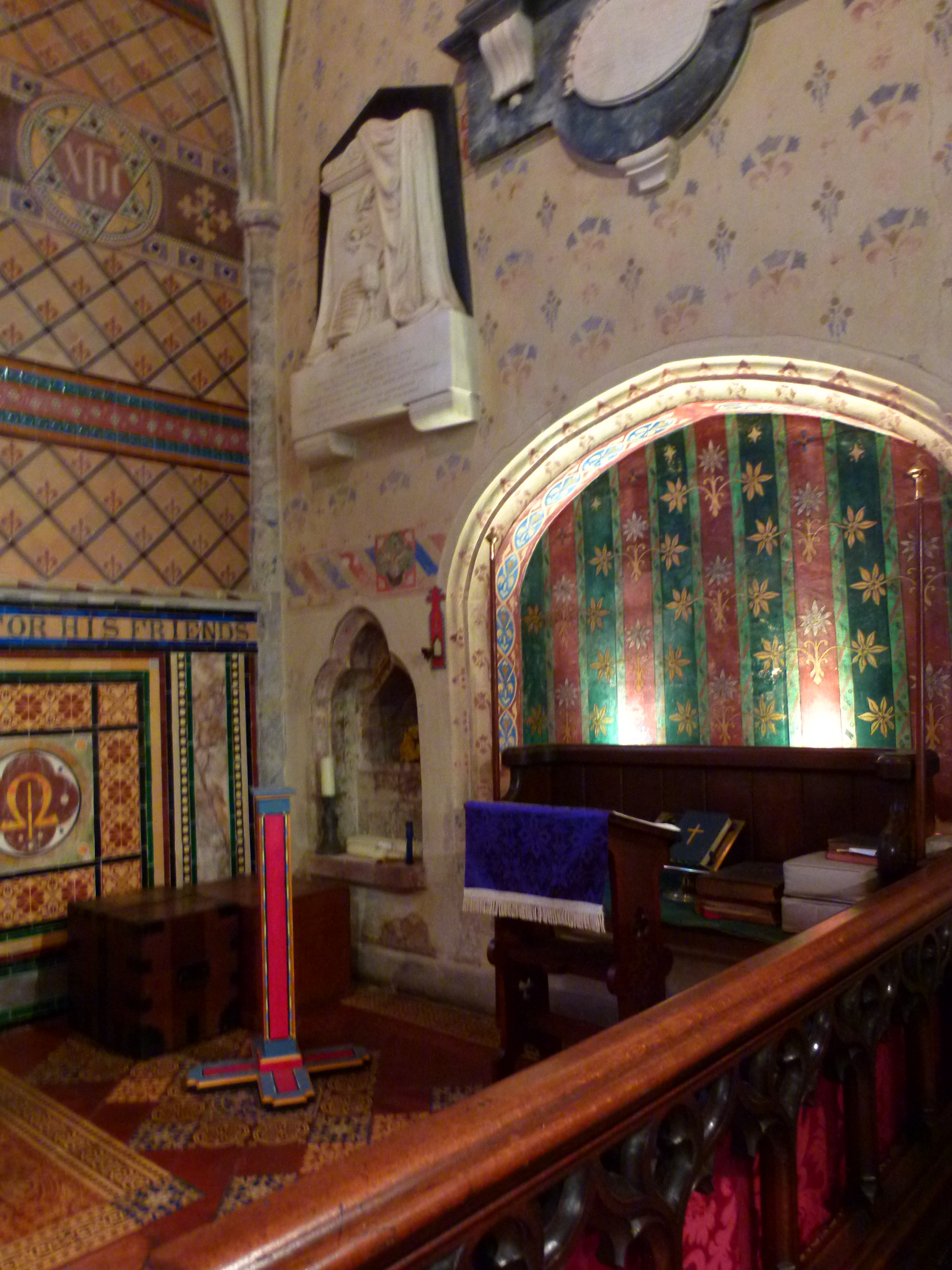
The church at the western end of Marlborough High Street is full of colour, with painted walls and tall stained glass lights. I’m not entirely sure we did the place justice, coming as it did hard on the heels of the Mound, but we appreciated the way that it was now being cared for, having become a shop where locals crafts were sold as well as tea and cake, contributing to its upkeep while maintaining access to the building. Far better than the sad fate of many such places, turned over to developers and converted into expensive apartments.
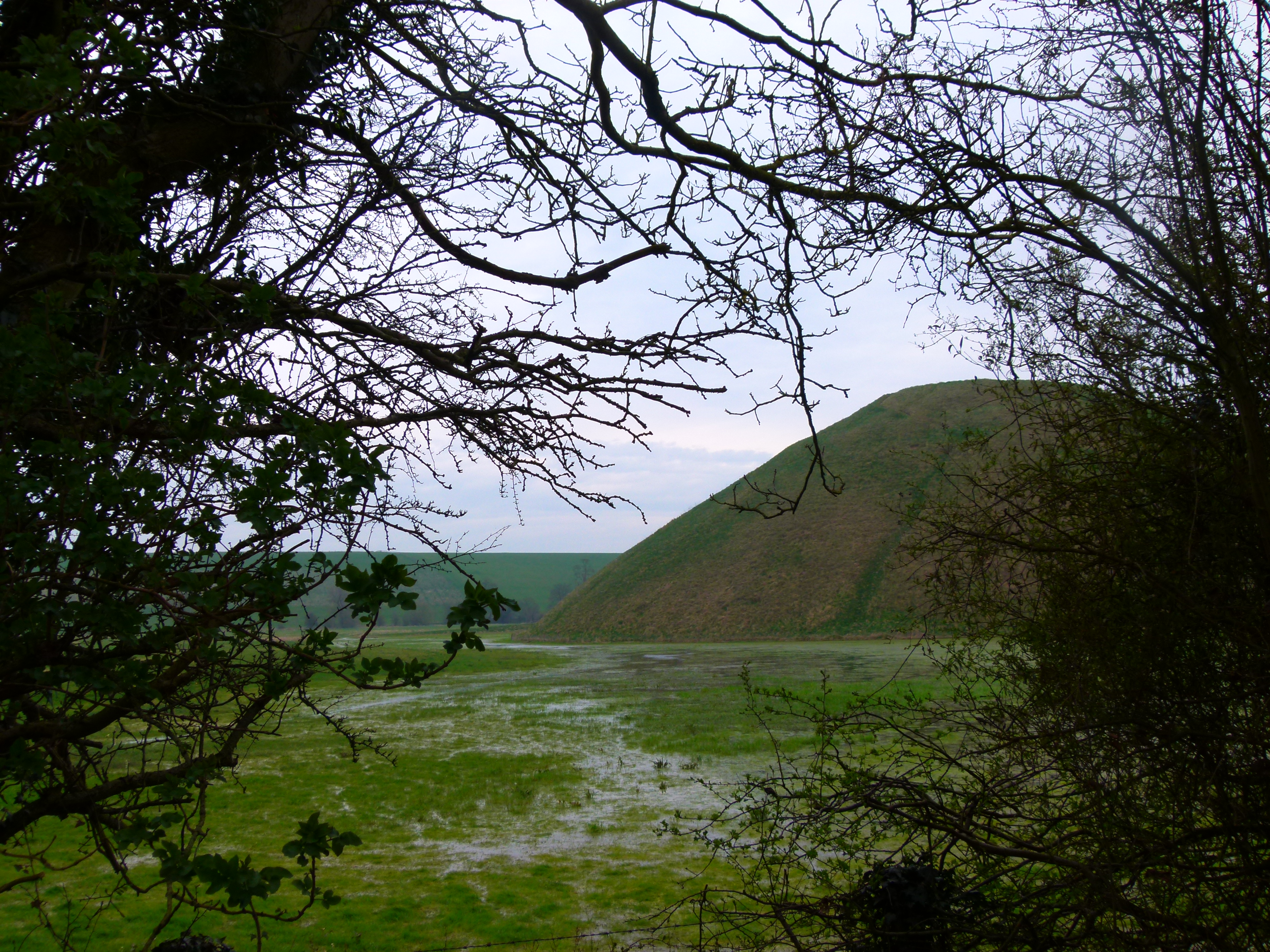
We returned to the car and continued the journey, following the Kennet river towards Avebury. It has become something of a tradition now that we stop to pay our respects at Silbury Hill. It is twice the height of the Mound and a mere six miles away… you have to accept that they were linked, especially as barrows and ancient sites line the road between, entering into one of the most sacred of ancient landscapes still surviving in England.
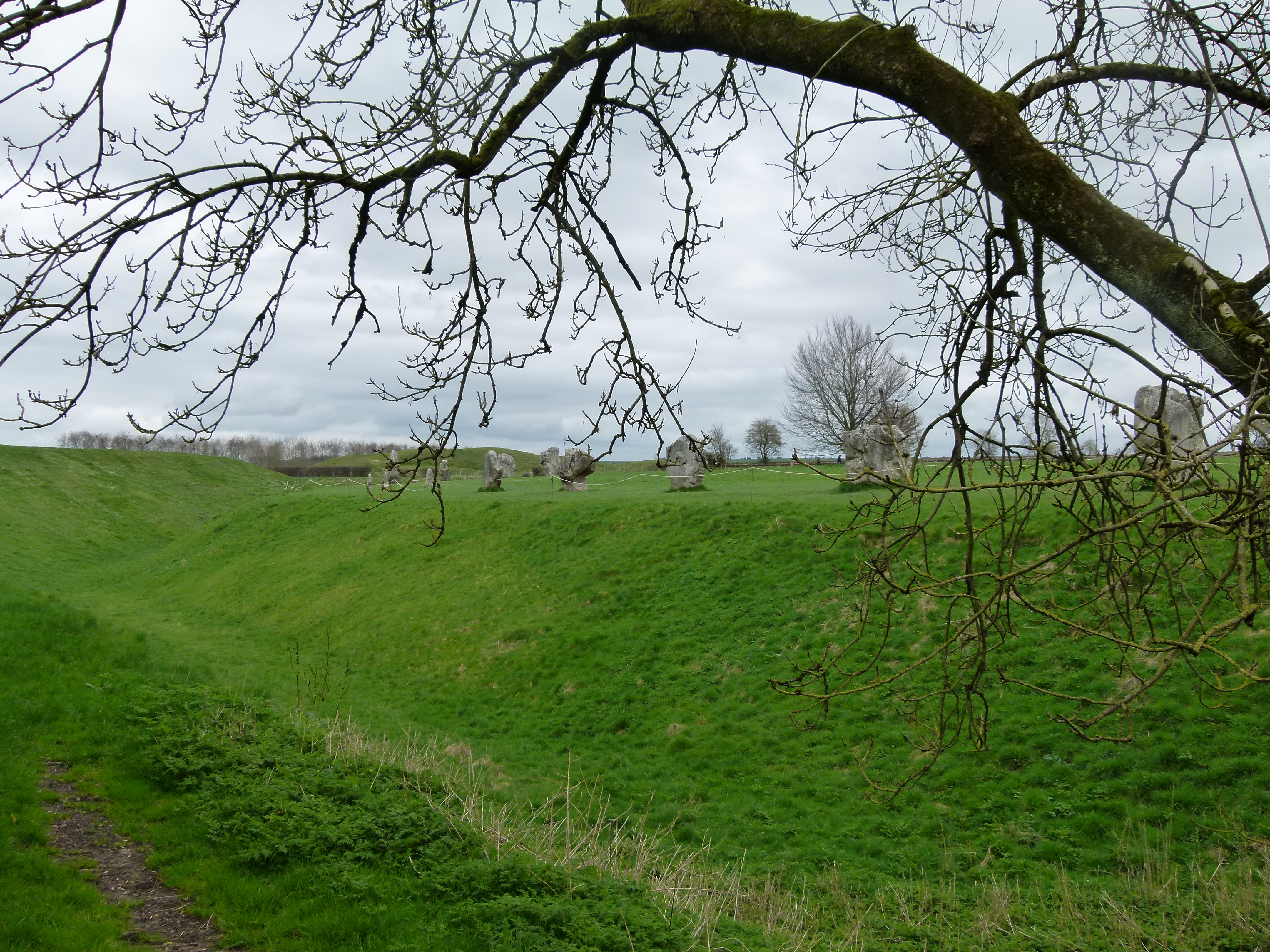
Of course, here there are no buildings, no scale of reference as the huge, man-made hill towers over the plain as it has for over 4750 years. It is older than the pyramids of Giza in Egypt, its internal construction sophisticated and I itch to climb it and stand on the summit, looking out over the land. This is forbidden, however, to protect the Hill from the erosion of feet. Sometimes, though, in protecting and preserving the structure you lose sight of the essence of what something was made for. I have a feeling that it is only by being in the landscape there, looking out from the top, you would begin to understand why our ancestors built that mound there. When you consider the rest of the landscape with its multitude of barrows, stone circles and avenue of monoliths, you know without question that this is something very special.
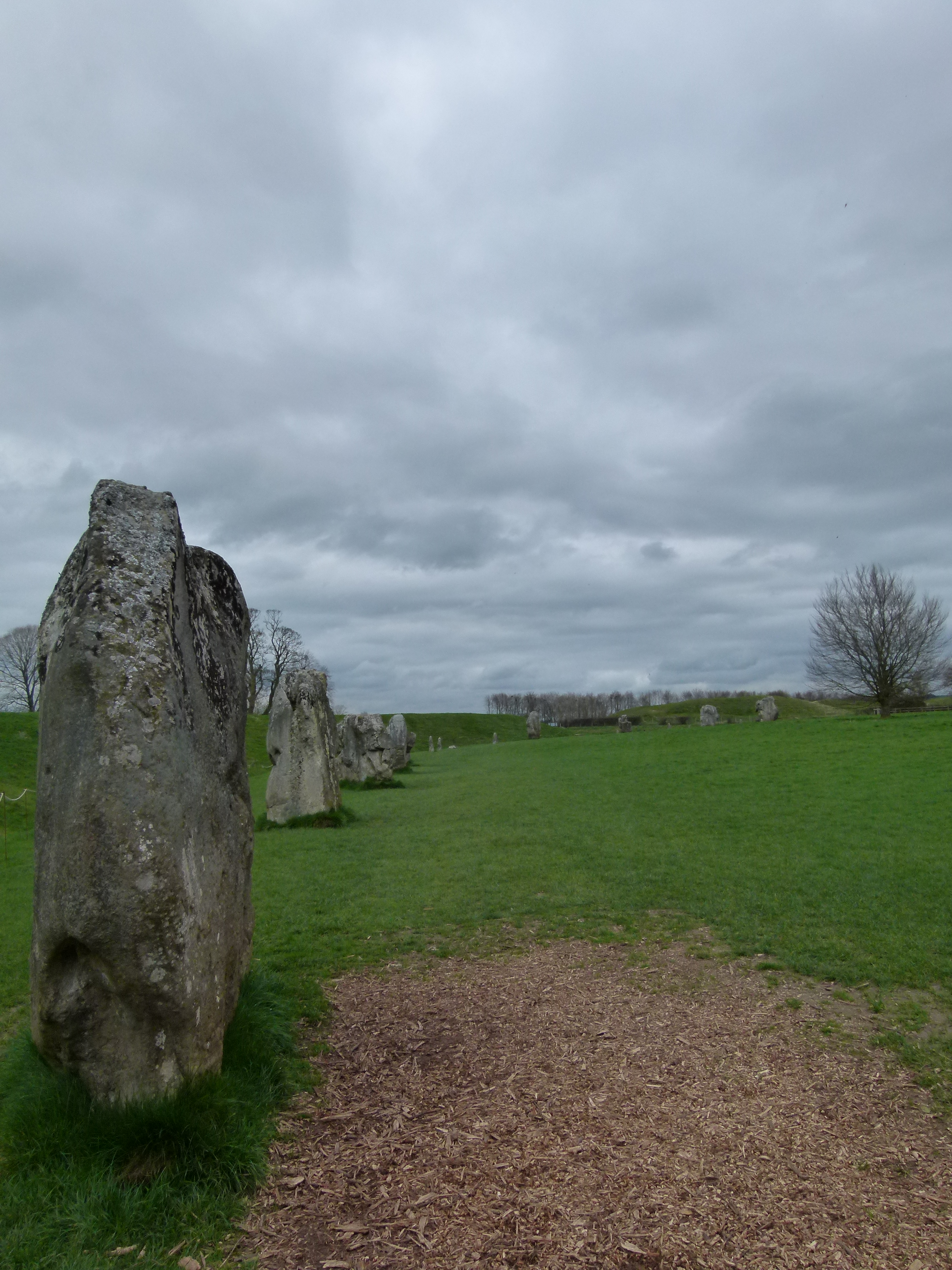
We have learned in our travels that size matters… and then it doesn’t. Not really. The huge ancient monuments seem smaller the closer you get, defying the laws of physics but giving lessons in perspective and perception that we cannot help but take to another level. The builders of these things were no ignorant savages. The sheer scale in which they worked, the beauty and complexity of what they have left us is testament to that. Yet these, we are told, we simple people, nomads who had just discovered agriculture and begun to settle in one place… In a time when working the land with antler picks would have been hard enough work and community a new thing, why did they take the time and effort to shape the landscape on such a massive scale? What was the driving force behind that concerted, coordinated effort? Who held that much power?

The only similar structures I can think of throughout our history where such comparative magnificence is seen is in the towering medieval cathedrals that dominated the mean streets and hovels of the poor who built them. Perhaps that is the link, we may never know for sure. We can only stand in awe, acknowledging that there are questions to be asked that may remain unanswered. The Mysteries are not so called without reason.
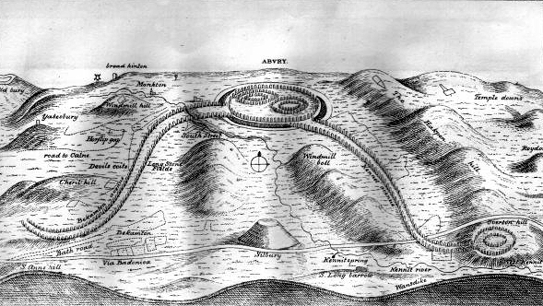
William Stukeley’s Serpent Temple






























 Sue Vincent's Daily Echo
That stained glass window pic is fabulous.
Enjoyed the piece too. ( just thought I better add that LOL)
LikeLike
One of many, Richard… I can’t resist them 🙂
LikeLike
Nothing wrong with that 🙂
LikeLike
😀
LikeLike
that window is awe-inspiring and these monuments of all sorts really give you pause to think, don’t they?
LikeLike
The window is one of many I have… too many, almost. Yet all are illuminating when you start thinking about the symbolism.
The ancient things here are something else though… older than the pyramids… and we drive past barely noticing many of them. Odd isn’t it?
LikeLike
William Stukeley’s Serpent Temple drawing reminded me of the mysterious Serpent Mound in our state: http://www.greatserpentmound.com/ I like that there are still unsolved mysteries.
LikeLiked by 1 person
Tha too is somewhere I would love to visit one of these days… Where would be the joy in an existence without mystery?
LikeLike
Amazing! Beautiful and so precise. The ancients had a definite connection with the earth and all that is sacred within and outside of it.
LikeLike
Yes, they did, Anne.
LikeLike
Pingback: Rooted in the Land – Of Staff and Stone – France & Vincent