
Reblogged from The Magical World of G. Michael Vasey:
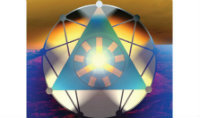
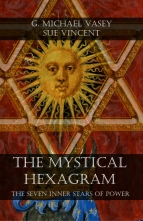
Several years ago, Sue Vincent and I wrote a book about the Hexagram. The book explores that symbol. “Not from some scholarly or deeply complex perspective, but seeing it as a representation relating to life and living. The forces and pressures that are associated with the hexagram are, after all the forces of life at both practical and Universal levels. By exploring and beginning to understand the symbol, we are able to learn and discover more about ourselves.” On the website for the book, I have occasionally pointed to how the hexagram is a key of sorts to help unlock deeper mysteries in many different occult symbols or methods. In the last few months, I have been exploring the Czech landscape – the slavic landscape to be more precise – and I came across yet another example.

The Mystical Hexagram
In slavic myth, the world is seen as a tree – a tree of life if you will. In fact, it may be that the ancient Slavs worshipped trees and the Gods associated with them. So imagine from this slavic perspective that creation is a tree – a huge and ancient Oak. The huge Oak reaches up to the sky and its branches reach up to heaven while its solid roots reach to the underworld. The trunk is the world. Now, atop the tree and the ruler of heaven is the mighty Perun – God of thunder and lightening. Often symbolized by the Eagle and storms. A mighty warrior wielding a mighty battle axe riding a chariot. His weapon is lightening or golden apples that he throws at his enemies. He is representative of Fire and Air. Beneath him, ruling the underworld is Veles, a trickster, a shapeshifter and symbolized by the serpent. He is often pictured as having the head of a bear and the body of a serpent and he punishes with disease. Veles is representative of Earth and Water.
Continue reading at The Magical World of G. Michael Vasey




















 Sue Vincent's Daily Echo
Sounds very interesting, Sue! Will head over, and need to get the book. The Hexagram was to thank the Catholic sole domination – for a long time misinterpreted. Very often based on the less knowledge of catholic scientists too. 😉 Thank you for mentioning your bock. Michael
LikeLike
It is an interesting read, Michael, for this is a very old symbol indeed.
LikeLike