

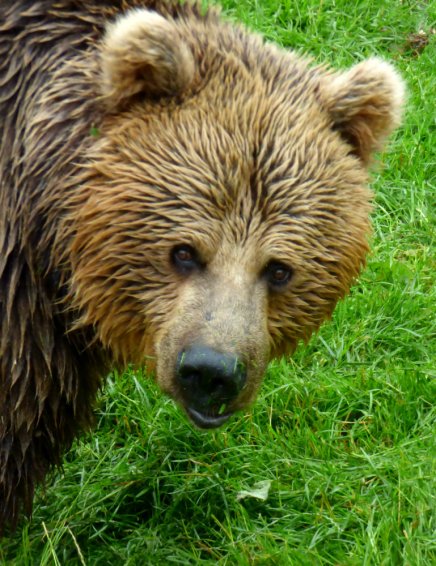
Another erstwhile resident of Britain is the Brown Bear. It figures in many of our legends and folktales and it is for the bear that the legendary King Arthur was named. These lumbering giants still roamed our land until around a thousand years ago, when overhunting and the horrific but popular ‘sport’ of bear baiting finally rendered them extinct in Britain.
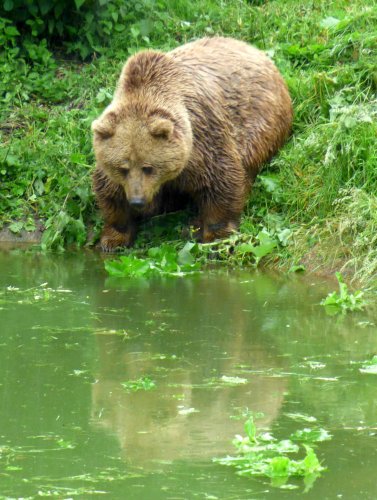
Along with meat and fur, one of the major factors that inspired the hunters was fear; they are powerful creatures. Bears and wolves were the major predators and even the local lords and kings supported their eradication, offering bounty to those who killed them. Bears were historically carnivores, with their diet being 80% meat. That changed with the changing environment. By the Middle Ages, that had halved and for modern bears, meat makes up only 10-15% of their diet, though they will feed on sheep when they can, making them a very real threat to farmed animals as well as to the deer it is hoped they would help control.
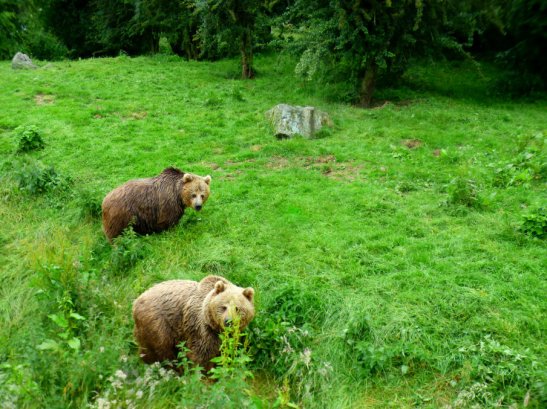
Across Europe, there are several populations of the bear, including a small and endangered group in the mountains between France and Spain and a reintroduced group in Italy which, in spite of some attacks on humans, was hailed as an environmental success. Statistically, they are not a great threat to humans. In Scandinavia, where there is a healthy population of bears, three people were recorded killed by them in the last century… as many as were killed by sheep in a similar period in the UK, while cows have killed 74 people here in the last 15 years. Figures alone do not tell the whole story though… the deaths by cow were caused largely through inappropriate human behaviour… but then, that might also be the case for the sheep and the bears. We do not always have the respect that we should for the animals with whom we share our planet, expecting them to conform to our needs and behaviour.
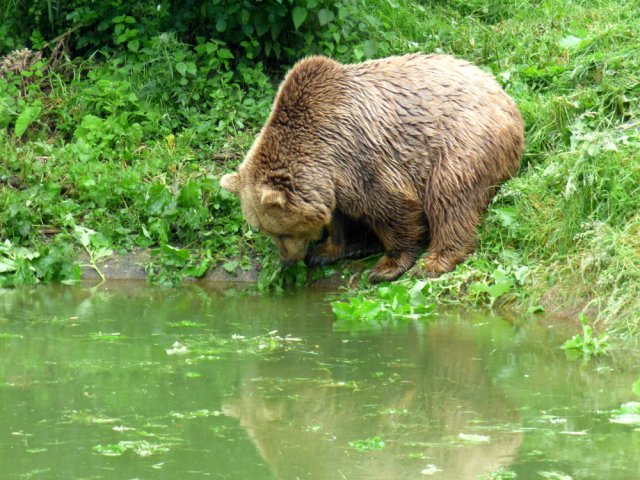
More controversial than the reintroduction of the lynx is the tentative hope to reintroduce a small population of brown bears to the UK. There are, as always arguments both for and against the reintroduction of any animal, let alone a top predator. Whilst there are undoubtedly legitimate fears for livestock, it must also be borne in mind that we have changed our landscape over the centuries and just because it was once suitable for the animals we seek to reintroduce, it does not automatically follow that it would be so now. Nor do we ourselves have the skill and knowledge we once had to live side by side with large animals… we would have to learn all over again and in the interim period, there would doubtless be outcry against predation and possibly human tragedies. It is not a straightforward debate with black and white answers.
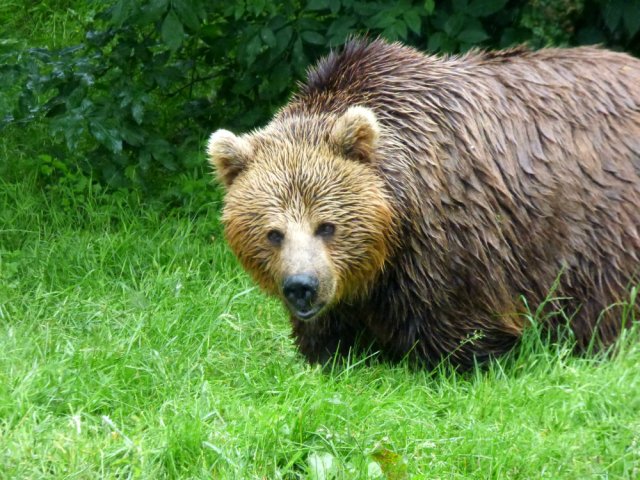
I have to wonder though, whether in our little island we have become spoiled by our lack of predators over the past thousand years. Our largest wild carnivore is the badger, our only venomous snake, the adder and our indigenous spiders, in spite of my recent escapade, give little cause for concern. We do not have an inalienable right to the land or our use of it. We too are animals… probably the most efficient and deadly predator on earth… and as dependent upon a healthy ecosystem as any other creature. Perhaps that ecosystem would benefit from the balance provided by the bears.
Some of the arguments both for and against rewilding can be found in this BBC Earth article that includes details of the reintroduction of the beavers, that had been absent for over 400 years.







































 Sue Vincent's Daily Echo
Reblogged this on GrannyMoon's Morning Feast.
LikeLike
Thank you!
LikeLiked by 1 person
America is a lot less densely populated than the U.K. and we’re having a really a hard time not slaughtering our OWN brown bears. Where would they put them where they wouldn’t be in direct conflict with humans? I love bears, but I somehow don’t see a happy ending here. Maybe up in northern Scotland or Wales?
LikeLiked by 1 person
It would have to be Scotland, I think, unless they were in a very well managed area. There is a large estate there intent on reintroduction of these species, but there is naturally a lot of opposition.
LikeLiked by 1 person
Love Bear
LikeLiked by 1 person
I’m rather fond of Bear myself 🙂
LikeLiked by 2 people
in my environs, it’s the black bear – and we have a plethora of them
LikeLiked by 1 person
Nothing here to compare with hem at all.
LikeLiked by 2 people
I believe our black bears are a bit smaller and less aggressive than your browns
LikeLiked by 1 person
I think I’d still like to know they were around 🙂
LikeLiked by 1 person
We were camping in Montana, where the shops sold little bracelets of bells that were supposed to keep the bears away. When we ran into a native American ranger and asked about that, she laughed and told us that if we met a bear, those bells would be the last thing we heard…
LikeLiked by 2 people
I think a bear would hear us noisy humans befoe the bells…
LikeLiked by 1 person
They sure are beautiful creatures. . But would I like to find one rummaging my bin??!!
LikeLiked by 1 person
I doubt we’ll see them here, for that very reason, though in many respects that is a shame.
LikeLiked by 2 people
I agree… But if we can’t give them a landscape that is close enough to their real home environment, it’s not fair on them either…. So maybe we can stick to foxes!
LikeLike
Agreed, though we do have their own environment here.
LikeLiked by 1 person
I guess it’s more if the people who live around those areas want them back too… Though like you said, it’s unlikely to happen anyway. 😊
LikeLiked by 1 person
Lynx and wolves stand a better chance, I think.
LikeLiked by 1 person
Possibly, though I’m not sure I fancy coming face to face with any of them!!
LikeLike
I wouldn’t mind… at a safe distance 🙂
LikeLiked by 1 person
😀
LikeLiked by 1 person
Black bear country near where I live … people have bear-proof bins (not that everyone uses them-arrogant ijits) and common sense (not that everyone uses that either-sigh) and manages to live in harmony with the local populations.
LikeLiked by 1 person
It would be nice to think we could too, though it would take quite some time before we learned how, having been without large animals here for so long in the wild.
LikeLike
Reblogged this on Anita Dawes & Jaye Marie.
LikeLiked by 1 person
Just recently visited a bone cave in the Mendips… and the greatest excitement was to hold an 80,000 brown bear bone…
LikeLike
Banwell? Interesting place.
LikeLiked by 1 person
Yes indeed Banwell! Have you been?
LikeLike
No… but I’d like to 🙂
LikeLike
I really recommend it, Sue, and there are some interesting C19 grottoes and a tower which have been restored… there are amazing views too!
LikeLike
I’ll have to try and get there next time I am down that way, Lois 🙂
LikeLike
Bears are interesting creatures and have often been featured in folklore, books, and movies. I’m happy to see them in these mediums versus up close and personal. I hope the project works. They are part of the ecosystem and when we eliminate what we consider undesirable species we upset the balance.
LikeLiked by 1 person
There are some very convincing arguments for reintroducing the predators, ones that cover everything from soil erosion, further species loss, water conservation and flooding. I still think it will be a hard fight for it to happen though.
LikeLiked by 1 person
It always is.
LikeLiked by 1 person
Sorry. A funny thought crossed my mind (I had nothing to do with it) when I came to the last close-up picture. I wanted to wash and tumble dry him to fluff up his fur. Guess he’s real, not a toy 😉
LikeLiked by 1 person
For some reason your comments keep ending up in the spam file…
Yes, I would have liked to dry him off too, but then, I was just glad to see him at all. The weather was appalling too.
LikeLike
Sorry about the spam. 😦
LikeLiked by 1 person
WP up to their tricks again…
LikeLiked by 1 person
LikeLiked by 1 person
Oh, those nasty, vicious sheep.
LikeLiked by 1 person
…and cows 🙂
LikeLiked by 1 person
Aaargh!
LikeLiked by 2 people
I agree with what you said about should we re-introduce to a landscape that is wildly different but I hope that these animals can be reintroduced to the native land that they were once on. It will take a lot of talking and educating people but I would love to see, brown bears, badgers, lynx, beavers and wolves back in Britain.
LikeLike
I hope we can do it too, Adele. There are still areas they could roam, far enough from homes…
LikeLike
Reblogged this on firefly465.
LikeLike
It would be nice Sue, but I can’t see it happening until we stop trying to kill off the wild animals who currently live alongside us like Bill Badger and Brer Fox. How long will it be before someone decides that introducing Beaver back into the countryside was also wrong? Personally I would love to see Bears, Wolves and Lynx in the more remote parts of the British Isles. 😉 x
LikeLiked by 1 person
Oh there are already complaints about the beavers… and the red kites. Ful circle, the kites are being accused of killing farm animals… which is one of the reasons they were almost eradicated before. They eat rubbish, rodents, roadkill and worms… all of which is fine by me!
LikeLiked by 1 person
Reblogged this on Have We Had Help? and commented:
A great article from Sue 😉
LikeLiked by 1 person
Thanks, Jack.
LikeLike
Great Post!
LikeLike
Thank you.
LikeLiked by 1 person
Nice article, wouldnt it be lovely to give a part of the island back to nature! I worked in UK for a while, I noticed how rabits over-populated the orgcharts, in absence of a predator like the lynx, since the foxes are already being decimated by hunters! Following for more articles!
LikeLike
There is space for returning some predators, I believe, though there would always be concerns and opposition.
LikeLike