It is with pleasure that I hand the blog over today to that inimitable literary Red-Beard, Geoff le Pard, whose new book, My Father and Other Liars, was released in paperback and for Kindle earlier this year. You can read the first two chapters of the book by clicking here. Details of further guest appearances for the Blog Tour can be found here.
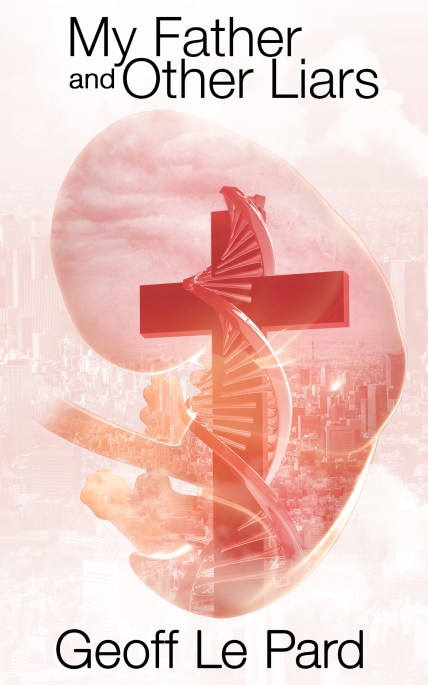
“An action-packed and intricate blend of religious nuttery, thriller and romantic novel.”
My Father and Other Liars (MFOL) started its life one bleak frozen December day in Union Square San Francisco. I stood, stomping my feet to keep out the chill while I waited for my family to emerge from Macy’s. Also stamping their feet were two or three young people, standing behind a sign asking for donations towards a local soup kitchen. The Hyde, from memory. I had already signed up to volunteer at Crisis at Christmas, a UK homeless charity so wandered over to kill some time and find out a little about what the Hyde did. The young lady I spoke to, who I chiefly remember for her white beanie, curly pigtails and unfeasibly bright teeth told me she was coming to London in the following June. ‘I’ll buy you a coffee if we see each other’ she said in response to my ten buck donation. I remembered that encounter and, as writers do, ‘what iffed’ it into a scene where my main characters first meet.
Forever more the book has started in San Francisco, variously in Union Square, near Pier 39 and by City Hall with two strangers meeting. I’ve used my trips to SF – I go back every other year or so – to take pictures and to build up a picture of place, of the temperature of the place – the speed people move, the frenetic streets, the mix of tourists and busy locals, the insistent cabs and the ubiquitous buses. This is a location I know reasonably well and can call it to mind when I need to. But it is also thousands of miles away so if I need something specific I’m stuck. It happens and you have to write round it. That is the danger of locations that are real but not immediately accessible.
MFOL has challenged me in ways my other books have not around the locations I have chosen. I didn’t set out to move the story around quite so comprehensively but as the story developed so did the need for a variety of locations.
San Francisco
I wanted American Lori Ann and British Mo Oldham (my main protagonists) to meet somewhere neutral, where neither was exactly comfortable. Mo s British and Lori Ann a resident of the dusty mid-west. Since my first scene came to me in SF that’s where I stayed
London
A cop out in a sense as it is my home territory but Mo, as a freelance journalist who has worked for the major English dailies and a Brit was most likely to be based here. Writing these scenes have been a pleasure and a doddle. The real challenge was Mo’s flat, set in a Kennington Mansion block – I used my memories of two friends who lived in similar accommodation a few years back.
Beaumont, Oklahoma
This was by far the most difficult. The Church of Science and Development (you’ll find out more about this church as the blog tour develops – you’ll have to read on!) is fictitious. It needed a home and somewhere where an evangelical American church might be based. Somewhere remote. The obvious area was one of the Bible belt states. I’ve not spent any time there and in choosing Oklahoma, which fitted the bill, I took a chance. These days you can read about a place, look at images and steep yourself in research but there’s nothing like real experience. The smells, the pace of life, the feel of the morning air, the sharpness of the colours. Which is where beta reads can be so helpful. I will discuss those later in this tour. Suffice it to say, by choosing somewhere about which I knew nothing did cause me some anxiety and I will be the first to admit I may yet irritate readers if it turns out I haven’t really captured its essence
Leon Nicaragua
Another challenge! In my story, Isaac Beaumont, the leader of the Church and Lori Ann’s father, has a secret. I decided I needed him far away from home, somewhere both remote but culturally uncomfortable for him. So where could I put him? Where might he go as a young man that was remote and dangerous? Put like that Nicaragua was an easy choice; the civil war and the US support for the Contras is well known. A zealous young Christian looking for a mission to prove himself may well have chosen Nicaragua as the venue for is mission. And the timing worked well for a story set about now. That just left getting a feel for the place. This has proved most difficult. I have yet to visit but my son and his girlfriend did last year and their feedback, their photos have been so helpful. Once again, people familiar with the place may query some aspect but I feel sure, for the vast majority they will find it credible.
I moved my characters around in this book; they visit Northampton; Box Hill, Redhill and Caterham in the Surrey; and Washington and New York in the US (I know these places sufficiently for the brief scenes there). However in each case the risk is that something might change, some road or street might change or be shut or a building demolished. I try and check through the internet, and street view but there is nothing like actually knowledge.
Graham Swift once said, about his Booker prize-winning Last Orders, that he did no research for the most important scene set in Margate on the north Kent coast. He never went there and didn’t see the need; he understood seaside towns and that was sufficient. I like that idea but I’m not sure I’m brave enough to do no research. Not yet anyway.

“When British freelancer Maurice Oldham saves American scientist Lori-Ann Beaumont from a pack of journalists at a ProLife conference in San Francisco, neither expects to see the other again. But six months on, Lori-Ann is on Maurice’s doorstep, bruised, penniless and desperate to find her boyfriend, Peterson, who has gone missing in England. Maurice soon realises nothing is as it seems with Lori-Ann. Why is she chasing Peterson; why has her father, Pastor of the Church of Science and Development sent people to bring her home; what is behind the Federal Agency who is investigating Lori-Ann’s workplace in connection with its use of human embryos; and what happened in Nicaragua a quarter of a century ago that is echoing down the years? For Maurice and Lori-Ann the answers lie somewhere in their Fathers’ pasts. Finding those answers will take Lori-Ann and Maurice from England via America to Nicaragua; in so doing they will have to confront some uncomfortable truths about their Fathers and learn some surprising things about themselves.”
 My Father and Other Liars is the second book by Geoff Le Pard. Published in August it is available as an ebook and paperback here:
Amazon.co.uk
Amazon.com
His first book, Dead Flies and Sherry Trifle can be found here:
Amazon.co.uk
Amazon.com
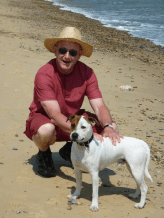
About the author:
Geoff Le Pard started writing to entertain in 2006. He hasn’t left his keyboard since.
When he’s not churning out novels he writes some maudlin self-indulgent poetry and blogs at geofflepard.com. He walks the dog for mutual inspiration and most of his best ideas come out of these strolls.






























 Sue Vincent's Daily Echo
Thank you Sue for hosting this. Most appreciated
LikeLiked by 1 person
My pleasure Geoffle!
LikeLiked by 2 people
Reblogged this on TanGental and commented:
My second guest post, this time over at Sue Vincent’s blog, The Daily Echo. I’m talking about the difficulty of dealing with multiple locations in your books, especially those you have never visited.
LikeLiked by 2 people
Cracking post Geoffle – I like that quote too, but like you I don’t think I am brave enough to do no research!!
LikeLiked by 2 people
Thanks Sacha. I’d love to skip research until I start and then I’m sucked (or is that suckered) in.
LikeLiked by 2 people
Reblogged this on oshriradhekrishnabole.
LikeLiked by 2 people
Thank you do much for the reblog!
LikeLiked by 1 person
Great post.
I have often wondered what is that in a writing that has the power to holder our attention as against the mega-bytes of written stuff which we glance at and then move away? I suppose it comes down to a tautness and a possibility creating style that does the trick. What would you say?
Shakti
LikeLiked by 2 people
I suppose those who know that for sure make a fortune from writing! Personally it is a combination of, as you say tautness , a compelling narrative and believability. I become quickly disillusioned if the plot twists don’t stack up. Suspending disbelief for fantasy is fine as long as the internal logic is consistent.
LikeLiked by 1 person
Fascinating post. I really enjoyed learning about the history, and the fact you stayed true to the origins of the story when you stuck to San Francisco. It’s important I think, reflecting the essence of a place. I agree that you don’t always need to visit a location, but if you are to bring a scene to life you need the elements you described; sights, sounds, pace, etc.
LikeLiked by 1 person
A course i went on was tutored by a poet/novelist who was mostly a twannock but he made the point about dusting your prose with little grains of detail like salt in your chips. I always have that idea in mind whether it’s physical description or place or mood. Makes sense to me anyway since as a reader I like to make up my mind about Pepe and not be told about them
LikeLiked by 2 people
That’s great advice. I’ll remember that one 😀
LikeLiked by 2 people
Lovely to read about the real experience that kicked off this novel, Geoff, and you’ve certainly worked hard to make your locations authentic. This novel does move around the world a lot but always appropriate for the story.
I think even in a location we know extremely well there’s still the chance of irritating readers. When I launched my novel in Newcastle I read from a chapter that describes a walk through Jesmond Dene. Later, someone queried whether I was right about the smell of the river running through it which had been apparently cleaned up since I’d fixed it in my mind. Since we were both vague about the exact year this happened, and my novel is set in the recent past, I don’t think this really mattered, but it was a little unnerving for a moment!
LikeLiked by 3 people
There’s always the danger, too, of going overboard describing a place that elicits strong feelings either way…
LikeLiked by 1 person
Such a good point. My current wip centres on a real place in central London. I was talking to my cover designer about some possible images and since I was up that way last week I popped along. One of the buildings I’ve described in several places in the narrative is a building site!. I checked and it’s a refurbishment so it will still look the same outside when finished. Mine will be set ‘about now’ so it pays to be careful.
LikeLiked by 1 person
Thanks for hosting Geoff, Sue. Lovely to see him over here, and interesting to read about the locations in the book. I won’t be worried too much about the locations, having only visited London, once. I’ll be more intrigued by the plot and the relationships.
LikeLiked by 1 person
That’s the thing, isn’t it… a book can take you places and give you a ‘feel’ for them. Even if your feet never get there 🙂
LikeLiked by 1 person
That’s true Norah. I think if you get it right the reader doesn’t notice but if you get it wrong beware the locals’ wrath!
LikeLiked by 2 people
Reblogged this on theowlladyblog.
LikeLiked by 2 people
Thank you reblogging Geoff’s article, Viv 🙂
LikeLike
thanks Viv!!
LikeLiked by 1 person
I always enjoy learning how other writers get inspired and process their ideas into a story. That “what if” beginning really launched your book. And I know the hesitation about place. Maybe it depends on the writer and how one uses place. Maybe someone like Graham Swift uses place to distill the essence of its people, thus he relies more on characterization than setting. You take readers to these settings, and they are believable to the characters and actions. I’m wanting so badly to go to North Carolina for Rock Creek because I want to experience how different it is from Nebraska. I know it impacted the characters, but I need to feel how and I while I do use YouTube to research the place, it’s not the same as breathing the air and standing beneath a North Carolina sky. But your process is encouraging!
Thanks for hosting, Sue!
LikeLike
Thanks Charli. I really would love to visit every location because there’s always something you can take away. In another life perhaps. And the irony with Swift is in Waterland he uses the intimate details of the Fens to such good effect almost as another character.
LikeLiked by 1 person
Pingback: Critical Role of Beta Readers « Carrot Ranch Communications
Pingback: The Friday Fiction with Geoff le Pard | aliisaacstoryteller
Thanks Sue!
LikeLike
My pleasure, Geoff 🙂
LikeLike