
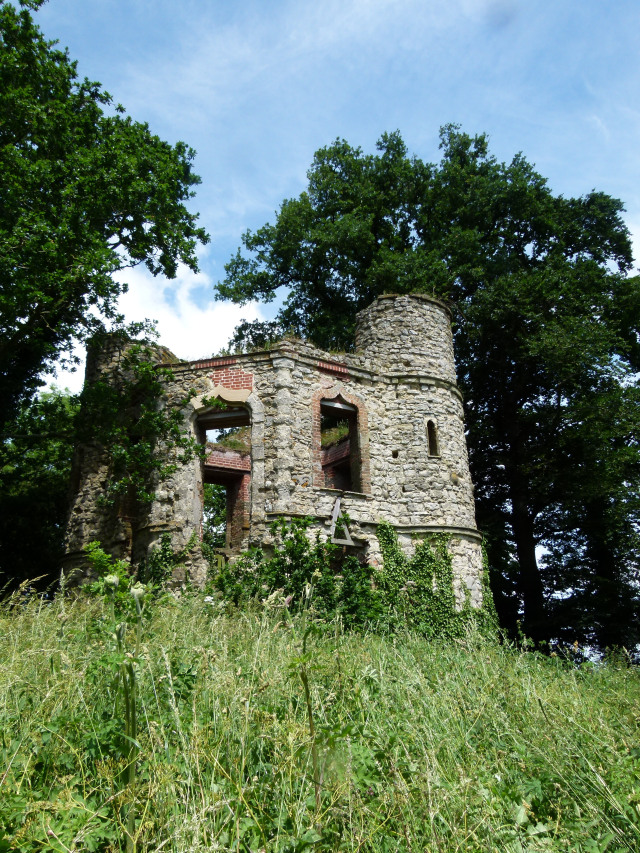
 One summer’s morning, back in 2013, I nipped out for milk and got a little sidetracked… I often do.
You may have noticed that I seem to spend a lot of time wandering the highways and wild places with a camera. Occasionally I become aware that this is, quite possibly, folly for a woman alone. As I waded through nettles taller than I this morning, in search of a shot of a local ruin I was reminded of this as I called myself an idiot for the umpteenth time. I was, however, very glad I had chosen the leggings and sleeves I had cursed two minutes earlier as being too warm for the sunshine.
I had not intended to visit the place, had, indeed, only nipped out to get milk and Ani’s dinner. But picking up the camera is a habit. I thought a drive in the gorgeous sunshine might clear the fog of painkillers and Dinton is, like so much here, on my doorstep.
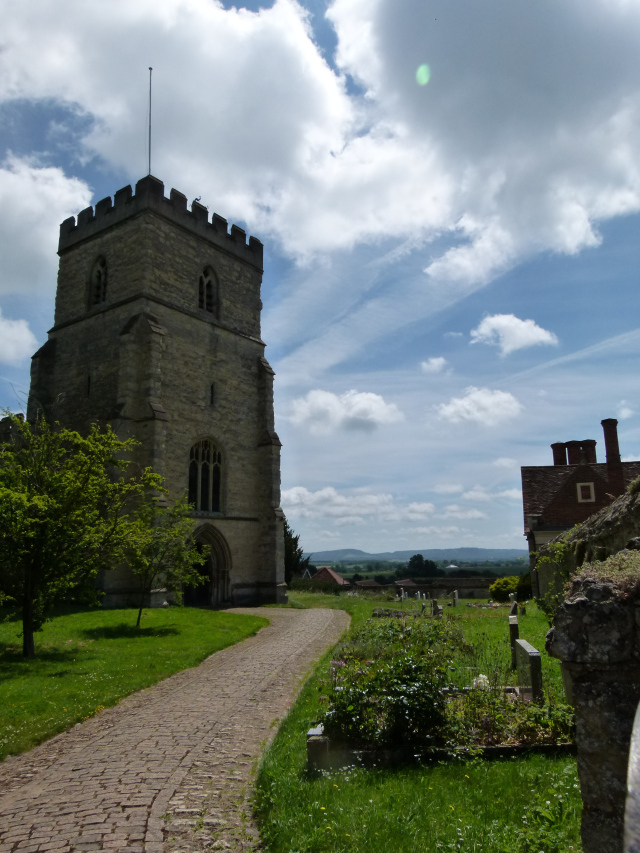
St Peter and St Paul, Dinton
There is an ancient church there, dating back to Norman times at least, it has probably been a sacred site since much earlier. Cromwell probably visited the church if he stayed with his friend Simon Mayne at the magnificent old manor next door. It was Mayne who signed the death warrant of Charles I and it is thought that his clerk, John Biggs, may have been the executioner. It is known that after the beheading of the King, Biggs returned to the village and lived in a cave or hidden place, becoming known as the Dinton Hermit. I am desperate to get inside the church and see if the interior matches up to the fabulous doorway, but there are no keyholder details displayed. I might be lucky on a Sunday….
Sadly, I was not. So I remembered the Castle.
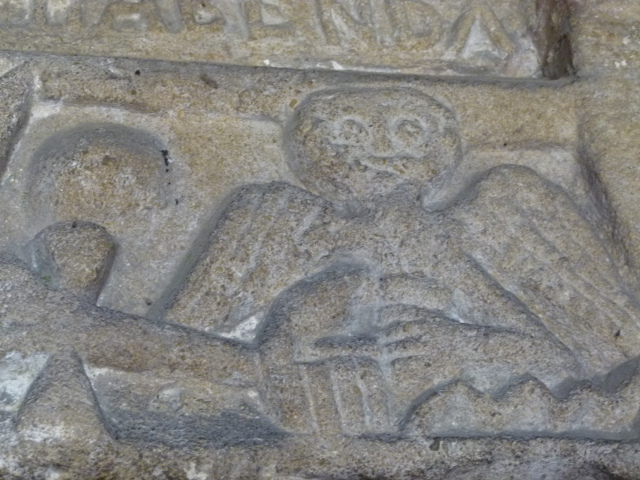
Norman tympanum at the church… an angel wielding Thor’s hammer?
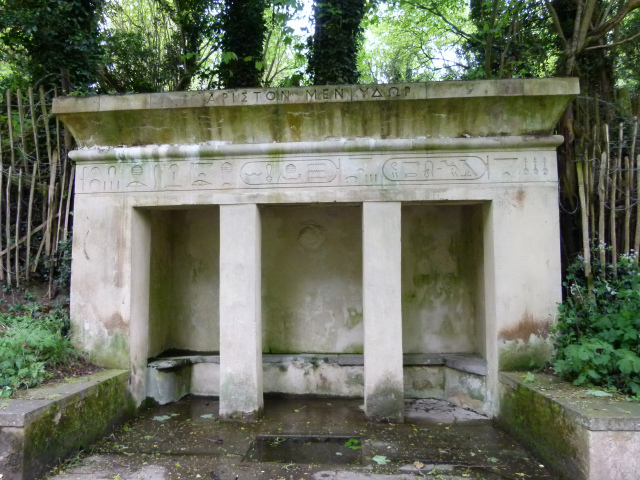
Dinton Castle is a bit of a misnomer. It is a ruined folly, built in 1769 by Sir John Vanhattem, then Lord of the Manor to house his collection of fossils. Indeed, the spirals of great ammonites can still be seen built into the higher, less accessible reaches of the crumbling limestone walls. I had walked the boys here one summer’s day just after we had moved from the north. It was a long trek, but we were exploring and had already found the most incongruous Egyptian temple down a country lane, built to house the ancient sacred spring.
Somewhat unexpected in a country lane in deepest Buckinghamshire..
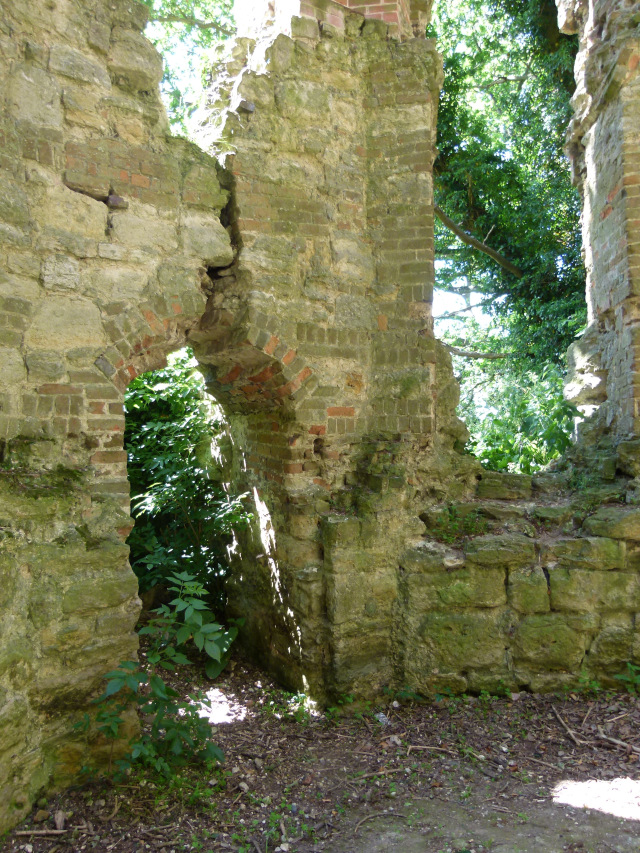
 The folly stands rather romantically in a circle of trees, half hidden from the road in summer. Neat fields surround it on three sides, all straight lines and edges. But there are no manicured lawns within, just five foot high nettles and a narrow trampled path to the entrance.
Little now remains apart from the octagonal shell and the towers east and west. Inside the place is open to the winds and the pigeons nest in the remnants of the fireplaces. It is fascinating to me to be able to trace the clues in the architecture, reconstructing the building in imagination from the remains.
 The space was surprisingly free of the bottles and sweet wrappers of local children, but then, it has a very curious feel to it. I would imagine, for that very reason, that in the days prior to games consoles it would have been a regular haunt of adventurous youth, but today it stood silent in its leafy bower.
The site itself has a history going back a very long way. Neolithic and paleolithic remains have been found here, and during the building of the folly a Saxon burial ground was uncovered. The ammonites, of course, are at least 65 million years old. They are beautiful things. Pliny called them after Amun after the Egyptian god who wore the curved ram’s horns. They bring back memories of childhood on the beaches of Yorkshire, armed with a fossil hammer and a teacher of such tales. One story, I remember was that of Saint Hilda who turned a plague of snakes to stone. It was below her abbey at Whitby we used to find the best ones.
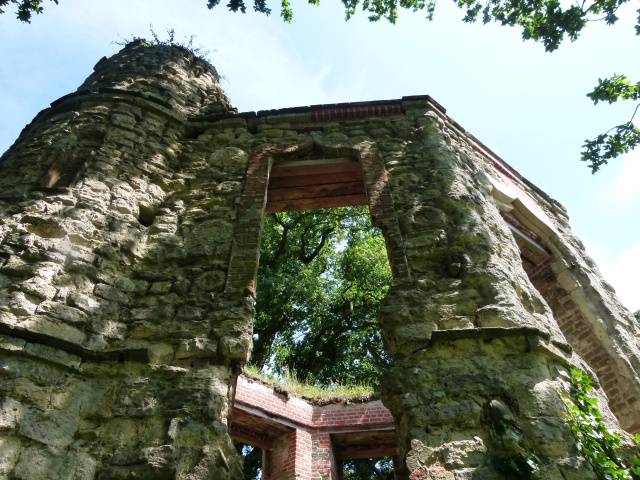 Their form is seen in many old walls in the area, they were common in the local quarries once upon a time. One can only imagine what the workers believed these serpentstones to be in the days before our knowledge of prehistory explained them. They must have seemed magical indeed, echoing the spiral patterns of our ancestors that are still remembered in folk dance and art to this day.
Of course, the place is haunted, according to local myth. With such a history, it almost has to have a ghost story. It is said that the King’s executioner walks there, even though the folly was yet to be built. Still, the land has always been there, and who knows what echoes of memory the earth itself holds if we knew how to listen for them?

































 Sue Vincent's Daily Echo
Wow… is there a stream or an empty stream bed near the folly, by any chance??? Haunting…(she says as the hair on her arms stands up….)
LikeLike
There is, not very far away.
LikeLike
gorgeous!!!!
LikeLiked by 1 person
Reblogged this on oshriradhekrishnabole.
LikeLiked by 1 person
Love the name Dinton, some lovely historical notes about it all too.
LikeLike
It’s a bit special, Dinton 🙂
LikeLike
What an inspiring site! Thanks for this awesome blog post, Sue.
LikeLike
Thank you, Karen!
LikeLike
Love reading about the history of these ruins – always interesting!
LikeLike
It is a place I am rather fond of…except when the stinging nettles are up 🙂
LikeLike
Lol – no fun then! 😉
LikeLike
Not when you forget and wear shorts 😉
LikeLike
oh, ouch! 😉
LikeLike
about the same amount of letters but rather more polite than I recall I put it myself 😉
LikeLike
HAHAHA! 😀
LikeLiked by 1 person
It’s hard to believe trash hasn’t been dumped there. Maybe people believe the ghost stories. 🙂
LikeLike
They may have reason to believe them… an eerie place at night.
LikeLike